
How to Communicate With Gravitas at Work: 8 Shifts

What Is Gravitas in Professional Communication?
Gravitas in professional communication is the quality of being taken seriously. It's the perception that your words carry weight, your thinking has depth, and your presence commands attention—without needing volume, aggression, or a corner office to earn it.
Unlike charisma, which draws people in through warmth and energy, gravitas earns respect through substance and composure. A 2023 study by the Center for Talent Innovation (now Coqual) found that gravitas accounts for 67% of executive presence—more than communication style (28%) and appearance (5%) combined. It's the single most important factor in whether people perceive you as a leader.
Gravitas shows up in how you structure your thinking, how you handle disagreement, and how you respond when the stakes are high. It's not a personality trait you're born with. It's a set of communication behaviors you can learn, practice, and master. For a deeper exploration, see our guide on how to develop gravitas as a leader.
Shift 1: Replace Hedging Language With Direct Statements
Why Hedging Undermines Your Authority
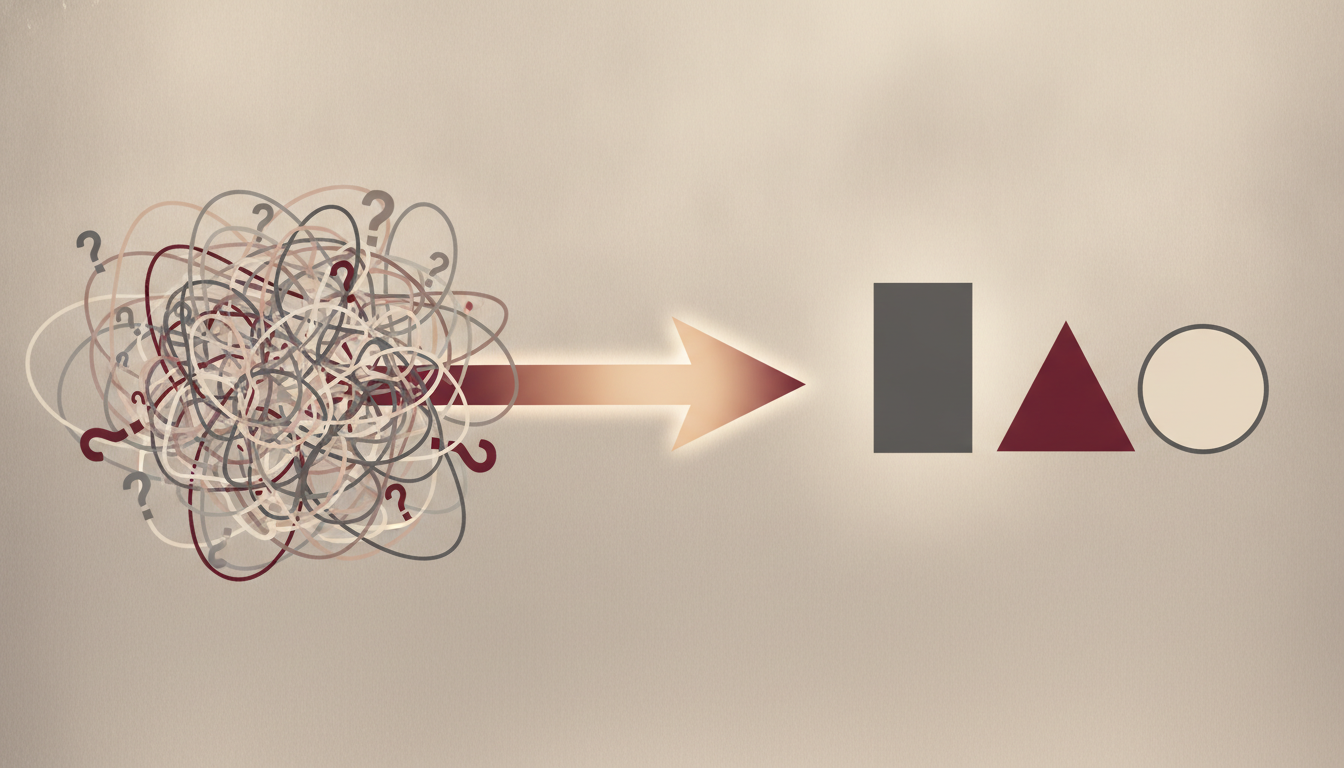
Hedging is the habit of softening your statements with qualifiers like "I think," "sort of," "maybe," "I'm not sure, but," or "this might be wrong." Most professionals hedge without realizing it. They do it to protect themselves from being wrong, to avoid seeming pushy, or simply out of habit.
The problem is that hedging sends a signal: I'm not confident in what I'm saying, so you shouldn't be either. Research from the University of California, Irvine found that speakers who used hedging language were rated 25% less credible by listeners, even when the content of their message was identical to a direct version.
How to Make the Shift
Start by auditing your language in meetings for one week. Note every time you say "I think," "just," "kind of," or "does that make sense?" Then practice replacing those phrases with direct alternatives:
- Instead of: "I think we should maybe consider a different vendor."
- Say: "We should evaluate a different vendor. Here's why."
- Instead of: "I just wanted to flag something small."
- Say: "I want to flag something important."
- Instead of: "This might not be right, but…"
- Say: "Based on the data, here's my recommendation."
This doesn't mean being rigid or never expressing uncertainty. When you genuinely don't know something, say so clearly: "I don't have that data yet. I'll have it by Thursday." That kind of directness is itself a form of gravitas. For more examples of language patterns that erode credibility, explore our post on words that make you sound less confident at work.
Shift 2: Lead With the Conclusion, Not the Backstory
The Executive Communication Pattern
One of the most reliable differences between people who communicate with gravitas and those who don't is sentence order. Professionals who lack gravitas tend to build up to their point: they share context, walk through their process, describe the problem, and finally arrive at a recommendation. Executives do the opposite.
According to a Harvard Business Review analysis of executive communication patterns, senior leaders spend 65% less time on preamble and context than mid-level managers. They lead with the conclusion, then provide supporting evidence only as needed. This is sometimes called the "pyramid principle," originally developed by Barbara Minto at McKinsey.
A Framework You Can Use Today
Use the CLR structure: Conclusion, Logic, Request.
- Conclusion: State your main point in one sentence.
- Logic: Provide two to three pieces of supporting evidence.
- Request: Say what you need from the listener.
Notice there's no throat-clearing. No "So, I was looking at the data and I noticed something interesting…" The listener knows immediately what you're proposing and why. Learn more about this approach in our article on how executives structure their thinking before speaking.
Shift 3: Slow Down and Use Strategic Pauses
The Science of Pace and Perception
Speed communicates nervousness. When you rush through your words, listeners unconsciously interpret it as anxiety, lack of preparation, or low status. A study published in the Journal of Nonverbal Behavior found that speakers who used deliberate pauses were rated as 30% more competent and confident than those who spoke at a consistently fast pace—even when delivering the same content.
Gravitas lives in the pauses. When you pause before answering a question, you signal that you're thinking—not scrambling. When you pause after making a key point, you give it room to land.
Three Types of Strategic Pauses
The Thinking Pause: Before answering a difficult question, pause for two to three seconds. Look thoughtful, not frozen. This communicates that you take the question seriously. The Emphasis Pause: After making your most important statement, stop talking for a full beat. Let the silence do the work. Most people rush to fill silence. Resist that impulse. The Transition Pause: Between sections of a presentation or between topics in a meeting, pause briefly. This signals structure and control. It tells the room: I know where I'm going.Practice by recording yourself in a low-stakes setting—a practice presentation or a voice memo summarizing your week. Listen back. Count how many pauses you actually take versus how many you think you take. The gap is usually significant. For vocal techniques that build authority, see our guide on how to develop a commanding voice at work.
Ready to Build Unshakable Professional Authority? The shifts in this article are just the beginning. The Credibility Code gives you the complete system—scripts, frameworks, and daily practices—to communicate with gravitas in any professional situation. Discover The Credibility Code
Shift 4: Ground Your Body Language
What Your Body Says Before You Speak
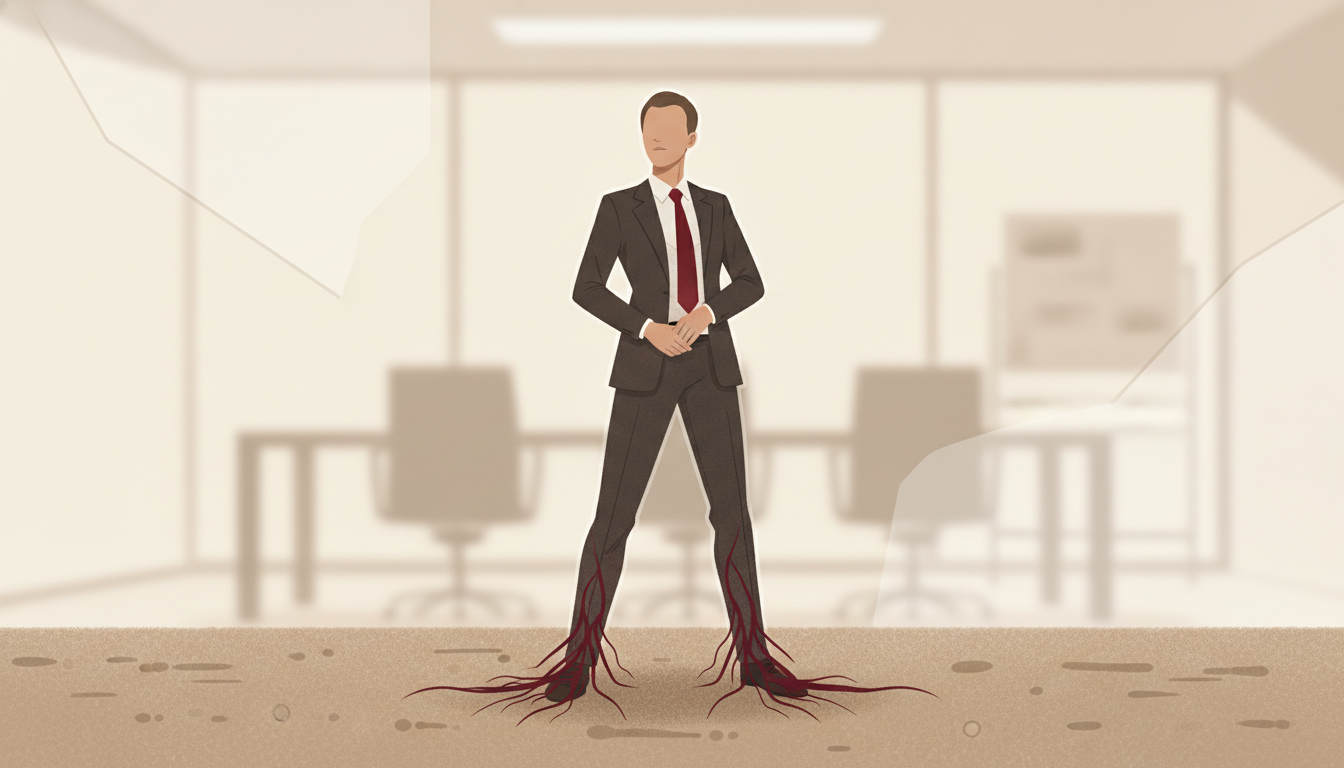
Gravitas is a full-body experience. You can have the most well-structured argument in the room, but if you're fidgeting, swaying, or avoiding eye contact, your message loses weight. Research by Albert Mehrabian—often oversimplified but directionally accurate—suggests that nonverbal cues significantly influence how messages are received, particularly when verbal and nonverbal signals conflict.
People with gravitas tend to take up appropriate space. They stand or sit still. They make steady (not aggressive) eye contact. They gesture with intention rather than nervous energy.
Four Body Language Anchors for Gravitas
Feet planted. Whether standing or sitting, keep both feet flat on the floor. This grounds your posture and reduces unconscious swaying or shifting. Hands visible and still. Rest your hands on the table or at your sides. Avoid touching your face, hair, or jewelry. Visible hands signal openness; still hands signal composure. Eye contact at 60-70%. Hold eye contact for roughly three to five seconds at a time, then briefly look away. This is the range that communicates confidence without intensity. Chin level. A tilted head can signal curiosity (useful in some contexts) but can also signal deference. When making a strong point, keep your chin level and face the listener squarely.These aren't power poses or dominance displays. They're composure signals. They tell the room that you're centered, present, and in control of yourself. For a comprehensive breakdown, read our guide on body language for leadership presence.
Shift 5: Speak in Shorter, More Definitive Sentences
Why Brevity Signals Authority
Long, winding sentences are the enemy of gravitas. When you pack too many ideas into one sentence—connected by "and," "but," "also," and "so"—you dilute every point you're making. The listener has to work harder to follow you, and the impression you leave is one of uncertainty rather than clarity.
A study by the Economist Intelligence Unit found that 57% of senior executives identified unclear communication as the biggest barrier to workplace productivity. Shorter sentences force clarity. They require you to know your point before you open your mouth.
The Discipline of Brevity
Compare these two versions:
Low gravitas: "So I was thinking about the Q3 numbers and I noticed that our customer acquisition cost has been going up for the last three months and I think it might be related to the new ad platform we switched to in July, but I'm not totally sure, so maybe we should look into it." High gravitas: "Our customer acquisition cost has risen for three consecutive months. I believe the new ad platform is the cause. I recommend we audit performance by channel this week."Same information. Completely different impact. The second version uses three sentences where the first uses one. Each sentence carries one idea. Each idea lands.
Practice this by writing out your key points before important meetings. Edit them down. Remove every word that doesn't earn its place. This is a discipline, not a talent—and it's one of the fastest ways to sound more senior at work.
Shift 6: Anchor Your Claims in Evidence
Moving From Opinion to Authority
There's a reason that the most credible people in any room tend to reference data, precedent, or specific examples. Gravitas isn't just about how you say something—it's about the substance behind it. When you make a claim and back it up immediately, you move from sharing an opinion to establishing a position.
This doesn't mean you need a spreadsheet for every conversation. It means developing the habit of grounding your statements in something concrete.
The Evidence Stacking Method
When making a recommendation or argument, stack at least two forms of evidence:
- Data: Numbers, metrics, research findings.
- Precedent: What happened before in a similar situation.
- Expert reference: What a recognized authority has said or published.
- Direct observation: What you personally witnessed or experienced.
Notice how the combination of external data and internal experience creates a much stronger argument than either alone. This is how you position yourself as an expert at work—not by claiming expertise, but by demonstrating it through the quality of your reasoning.
Shift 7: Hold Composure Under Pressure
Gravitas Is Tested in Difficult Moments
Anyone can appear authoritative when things are going well. Gravitas is revealed when things go sideways—when someone challenges your idea publicly, when you're asked a question you can't answer, or when a meeting turns confrontational.
The professionals who are perceived as having the most gravitas are the ones who remain steady in these moments. They don't get defensive. They don't rush to fill the silence. They don't match the emotional temperature of the room. They regulate it.
The PAUSE Protocol for High-Pressure Moments
When you feel your composure slipping, use this five-step process:
- P — Pause physically. Stop moving. Plant your feet. Take one breath.
- A — Acknowledge the moment. "That's an important challenge" or "I appreciate you raising that."
- U — Understand before responding. Ask a clarifying question if needed: "Can you say more about what's driving that concern?"
- S — State your position. Respond with a clear, grounded statement.
- E — Exit cleanly. Don't over-explain or backtrack. Make your point and stop.
This protocol works in meetings, negotiations, performance reviews, and any conversation where stakes are high. For more frameworks on staying composed, explore our article on leadership presence in difficult conversations.
Go Deeper With a Proven System If these shifts resonate, The Credibility Code gives you the full playbook—including scripts for high-pressure conversations, daily gravitas-building practices, and frameworks used by executives who command every room they enter. Discover The Credibility Code
Shift 8: Own Your Expertise Without Apologizing for It
The Apology Reflex and Its Cost
Many mid-career professionals—especially those who've been overlooked, interrupted, or conditioned to defer—develop what psychologists call an "apology reflex." They preface contributions with "Sorry, but…" or "I might be overstepping, but…" or "This is probably obvious, but…"
Each of these phrases is a small act of self-sabotage. They tell the listener: discount what I'm about to say. A 2019 study published in the European Journal of Social Psychology found that excessive apologizing in professional contexts reduced perceived competence by up to 20%, regardless of the actual quality of the contribution.
How to Claim Your Authority
Gravitas requires that you take ownership of your knowledge, your perspective, and your right to contribute. This doesn't mean arrogance. It means clarity about what you bring to the table.
Replace apology openers with authority openers:- Instead of: "Sorry, can I add something?"
- Say: "I want to add a perspective on this."
- Instead of: "I might be wrong, but…"
- Say: "Here's what I'm seeing."
- Instead of: "This is probably a stupid question…"
- Say: "I have a question about this."
Start tracking how often you apologize before contributing in meetings. Most people are surprised by the frequency. Reducing this one habit can shift how others perceive your authority within weeks. For a deeper dive into this pattern, read our post on how to stop undermining yourself at work.
Putting All Eight Shifts Together
These eight shifts don't require a personality overhaul. They require awareness and practice. Here's a simple way to start:
Week 1-2: Focus on Shifts 1 and 2 (direct language and leading with conclusions). Audit your language in meetings and emails. Week 3-4: Add Shifts 3 and 4 (strategic pauses and grounded body language). Record yourself in practice settings. Week 5-6: Layer in Shifts 5 and 6 (shorter sentences and evidence-based claims). Edit your written communication first, then apply to spoken. Week 7-8: Integrate Shifts 7 and 8 (composure under pressure and owning your expertise). Practice in progressively higher-stakes settings.Gravitas compounds. Each shift reinforces the others. Direct language sounds more powerful when delivered slowly. Evidence-based claims land harder in short sentences. Composure under pressure is easier when your body language is already grounded.
The goal isn't to become someone you're not. It's to remove the habits that obscure the authority you already have.
Frequently Asked Questions
What is gravitas in the workplace?
Gravitas in the workplace is the quality of communicating with weight, substance, and authority. It's the perception that your words matter, your thinking is sound, and your presence commands respect. Unlike charisma, gravitas is built through composure, clarity, and evidence-based communication rather than personality or energy. It's the most important component of leadership presence and can be developed through deliberate practice.
How is gravitas different from confidence?
Confidence is an internal feeling—believing in your own abilities. Gravitas is an external perception—others believing your words carry weight. You can feel confident but lack gravitas if your communication habits (hedging, rambling, apologizing) undermine your message. Conversely, you can project gravitas even when you feel uncertain by using structured language, deliberate pacing, and composed body language. Gravitas is confidence made visible through communication behavior.
Can introverts develop gravitas at work?
Absolutely. Gravitas actually favors introverts in many ways. Introverts tend to think before speaking, choose words carefully, and avoid unnecessary filler—all hallmarks of gravitas. The key shifts for introverts are learning to project vocally (volume and pace), holding steady eye contact, and resisting the urge to over-qualify statements. Many of the most respected leaders in business are introverts who communicate with remarkable gravitas precisely because they speak less but say more.
How long does it take to develop gravitas?
Most professionals notice a measurable shift in how others perceive them within four to eight weeks of deliberate practice. The fastest improvements come from eliminating hedging language and leading with conclusions—these can change perception within days. Deeper shifts, like maintaining composure under pressure and consistently grounding claims in evidence, take longer to become automatic. Like any skill, gravitas develops through repetition, not revelation.
What are the biggest mistakes that kill gravitas?
The five most common gravitas killers are: over-apologizing before contributing, rambling without a clear point, matching the emotional intensity of a heated room, using filler words excessively ("um," "like," "you know"), and physically fidgeting during important conversations. Each of these signals low status or uncertainty to listeners, regardless of the quality of your actual ideas. Eliminating even two of these habits can dramatically improve how others perceive your authority.
Can you have gravitas in virtual meetings?
Yes, but it requires more intentional effort. In virtual settings, your face and voice carry the full weight of your presence. Key adjustments include: looking directly into the camera (not the screen) when speaking, using a slightly slower pace than in-person, eliminating background distractions, and keeping your upper body still and centered in the frame. Virtual gravitas also depends heavily on concise communication—attention spans are shorter on video, so leading with your conclusion becomes even more critical.
Build Gravitas That Gets You Noticed, Respected, and Promoted You've just learned eight shifts that can transform how you're perceived at work. The Credibility Code takes you further—with the complete system of scripts, daily practices, and frameworks that help mid-career professionals build lasting authority in every conversation, meeting, and presentation. Discover The Credibility Code
Ready to Command Authority in Every Conversation?
Transform your professional communication with proven techniques that build instant credibility. The Credibility Code gives you the frameworks top leaders use to project confidence and authority.
Discover The Credibility CodeRelated Articles

How to Communicate With Gravitas at Work: 8 Key Shifts
Communicating with gravitas at work means speaking with a deliberate blend of authority, composure, and substance that makes people stop and listen. It requires eight specific shifts: leading with your conclusion, eliminating hedging language, slowing your delivery, grounding your body language, using strategic silence, choosing precise words, anchoring claims in evidence, and holding your ground under pressure. These shifts transform you from someone who shares ideas into someone whose ideas sh
How to Communicate With Gravitas: 8 Daily Practices
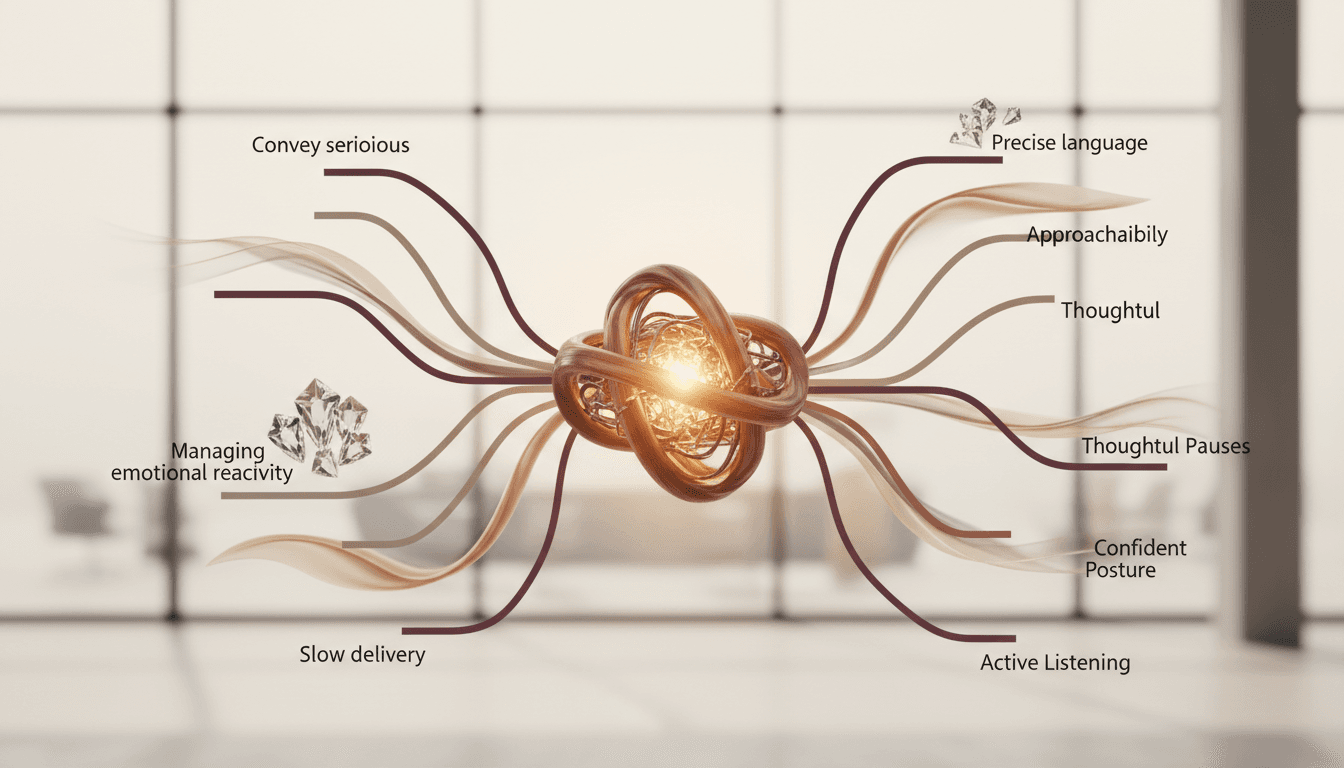
To communicate with gravitas, practice these eight daily habits: slow your delivery, choose precise language, eliminate hedging words, manage emotional reactivity, use purposeful silence, lead with conclusions, anchor your body language, and prepare your key messages in advance. Gravitas isn't a personality trait — it's a communication discipline. Professionals who develop it are perceived as more credible, more competent, and more worthy of leadership roles.

How to Communicate with Gravitas: A Practical Guide
Communicating with gravitas means speaking with a combination of authority, composure, and intentional weight that makes people stop and listen. To develop it, focus on five core areas: choose precise, confident language; control your vocal delivery (pace, tone, pauses); regulate your emotions under pressure; use strategic silence instead of filling space; and anchor every statement in substance over style. Gravitas isn't about being loud—it's about being unmistakably credible every time you spe