
Communicate With Impact at Work: 8 High-Influence Habits

What Is High-Impact Communication at Work?
High-impact communication at work is the ability to consistently deliver messages that are clear, credible, and compelling—so that people listen, remember, and act on what you say. It goes beyond speaking well or writing clean emails. It's a system of daily habits that shape how others perceive your competence, authority, and leadership potential.
Unlike charisma, which feels innate, high-impact communication is built through repeatable practices. According to a 2024 Harris Poll survey commissioned by Grammarly, poor communication costs U.S. businesses an estimated $1.2 trillion annually—roughly $12,506 per employee per year. The professionals who communicate with impact aren't just better speakers. They're the ones who get promoted, get heard in meetings, and get trusted with high-stakes decisions.
Habit 1: Lead With Your Conclusion
Why Bottom-Line-Up-Front Changes Everything
Most professionals bury their point. They build context, share background, explain the process—and finally arrive at the recommendation three paragraphs (or three minutes) in. High-impact communicators flip this entirely.
The military calls this BLUF: Bottom Line Up Front. In practice, it means stating your conclusion, recommendation, or request in the first sentence—then providing supporting detail. This single shift can transform how senior leaders perceive you, because executives communicate differently than everyone else. They process information top-down. When you match that pattern, you signal that you think at their level.
How to Apply BLUF in Three Scenarios
In a meeting update: Instead of "So we ran the analysis last week and looked at three vendors and compared pricing…" say, "I recommend Vendor B. They're 15% cheaper with faster implementation. Here's the comparison." In an email: Replace a four-paragraph narrative with a one-line opener: "Decision needed: Should we extend the project deadline by two weeks to incorporate client feedback?" Then add context below. In a 1:1 with your manager: Open with "I need your input on a resourcing conflict" rather than spending three minutes setting the stage.A study published in the Harvard Business Review found that executives spend an average of just 30 seconds scanning an email before deciding whether to engage or ignore it. Leading with your conclusion ensures you earn those 30 seconds.
The "So What?" Test
Before you speak or hit send, ask yourself: If the other person only heard my first sentence, would they know what I need? If the answer is no, restructure. This is the fastest way to sound more senior at work without changing your title.
Habit 2: Replace Weak Language With Decisive Words
The Hidden Cost of Hedging
Words like "just," "I think," "sort of," "maybe," and "I feel like" are credibility killers. They signal uncertainty—even when you're confident. Research from the University of Texas at Austin found that people who use hedging language are perceived as less competent and less hirable, regardless of the actual quality of their ideas.
Here's what this looks like in practice:
- Weak: "I just wanted to check in and see if maybe we could possibly move the timeline?"
- Decisive: "Can we move the timeline to March 15? That gives the team two additional weeks for testing."
The content is identical. The perception is completely different.
A Quick Substitution Framework
Use this swap list to audit your language this week:
| Instead of… | Say… |
|---|---|
| "I think we should…" | "I recommend…" |
| "Just a quick thought…" | "One consideration…" |
| "Does that make sense?" | "What questions do you have?" |
| "Sorry, but…" | (Remove it entirely) |
| "I feel like…" | "Based on the data…" |
If you find yourself undermining yourself at work with these phrases, you're not alone. Most professionals do it unconsciously. The fix is awareness plus deliberate practice.
Ready to Overhaul Your Communication Habits? The Credibility Code gives you the exact language frameworks, email templates, and daily practice systems that high-authority professionals use. Discover The Credibility Code
Habit 3: Structure Every Message With a Framework
Why Frameworks Beat Freestyle

When you speak off the cuff, your brain organizes information chronologically—what happened first, then second, then third. But listeners don't process information that way. They need structure: a clear container for your ideas.
Communication frameworks give you that container. They make you sound organized, concise, and prepared—even when you're improvising. According to a Stanford Graduate School of Business study, structured communication is up to 40% more memorable and persuasive than unstructured delivery.
Three Frameworks You Can Use Today
The PREP Framework (for opinions and recommendations):- Point: State your position.
- Reason: Give one supporting reason.
- Example: Offer a concrete example or data point.
- Point: Restate your position.
- What: Here's the situation.
- So What: Here's why it matters.
- Now What: Here's what we should do.
- Situation, Task, Action, Result.
For more frameworks used by senior leaders daily, explore 5 professional communication frameworks leaders use daily.
Habit 4: Master Your Vocal Delivery
The 38% Factor
Albert Mehrabian's widely cited communication research found that when content and tone are mismatched, listeners rely on tone of voice 38% of the time to interpret meaning. You can have the strongest argument in the room—but if your voice goes up at the end of every sentence, trails off, or sounds rushed, people won't trust it.
High-impact communicators control three vocal elements: pace, pitch, and pause.
Pace, Pitch, and Pause in Practice
Pace: Slow down by 10-15%. Most nervous speakers accelerate without realizing it. A deliberate pace signals confidence and gives your audience time to absorb your points. Pitch: Avoid upspeak—the habit of raising your pitch at the end of declarative sentences, making statements sound like questions. "We should move forward with this plan" is a statement. Let it land like one. Pause: The strategic pause is the most underused tool in professional communication. Pause for two full seconds after making a key point. It signals confidence and gives your message weight. If you want to speak with authority in presentations, mastering the pause is non-negotiable.A Daily Practice Drill
Record yourself during one meeting per week. Listen back for upspeak, filler words ("um," "uh," "like"), and pace. Track your improvements over 30 days. Most professionals are shocked at the gap between how they think they sound and how they actually sound.
Habit 5: Write Emails That Command Attention and Action
Why Email Is Your Most Visible Communication Channel
You might speak in two or three meetings a day. But you send dozens of emails. Email is where your professional brand lives—visible, searchable, and forwardable. A sloppy email doesn't just waste time. It erodes credibility every time someone reads it.
The McKinsey Global Institute reports that the average professional spends 28% of their workday reading and responding to email. That means your emails are competing with hundreds of others for attention. If yours don't stand out structurally, they get skimmed or ignored.
The High-Impact Email Formula
Follow this structure for every substantive email:
- Subject line: Specific and action-oriented. "Q3 Budget Approval Needed by Friday" beats "Quick question."
- First line: State the purpose or ask. "I need your approval on the revised Q3 budget by Friday EOD."
- Body: Provide only the context needed to make a decision. Use bullet points for multiple items.
- Close: Restate the action and deadline. "Please confirm by Friday at 5 PM ET so we can proceed with vendor contracts."
For a deeper dive into email authority, read how to sound confident in emails: 9 writing rules.
Tone Traps to Avoid
- Over-apologizing: "Sorry to bother you" signals low status. Replace with "I appreciate your time on this."
- Excessive exclamation marks: One per email maximum. More than that reads as insecurity masked by enthusiasm.
- Passive voice for your own work: "The report was completed" hides your contribution. "I completed the report" owns it.
Your Emails Are Building (or Breaking) Your Reputation Right Now. The Credibility Code includes email templates, before-and-after rewrites, and a tone audit checklist used by executives. Discover The Credibility Code
Habit 6: Ask Strategic Questions Instead of Just Answering Them
How Questions Signal Leadership Thinking
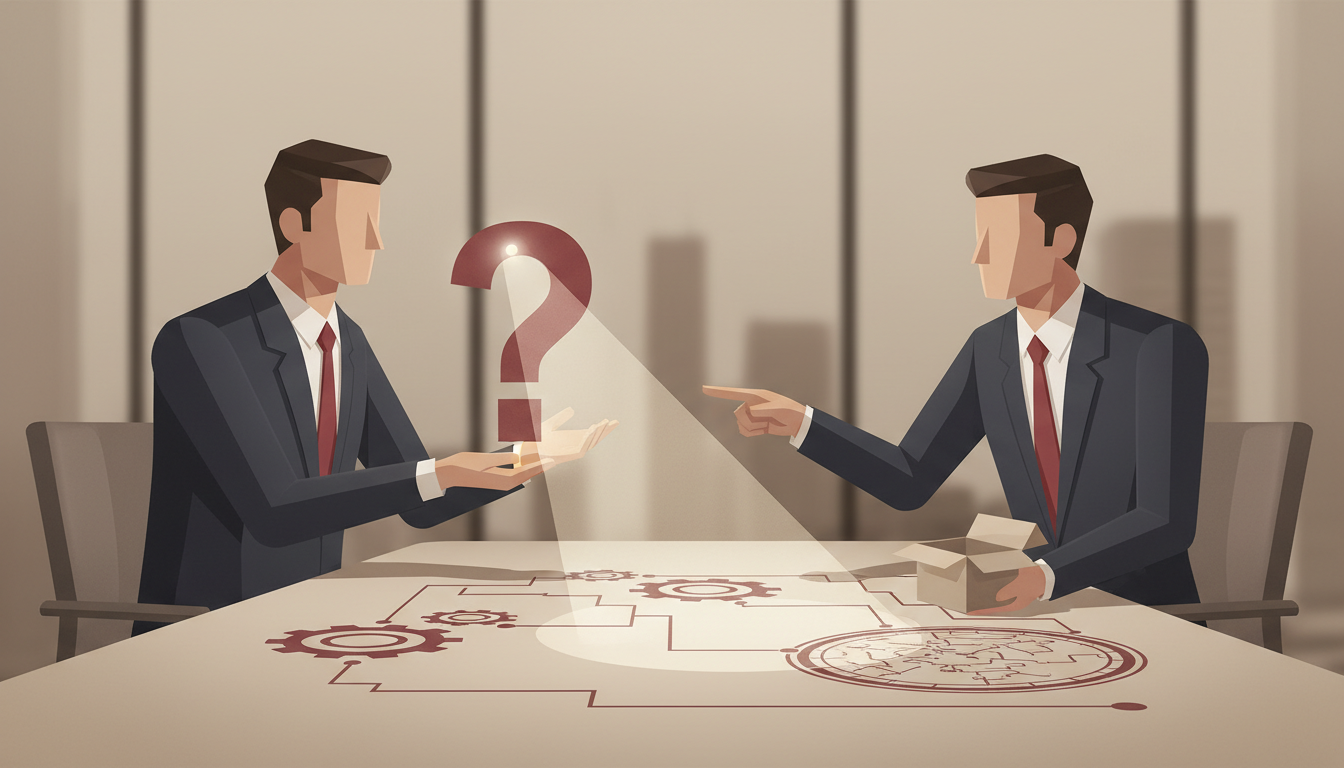
Most professionals focus on having the right answers. High-impact communicators focus on asking the right questions. Strategic questions demonstrate that you see the bigger picture, think critically, and care about outcomes—not just tasks.
Consider the difference:
- Task-level question: "When is this due?"
- Strategic question: "What's the business outcome we're optimizing for with this deadline?"
The second question doesn't challenge authority. It signals that you're thinking like a leader. This is one of the key habits explored in how to communicate your strategic value at work clearly.
Three Types of High-Impact Questions
Clarifying questions prevent wasted effort: "To make sure I'm aligned—are we prioritizing speed or quality on this deliverable?" Reframing questions shift the conversation: "We've been discussing the cost of this initiative. Can we also quantify the cost of not doing it?" Accountability questions move decisions forward: "Who owns the next step, and by when?"Practice inserting one strategic question into every meeting you attend this week. You'll notice a shift in how people engage with you.
Habit 7: Calibrate Your Body Language to Match Your Message
The Nonverbal Credibility Gap
A study from the Journal of Nonverbal Behavior found that observers form judgments about a speaker's competence within the first seven seconds of an interaction—before the speaker has finished their opening sentence. Your body language either reinforces your words or contradicts them.
The most common nonverbal credibility killers include: fidgeting, avoiding eye contact, crossing arms during collaborative discussions, nodding excessively (which can signal submission rather than agreement), and taking up as little physical space as possible.
The Three Anchors of Confident Body Language
Stillness: Reduce unnecessary movement. Plant your feet, keep your hands visible and relaxed, and resist the urge to shift weight or touch your face. Stillness projects composure. Eye contact: In one-on-one conversations, maintain eye contact for 60-70% of the interaction. In group settings, deliver a full sentence to one person before moving your gaze to another. This creates connection and authority simultaneously. Expansive posture: Take up appropriate space. Sit fully back in your chair rather than perching on the edge. Use open hand gestures when making a point. Research by Amy Cuddy at Harvard Business School found that expansive postures are associated with higher perceived confidence and leadership capability.For a complete guide, explore how to look confident with body language.
Habit 8: Close Every Interaction With a Clear Next Step
Why the Close Matters More Than the Open
Many professionals prepare strong openings for meetings, presentations, and conversations—but let the ending dissolve into vagueness. "Okay, great, so… we'll circle back on that." This leaves decisions unmade, ownership unclear, and momentum dead.
High-impact communicators close with precision. They summarize what was decided, name who owns the next action, and state the deadline. This habit alone can set you apart from 90% of your peers.
The 15-Second Close Formula
At the end of any interaction, use this template:
"So to confirm: [decision made]. [Name] will [specific action] by [date]. I'll follow up with [next step] on [date]. Does that match everyone's understanding?"
Example after a project meeting: "To confirm: we're going with the revised timeline. Sarah will update the project plan by Thursday. I'll send the client the revised scope by Friday. Does that match everyone's understanding?"This takes 15 seconds. It transforms you from a participant into a leader—even without a leadership title. If you're working to build authority at work without a title, this is one of the highest-leverage habits you can adopt.
Frequently Asked Questions
How long does it take to communicate with more impact at work?
Most professionals notice a difference within two to three weeks of deliberate practice. Habits like leading with your conclusion and eliminating weak language produce immediate results—colleagues and managers respond differently when your messaging is clearer and more direct. Deeper shifts in vocal delivery and body language typically take 30 to 60 days of consistent effort.
What is the difference between communicating with impact and being aggressive?
Communicating with impact means being clear, direct, and structured. Aggression involves dominating, dismissing, or intimidating others. High-impact communicators invite dialogue—they state their position confidently and then ask for input. Aggressive communicators shut dialogue down. The distinction lies in respect: impactful communication respects both your own ideas and other people's perspectives. For more on this balance, see how to be more assertive at work without being rude.
Can introverts communicate with impact at work?
Absolutely. Many of the highest-impact communication habits—structured messaging, strategic questions, concise emails, deliberate pauses—play to introverted strengths. Impact doesn't require volume or extroversion. It requires clarity, preparation, and consistency. Introverts often excel at listening and synthesizing, which are underrated high-impact skills.
How do I communicate with impact in virtual meetings?
Apply the same habits with a few adjustments. Look directly into your camera (not at the screen) to simulate eye contact. Use the BLUF approach even more aggressively—virtual attention spans are shorter. Mute when not speaking to eliminate background noise, and use the chat function strategically to reinforce key points. Keep your video on and your posture upright to project presence through the screen.
What are the biggest mistakes that reduce communication impact at work?
The five most common mistakes are: burying your point in excessive context, using hedging language ("I think," "just," "maybe"), failing to close with clear action items, sending long unstructured emails, and letting your body language contradict your words. Each of these is fixable with the habits outlined above. For a deeper audit, read 12 weak communication habits that undermine your credibility.
How do I measure improvement in my communication impact?
Track three indicators: (1) whether people act on your requests faster, (2) whether you're invited into higher-level conversations or meetings, and (3) whether you receive feedback like "that was clear" or "great point." You can also record yourself in meetings monthly and compare your use of filler words, hedging language, and vocal delivery over time.
Turn These 8 Habits Into Your Daily Communication System. The Credibility Code gives you the frameworks, scripts, and practice routines to communicate with authority and impact in every workplace interaction—from emails to executive briefings. Discover The Credibility Code
Ready to Command Authority in Every Conversation?
Transform your professional communication with proven techniques that build instant credibility. The Credibility Code gives you the frameworks top leaders use to project confidence and authority.
Discover The Credibility CodeRelated Articles

How to Communicate With Impact at Work: 10 Daily Habits
Learning how to communicate with impact at work comes down to ten daily habits: leading with your conclusion first, replacing filler language with strategic pauses, structuring updates using a problem-solution-outcome framework, writing emails with clear action lines, using confident body language, asking high-value questions, giving specific feedback, closing conversations with next steps, preparing a "signature point" before meetings, and reviewing your communication wins each day. These small

How to Be More Persuasive at Work: 7 Credibility-Based Tactics
To be more persuasive at work, shift from pushing your ideas to building credibility that pulls people toward them. The most persuasive professionals use seven core tactics: the problem-cost-solution framework, evidence framing, strategic concession, authority signaling, stakeholder pre-alignment, reciprocity anchoring, and the credibility close. These approaches earn lasting buy-in from peers, leadership, and cross-functional teams—without manipulation or pressure.

Professional Communication Tips for Managers Who Lead
The professional communication tips that separate respected managers from average ones come down to six core habits: leading with clarity over detail, framing feedback around behavior rather than character, adapting your communication style when speaking upward versus downward, mastering the strategic pause, writing with executive brevity, and building psychological safety through how you listen—not just what you say. Below, you'll find the specific frameworks and techniques for each.