
How to Stop Your Voice Shaking During a Presentation
What Is Presentation Voice Shaking?
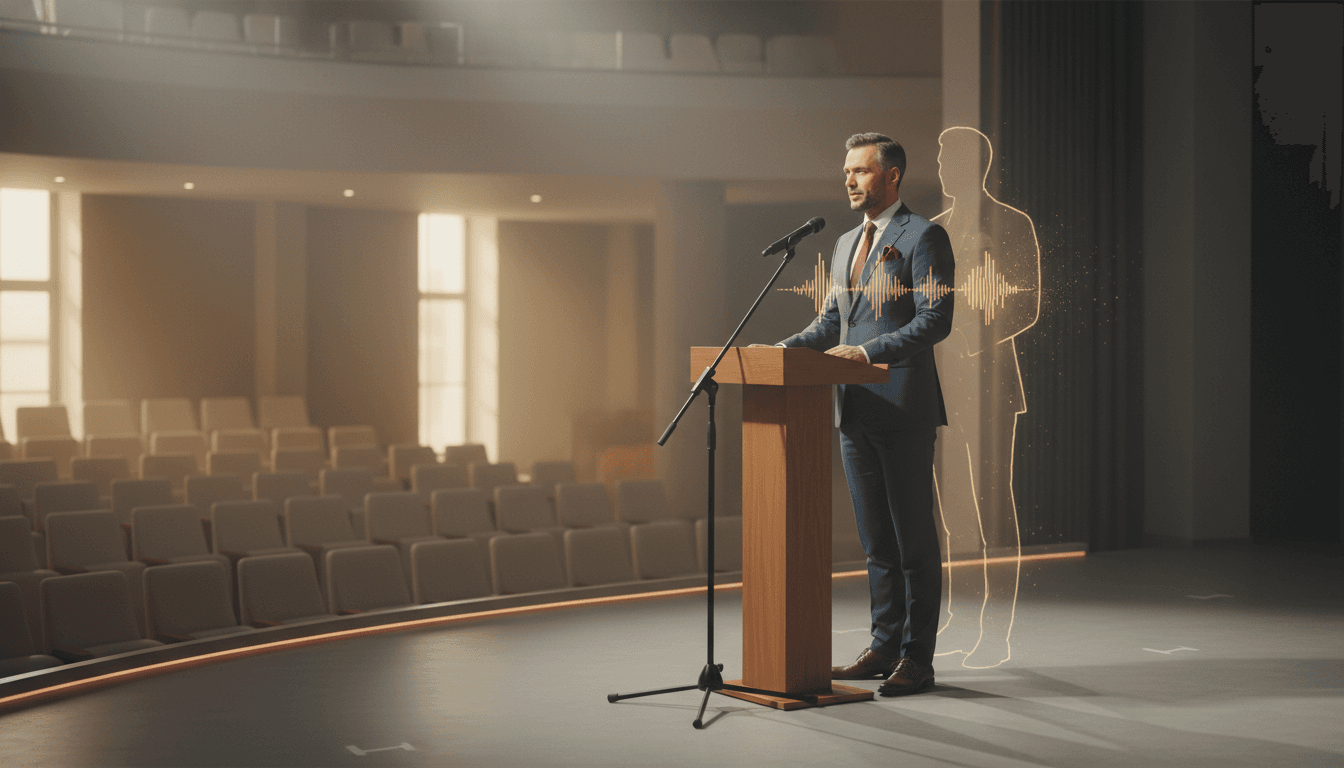
Presentation voice shaking is the involuntary trembling, wavering, or quivering of your voice that occurs when you speak under perceived pressure—typically during presentations, pitches, or high-visibility meetings. It's a physiological stress response, not a character flaw or a sign of incompetence.
The shaking happens when your sympathetic nervous system floods your body with adrenaline, causing the small muscles of your larynx (voice box) to contract involuntarily. According to the National Institute of Mental Health, approximately 73% of the population experiences some form of glossophobia—fear of public speaking—making voice shaking one of the most common professional communication challenges in the workplace.
Understanding this mechanism is critical because it shifts your focus from "What's wrong with me?" to "How do I manage my physiology?"—a far more productive and solvable question.
Why Your Voice Shakes: The Science Behind It
The Adrenaline-Larynx Connection

When your brain perceives a threat—and standing in front of colleagues or executives absolutely registers as a threat—your adrenal glands release cortisol and adrenaline. These hormones prepare your body to fight or flee. Your heart rate spikes, your breathing becomes shallow, and your muscles tense.
Your vocal cords are controlled by some of the smallest muscles in your body. They're exquisitely sensitive to tension. When adrenaline floods your system, these muscles contract unevenly, causing your voice to waver, crack, or shake. Research published in the Journal of Voice (2018) found that speakers under stress showed a measurable increase in fundamental frequency perturbation—the technical term for voice instability—by up to 15% compared to relaxed conditions.
Shallow Breathing Amplifies the Problem
Under stress, your breathing shifts from deep diaphragmatic breaths to rapid, shallow chest breathing. This robs your voice of the steady airflow it needs to produce a stable sound. Without consistent air pressure beneath your vocal cords, your voice literally has no foundation.
Think of it like a garden hose. A steady flow produces a strong, controlled stream. A sputtering, inconsistent flow creates an unpredictable spray. Your breath is the airflow, and your voice is the stream.
The Feedback Loop That Makes It Worse
Here's what traps most professionals: you notice your voice shaking, which makes you more anxious, which increases the adrenaline, which makes the shaking worse. A study from Harvard Business School (2014) found that individuals who tried to suppress anxiety symptoms actually experienced a 23% increase in physiological stress markers compared to those who acknowledged and reframed the anxiety.
This feedback loop is why willpower alone—"just relax"—never works. You need physical techniques that interrupt the cycle at its source. If you've ever struggled with sounding nervous when speaking, this loop is likely the culprit.
Immediate Physical Techniques to Stop Voice Shaking
The 4-8 Breathing Reset
This is the single most effective technique you can use in the 60 seconds before you speak. It directly activates your parasympathetic nervous system—the body's "calm down" system—by extending your exhale.
How to do it:- Inhale through your nose for 4 seconds
- Exhale slowly through your mouth for 8 seconds
- Repeat for 3 full cycles (about 36 seconds total)
- On your final exhale, begin speaking on the remaining breath
The extended exhale stimulates your vagus nerve, which sends a signal to your brain to lower your heart rate and reduce adrenaline output. You'll feel the effect within 20 seconds. This technique is used by elite military operators before high-stress operations—it works just as well before a quarterly business review.
The Grounding Press Technique
Physical grounding redirects your nervous system's attention from the perceived threat (your audience) to concrete physical sensation.
Before you begin speaking:- Press both feet firmly and evenly into the floor
- Engage your core muscles slightly—about 20% effort
- Press your fingertips into the table or podium (if available)
- Drop your shoulders away from your ears
This creates a physical anchor that stabilizes your body and, by extension, your voice. When your body feels stable, your nervous system interprets the environment as safer. For a deeper dive into how physical presence affects your delivery, explore these body language cues that signal power.
Vocal Warm-Ups That Prevent Shaking
Cold vocal cords are more prone to shaking, just as cold muscles are more prone to cramping. A 2-minute warm-up before any presentation dramatically reduces voice instability.
The 2-Minute Pre-Presentation Warm-Up:- Lip trills (30 seconds): Blow air through closed lips, creating a "brrr" sound. Slide up and down your pitch range. This relaxes your laryngeal muscles.
- Humming (30 seconds): Hum at a comfortable pitch. Feel the vibration in your chest and face. This engages your resonance chambers.
- Open vowels (30 seconds): Say "mah, may, mee, moh, moo" at a moderate volume, exaggerating your mouth movements. This loosens your jaw and tongue.
- Your opening sentence (30 seconds): Say your first sentence out loud three times, each time slightly louder. This primes your voice for the actual volume you'll use.
Do this in a restroom, stairwell, or your car. It feels silly. It works. According to the British Voice Association, regular vocal warm-ups reduce voice strain and instability by up to 40%.
Ready to Command Every Room You Walk Into? Voice control is just one element of professional presence. Discover The Credibility Code — the complete playbook for building authority, credibility, and a commanding presence in every professional conversation.
In-the-Moment Rescue Strategies
The Strategic Pause

When you feel your voice starting to shake mid-presentation, your instinct is to speed up and push through. This is the worst thing you can do. Instead, pause deliberately.
The technique:- Stop speaking at the end of a complete sentence
- Take one slow breath (4 seconds in, 4 seconds out)
- Make eye contact with a friendly face in the audience
- Resume speaking at a slightly slower pace
To your audience, this looks like a confident, purposeful pause for emphasis. To your nervous system, it's a reset. Research from the University of Michigan found that strategic pauses actually increase audience perception of speaker competence by 12%. Learn more about how to pause effectively in public speaking to turn this technique into a genuine strength.
Lower Your Pitch Intentionally
When you're anxious, your pitch rises. Higher pitch makes shaking more audible and makes you sound less authoritative. Consciously dropping your pitch by a small amount—think "speaking from your chest, not your throat"—stabilizes your voice and projects more vocal authority.
How to practice this:- Place your hand on your upper chest
- Speak so you feel vibration under your hand
- This is your chest voice—your most stable, resonant register
- When you feel shaking start, mentally direct your voice downward to this spot
Engage Your Audience Early
Shaking is worst in the first 60-90 seconds of a presentation because that's when adrenaline peaks. After about two minutes, your body begins to metabolize the excess adrenaline and your nervous system calms.
Strategies to survive the first 90 seconds:- Start with a question to the audience. This shifts attention off you and gives you a moment to breathe while they respond.
- Use a pre-rehearsed opening. Your first three sentences should be so well-practiced that you could say them in your sleep. Muscle memory carries you through the adrenaline peak.
- Move your body. Take a few steps, gesture naturally. Physical movement metabolizes adrenaline faster than standing still.
For a full toolkit of opening strategies, see our guide on how to start a presentation with confidence.
Long-Term Desensitization Strategies
Progressive Exposure Training
The most effective long-term solution for voice shaking is systematic desensitization—gradually increasing your exposure to speaking situations until your nervous system stops treating them as threats.
A 6-week progressive exposure plan:| Week | Activity | Stakes Level |
|---|---|---|
| 1-2 | Record yourself presenting alone, review the recording | Very low |
| 3 | Present to one trusted colleague and ask for feedback | Low |
| 4 | Volunteer for a 2-minute update in a team meeting | Moderate |
| 5 | Present a 5-minute segment in a cross-functional meeting | Moderate-high |
| 6 | Deliver a full presentation to a larger or senior audience | High |
The key is consistency, not intensity. Speaking once a quarter at an all-hands meeting will never desensitize you. Speaking in low-to-moderate stakes situations weekly will. A landmark study by Hofmann et al. (2012), published in Cognitive Behaviour Therapy, found that gradual exposure reduced public speaking anxiety symptoms by 58% over eight weeks.
Cognitive Reframing: From Threat to Challenge
Your brain's interpretation of the situation directly affects your physiological response. When you frame a presentation as a "threat" (I could fail, I could be judged), your body produces cortisol and adrenaline. When you frame it as a "challenge" (I get to share what I know, I can influence this outcome), your body still activates—but with a different hormonal profile that includes more DHEA, which actually improves performance.
Reframing scripts you can use before any presentation:- Instead of: "Everyone will notice if my voice shakes."
- Try: "My audience wants me to succeed. They're here for the content, not to judge my voice."
- Instead of: "I need to be perfect."
- Try: "I need to be clear and useful. That's a lower bar and a more valuable one."
This isn't positive thinking fluff. It's a clinically validated technique. If you struggle with nervousness in high-visibility settings, our guide on how to speak confidently in front of executives applies these reframing principles to senior-audience scenarios.
Build a Daily Vocal Confidence Practice
Athletes warm up daily, not just on game day. The same principle applies to your voice. A 5-minute daily practice builds the vocal muscle memory and breath control that prevents shaking before it starts.
The 5-Minute Daily Vocal Drill:- Diaphragmatic breathing (1 minute): Lie down or sit upright. Place one hand on your belly. Breathe so your belly rises on the inhale and falls on the exhale. Your chest should barely move.
- Sustained tone (1 minute): Hum a single note and hold it as long as you can on one breath. Aim for 15-20 seconds of steady, unwavering tone.
- Read aloud (2 minutes): Read a paragraph from any book or article out loud at a moderate pace. Focus on steady breath support and clear articulation.
- Power sentence practice (1 minute): Say three sentences you might use at work—recommendations, opinions, updates—in your most confident, grounded voice.
For a complete vocal development program, explore our resource on developing a confident speaking voice for work.
Your Voice Is Your Most Visible Leadership Tool. If it shakes, your message gets lost—no matter how brilliant your ideas are. Discover The Credibility Code and learn the complete system for communicating with authority, presence, and unshakable confidence.
When Voice Shaking Signals Something Deeper
Presentation Anxiety vs. Generalized Anxiety
It's important to distinguish between situational presentation anxiety (normal, manageable, responsive to the techniques above) and generalized anxiety disorder, which requires professional support.
Signs your voice shaking may need professional attention:- It occurs in everyday conversations, not just presentations
- It's accompanied by persistent worry, sleep disruption, or avoidance behavior
- Physical symptoms (racing heart, sweating, nausea) are severe and don't subside after the first few minutes
- You've avoided career opportunities specifically because of speaking fear
The Anxiety and Depression Association of America reports that social anxiety disorder affects approximately 15 million American adults, and fear of public speaking is the most common manifestation. If the techniques in this article don't produce improvement within 4-6 weeks of consistent practice, consider consulting a therapist who specializes in cognitive behavioral therapy (CBT) for performance anxiety.
The Confidence-Competence Connection
Sometimes voice shaking isn't just about physiology—it's about not feeling prepared or qualified to speak on the topic. If you're presenting material you don't fully understand or haven't adequately prepared, your anxiety is actually giving you accurate feedback.
The fix here isn't breathing exercises. It's preparation. Know your material cold. Anticipate questions. Rehearse transitions. When you're genuinely prepared, your confidence has a real foundation—and your voice reflects it. For strategies on handling the toughest moments in any presentation, see our guide on handling tough questions in meetings.
Frequently Asked Questions
Why does my voice shake when I present but not in normal conversation?
Presentations activate your fight-or-flight response because your brain perceives being evaluated by a group as a social threat. In normal conversation, the stakes feel lower, so your nervous system stays calm. The adrenaline surge during presentations causes your laryngeal muscles to tense, producing the characteristic tremor. This is entirely normal and affects the majority of speakers to some degree.
How long does it take to stop voice shaking permanently?
With consistent practice—daily vocal exercises and weekly speaking exposure—most people see significant improvement within 4-6 weeks. Complete elimination of shaking in high-stakes situations typically takes 2-3 months of progressive desensitization. The timeline depends on the severity of your anxiety and how frequently you practice. Consistency matters more than intensity.
Voice shaking vs. voice cracking during presentations: what's the difference?
Voice shaking is a sustained tremor or wavering caused by tension in the laryngeal muscles, typically from anxiety. Voice cracking is a sudden break in pitch, often caused by insufficient breath support, vocal fatigue, or transitioning between vocal registers. Shaking is primarily anxiety-driven; cracking is primarily technique-driven. Both respond well to breath control and vocal warm-ups, but shaking also requires nervous system management.
Can beta blockers help with voice shaking during presentations?
Beta blockers (like propranolol) block the physical effects of adrenaline—including rapid heart rate, trembling, and voice shaking. Some performers and speakers use them for high-stakes situations. However, they require a prescription, can have side effects, and don't address the underlying anxiety. They're a tool, not a solution. Most communication coaches recommend building physical and mental techniques first and reserving medication as a last resort, in consultation with a physician.
Does drinking water help stop voice shaking?
Hydration helps your vocal cords function smoothly and prevents dryness that can make shaking more noticeable, but water alone won't stop the tremor. Think of it as a supporting habit, not a primary fix. Sipping room-temperature water before and during a presentation keeps your vocal cords lubricated. Avoid ice-cold water, which can temporarily tighten throat muscles, and avoid caffeine, which increases adrenaline production.
What should I do if my voice starts shaking mid-presentation?
Pause at the end of your current sentence. Take one slow, deep breath. Drop your pitch slightly and resume speaking at a slower pace. Press your feet into the floor for grounding. If possible, ask the audience a question or refer to a visual aid—this redirects attention and gives you a few seconds to reset. Most audiences won't notice brief shaking, and a confident recovery always impresses more than a flawless delivery.
Stop Letting Nerves Undermine Your Best Ideas. The techniques in this article are just the beginning. Discover The Credibility Code — the complete playbook trusted by professionals who refuse to let anxiety stand between them and the career authority they've earned.
Ready to Command Authority in Every Conversation?
Transform your professional communication with proven techniques that build instant credibility. The Credibility Code gives you the frameworks top leaders use to project confidence and authority.
Discover The Credibility CodeRelated Articles

How to Control Your Voice When Nervous Presenting
To control your voice when nervous presenting, focus on three fundamentals: diaphragmatic breathing to stabilize airflow, deliberate pacing to prevent rushing, and vocal warm-ups before you speak. Nervousness triggers shallow breathing, which causes a shaky voice, rising pitch, and speed. By anchoring your breath low in your abdomen, pausing intentionally between key points, and warming up your vocal cords, you can sound steady, authoritative, and in control — even when your nerves are firing.

How to Stop Rushing When Presenting: 6 Pro Fixes
You rush through presentations because your nervous system interprets public speaking as a threat, triggering a fight-or-flight response that accelerates your heart rate, breathing, and speech. To stop rushing when presenting, use these six proven fixes: breath anchoring before and during your talk, strategic pausing at key transitions, chunking your content into digestible segments, audience-focused eye contact to regulate pace, mental rehearsal at half-speed, and physical grounding techniques.

How to Speak Without Notes: A Professional's Guide
To speak without notes professionally, build a mental structure before you speak—not a script. Use a framework like the "Three-Point Anchor" (one opening statement, three key points, one closing action) to internalize your message. Practice retrieval, not memorization: rehearse by recalling your structure from memory rather than reading it repeatedly. Pair this with deliberate pausing and confident delivery techniques, and you'll speak with authority in any professional setting—boardroom, stage,