
How to Pause Effectively in Public Speaking (With Examples)
What Is a Strategic Pause in Public Speaking?
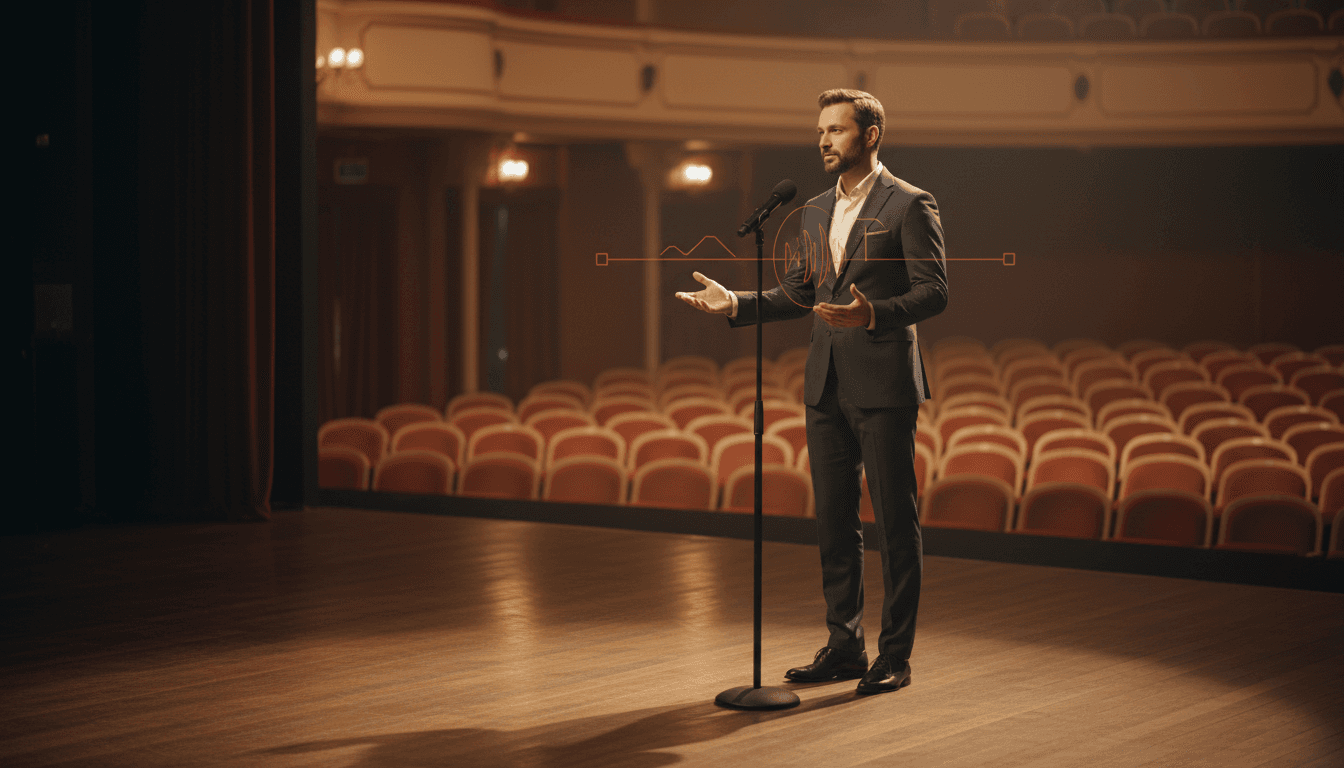
A strategic pause is a deliberate moment of silence inserted into your speech to create impact, improve comprehension, or project authority. Unlike awkward silence or losing your place, a strategic pause is intentional—you choose when to stop speaking, how long to hold the silence, and when to resume.
Think of it this way: punctuation gives writing its rhythm. Pausing gives speech its power. Without pauses, even brilliant ideas blur together into a wall of noise that audiences can't absorb.
According to research published in the Journal of Memory and Language, listeners need approximately 2 seconds of silence to fully process a new idea before they can engage with the next one (Ferreira & Bailey, 2004). When you pause, you're not wasting time—you're giving your audience the space they need to actually hear you.
The 5 Types of Pauses (And When to Use Each)
Not all pauses serve the same purpose. Master these five types and you'll have a complete toolkit for controlling the pace, energy, and authority of any presentation or conversation.
1. The Dramatic Pause
When to use it: Before revealing a key insight, surprising statistic, or pivotal moment. How long: 3–5 seconds. Why it works: The dramatic pause creates anticipation. Your audience leans in because silence signals that something important is coming. Example: Imagine you're presenting quarterly results to your leadership team. Instead of saying, "Revenue grew by 42% this quarter," try this: "Our revenue this quarter grew by..." [pause 3 seconds, make eye contact] "...forty-two percent." The silence before the number makes the number land harder.2. The Transitional Pause
When to use it: Between major sections, topics, or ideas. How long: 2–4 seconds. Why it works: It gives your audience a mental reset. Without transitional pauses, your presentation feels like one long, exhausting paragraph. Example: You've just finished explaining the problem your team faces. Before diving into your proposed solution, stop. Take a breath. Let the problem sit in the room. Then begin your next section. This signals to the audience: "We're moving to something new. Stay with me."3. The Emphasis Pause
When to use it: Immediately after your most important statement. How long: 2–3 seconds. Why it works: Silence after a key point acts like a verbal highlighter. It tells the audience, "What I just said matters. Let it sink in." Example: "The single biggest factor in client retention isn't our product. It's how we communicate during the first 30 days." [pause 3 seconds] That silence gives the room time to absorb your point—and signals that you believe in what you just said. If you want to learn more about how to present ideas clearly at work, emphasis pauses are essential.4. The Reflective Pause
When to use it: After asking a question—whether rhetorical or direct. How long: 3–5 seconds. Why it works: Most speakers ask a question and then immediately answer it themselves, which trains the audience to stop thinking. A reflective pause forces engagement. Example: "How many of you have sat through a presentation and couldn't remember a single point 10 minutes later?" [pause 4 seconds, scan the room] That silence makes the question real. People actually think about their answer. Now they're invested.5. The Authority Pause
When to use it: At the very beginning of your talk, after being introduced, or when you need to regain control of a room. How long: 3–5 seconds. Why it works: Starting with silence—rather than rushing into your first sentence—projects calm confidence. It signals, "I'm in control of this room, and I'll begin when I'm ready." Example: You walk to the front of the room. You set down your notes. You look at the audience. You say nothing for four seconds. Then you begin: "Let me tell you about the biggest mistake I made in my first year as a director." That opening silence commands attention more effectively than any loud greeting.A study by the Max Planck Institute for Psycholinguistics found that pauses of just 2–3 seconds in conversation are perceived as "noticeably long" and significantly increase listener attention (Heldner & Edlund, 2010). In public speaking contexts, this effect is even more pronounced—silence in a room full of people is magnetic.
Ready to Command Every Room You Walk Into? Strategic pausing is just one element of a credible, authoritative communication style. Discover The Credibility Code for the complete framework that helps professionals speak with confidence, presence, and influence.
How Long Should You Pause? A Practical Guide
One of the biggest questions professionals ask is: "How do I know if my pause is too short or too long?" Here's a simple framework.
The 2-3-5 Rule
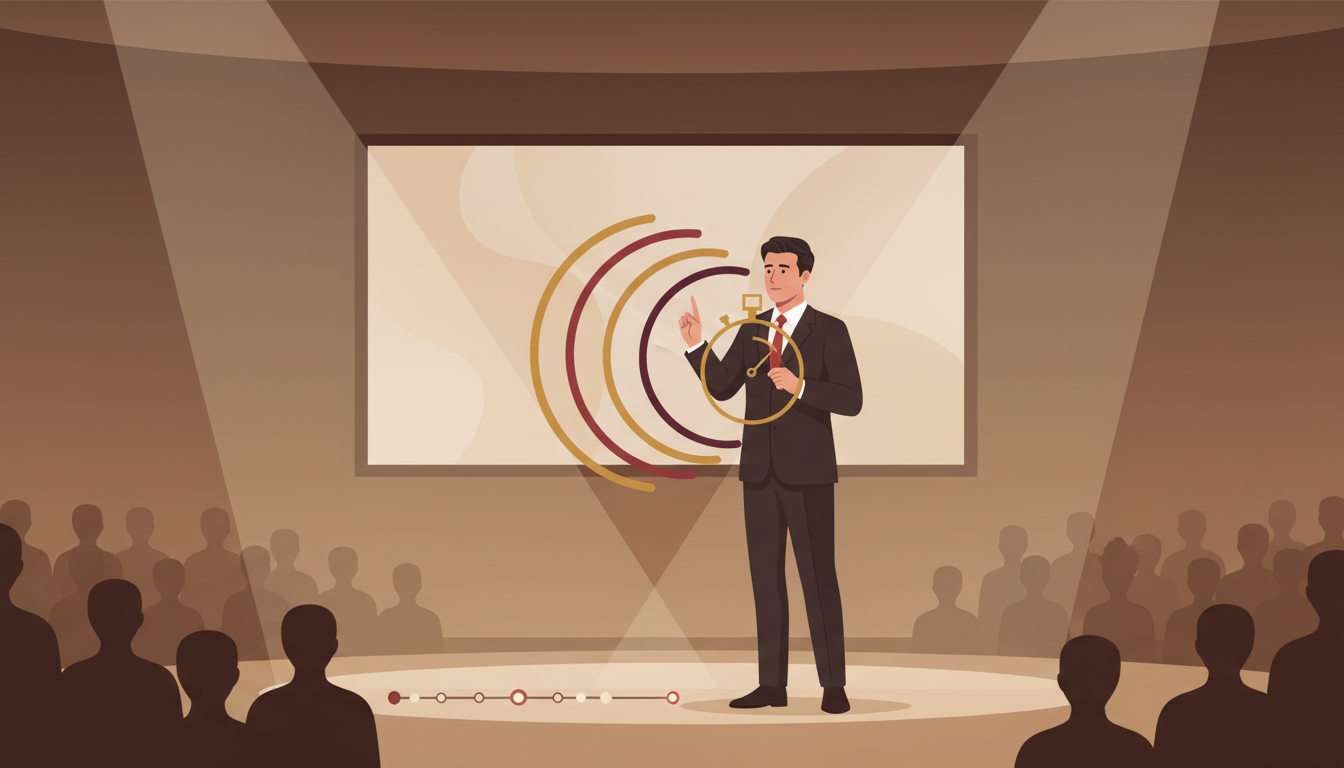
- 2 seconds: Minimum effective pause. Use for emphasis and minor transitions. This feels brief to you but noticeable to your audience.
- 3 seconds: The sweet spot for most pauses. Long enough to create impact, short enough to maintain momentum.
- 5 seconds: Maximum for most professional settings. Use sparingly—for dramatic reveals or authority moments. Five seconds of silence in front of a group feels like an eternity (in a good way).
Why Your Pauses Feel Longer Than They Are
Research from the University of Groningen shows that speakers consistently overestimate the length of their own silences by 50–150% (Bögels et al., 2020). What feels like five seconds to you is often only two seconds in reality. This is why most speakers don't pause long enough—their internal clock is unreliable.
Try this test: Record yourself giving a 2-minute summary of a recent project. Play it back. You'll almost certainly find that your "pauses" are barely one second long. This awareness alone will transform your delivery.Adjusting Pause Length by Context
| Context | Recommended Pause | Why |
|---|---|---|
| Team meeting update | 1–2 seconds | Keeps pace conversational |
| Executive presentation | 2–4 seconds | Signals authority and control |
| Keynote or all-hands | 3–5 seconds | Larger rooms need longer pauses |
| Q&A response | 2–3 seconds before answering | Shows thoughtfulness, avoids reactive answers |
| Difficult conversation | 2–4 seconds | Creates space for both parties |
For more on delivering in high-pressure settings, see our guide on how to speak with poise under pressure.
Common Mistakes That Ruin a Good Pause
Understanding the five pause types is only half the battle. You also need to avoid the habits that undermine their impact.
Filling the Pause with Filler Words
The number one pause killer is the filler word: "um," "uh," "so," "like," "you know." These aren't pauses—they're noise that signals uncertainty. According to a study published in Language and Speech, speakers who use frequent filler words are rated as significantly less credible and less competent by listeners (Brennan & Williams, 1995).
The fix? Replace every filler with silence. It's that simple—and that hard. Our guide on how to stop using filler words in professional speaking breaks this down step by step.
Breaking Eye Contact During the Pause
When you pause and look at the floor, the ceiling, or your notes, you signal discomfort. The pause loses its power. Instead, hold eye contact with one person (or a section of the room) during the silence. This transforms the pause from "I lost my place" to "I want you to absorb what I just said."
For a deeper dive into how your body supports your words, explore our guide on confident body language for public speaking.
Apologizing for the Silence
Never say, "Sorry, let me gather my thoughts" or "Bear with me for a moment." These phrases frame the pause as a mistake. Your audience didn't perceive the silence as a problem until you told them it was one. Own the silence. It belongs to you.
Pausing at Random Moments
A pause in the middle of a sentence—without rhetorical purpose—confuses your audience. Pauses work when they land at natural breakpoints: between ideas, after questions, before reveals. Random pauses just sound like you forgot what you were saying.
4 Exercises to Get Comfortable With Silence
For most professionals, the hardest part of pausing isn't knowing when—it's tolerating the discomfort of silence. These exercises will rewire your relationship with quiet.
Exercise 1: The Countdown Drill
Set a timer. Say one sentence out loud. Then count silently to three before saying the next sentence. Do this for five minutes daily. Within a week, a 3-second pause will feel natural instead of agonizing.
Exercise 2: The Recording Review
Record your next presentation rehearsal (even a voice memo works). Listen back and mark every place you used a filler word. Then re-record the same content, replacing each filler with a 2-second pause. Compare the two recordings. The difference in perceived confidence is striking.
Exercise 3: The Conversation Pause
In your next one-on-one meeting, practice pausing for 2 seconds before responding to any question. This trains you to be comfortable with silence in real-time, low-stakes settings. Bonus: people will perceive you as more thoughtful and senior. For more on how to sound more senior at work, this single habit makes a noticeable difference.
Exercise 4: The Power Open
Before your next presentation or meeting where you're leading the discussion, pause for 3–4 seconds before your first word. Don't say "Hi" or "Okay" to fill the space. Just stand (or sit), breathe, make eye contact, and begin when you're ready. This is the fastest way to build the muscle memory of authority. Our guide on how to start a presentation with confidence includes more openers that pair perfectly with the authority pause.
Build the Communication Habits That Earn Respect Pausing is one of the most powerful tools in your communication arsenal—but it works best as part of a complete credibility strategy. Discover The Credibility Code and learn the full system professionals use to speak with authority, lead with presence, and get taken seriously in every room.
Real-World Examples: Pausing in Professional Scenarios
Theory is useful. Seeing it applied is better. Here's how strategic pausing works in the scenarios you actually face at work.

Scenario 1: Presenting to Senior Leadership
You're presenting a budget proposal to the C-suite. After your opening slide, you say: "This proposal will save us $2.3 million annually." Then you pause for 3 seconds. You don't rush to the next slide. You let the number sit. The CFO looks up from their laptop. Now you have their attention.
Scenario 2: Answering a Tough Question in a Meeting
Your VP asks, "Why did the project miss its deadline?" Instead of immediately defending yourself, pause for 2–3 seconds. Take a breath. Then respond: "There were two factors. Let me walk you through both." That pause signals composure, not guilt. It tells the room you're thinking, not panicking. For more on handling pressure moments, see how to respond when put on the spot at work.
Scenario 3: Delivering Difficult News to Your Team
You need to announce a restructuring. You say: "I want to be transparent with you about a change that's coming." [pause 3 seconds] "Starting next month, our team structure will look different." The pause between those two sentences prepares the room emotionally. It signals gravity and respect. Without it, the news hits too fast and feels careless.
Frequently Asked Questions
How long should a pause be in public speaking?
Most effective pauses last 2–5 seconds. A 2-second pause works for emphasis and minor transitions. A 3-second pause is the sweet spot for most professional settings. Reserve 4–5 second pauses for dramatic reveals or authority moments. Research shows speakers consistently underestimate their pause length, so practice with a timer until you calibrate your internal clock.
How do I pause without it feeling awkward?
Maintain eye contact, keep your posture open, and breathe naturally during the pause. Awkwardness comes from breaking eye contact, fidgeting, or apologizing for the silence. When you hold steady and look confident, your audience reads the pause as intentional authority—not uncertainty. The more you practice, the more natural it becomes.
Pausing vs. using filler words: which is better?
Pausing is always better than using filler words. Filler words like "um," "uh," and "so" signal uncertainty and reduce perceived credibility. A clean pause signals confidence, gives your audience time to process, and makes you sound more senior. Studies show listeners rate speakers who pause (without fillers) as more competent and trustworthy.
Can you pause too much in a speech?
Yes. Over-pausing slows your momentum and can make your delivery feel stilted or overly theatrical. Aim for 3–5 strategic pauses per minute of speaking, placed at natural breakpoints. If every sentence is followed by a long pause, the technique loses its impact. Use pauses like seasoning—enough to enhance, not so much that it overwhelms.
How do I practice pausing for public speaking?
Start with the Countdown Drill: say one sentence, silently count to three, then say the next sentence. Record yourself and listen back. Practice pausing for 2 seconds before answering questions in meetings. Before presentations, rehearse your opening with a 3–4 second authority pause. Daily practice for two weeks is usually enough to make pausing feel natural.
Does pausing help with nervousness in public speaking?
Absolutely. Pausing gives you time to breathe, which activates your parasympathetic nervous system and reduces anxiety. It also slows your pace, which prevents the rapid-fire delivery that nervous speakers default to. Many speaking coaches recommend strategic pausing as the single most effective technique for managing presentation anxiety.
Your Voice Deserves to Be Heard—And Remembered. Strategic pausing is the mark of a speaker who commands respect. If you're ready to build the full set of communication skills that make professionals credible, authoritative, and impossible to overlook, Discover The Credibility Code. It's the complete playbook for speaking with confidence in every professional setting.
Ready to Command Authority in Every Conversation?
Transform your professional communication with proven techniques that build instant credibility. The Credibility Code gives you the frameworks top leaders use to project confidence and authority.
Discover The Credibility CodeRelated Articles

How to Sound Confident in a Presentation (Even When Nervous)
To sound confident in a presentation when nervous, focus on three controllable elements: slow your speaking pace by 20%, drop your vocal pitch at the end of sentences, and use deliberate pauses instead of filler words. Nervousness is invisible to your audience when you manage your voice, body, and breathing. The techniques below give you a tactical system to project authority — even when your heart is pounding and your hands are shaking.

How to Stop Rushing When Presenting: 6 Pro Fixes
You rush through presentations because your nervous system interprets public speaking as a threat, triggering a fight-or-flight response that accelerates your heart rate, breathing, and speech. To stop rushing when presenting, use these six proven fixes: breath anchoring before and during your talk, strategic pausing at key transitions, chunking your content into digestible segments, audience-focused eye contact to regulate pace, mental rehearsal at half-speed, and physical grounding techniques.

Handle Public Speaking Mistakes Gracefully: Pro Recovery
To handle public speaking mistakes gracefully, pause instead of panicking, acknowledge the error briefly without over-apologizing, then redirect your audience's attention forward. The key insight most speakers miss: audiences judge you far more on your *recovery* than on the mistake itself. A composed, even slightly humorous recovery can actually boost your credibility—because it signals confidence, self-awareness, and the kind of poise that audiences instinctively trust. Below, you'll find exac