
How to Start a Speech Without Being Nervous: 6 Methods
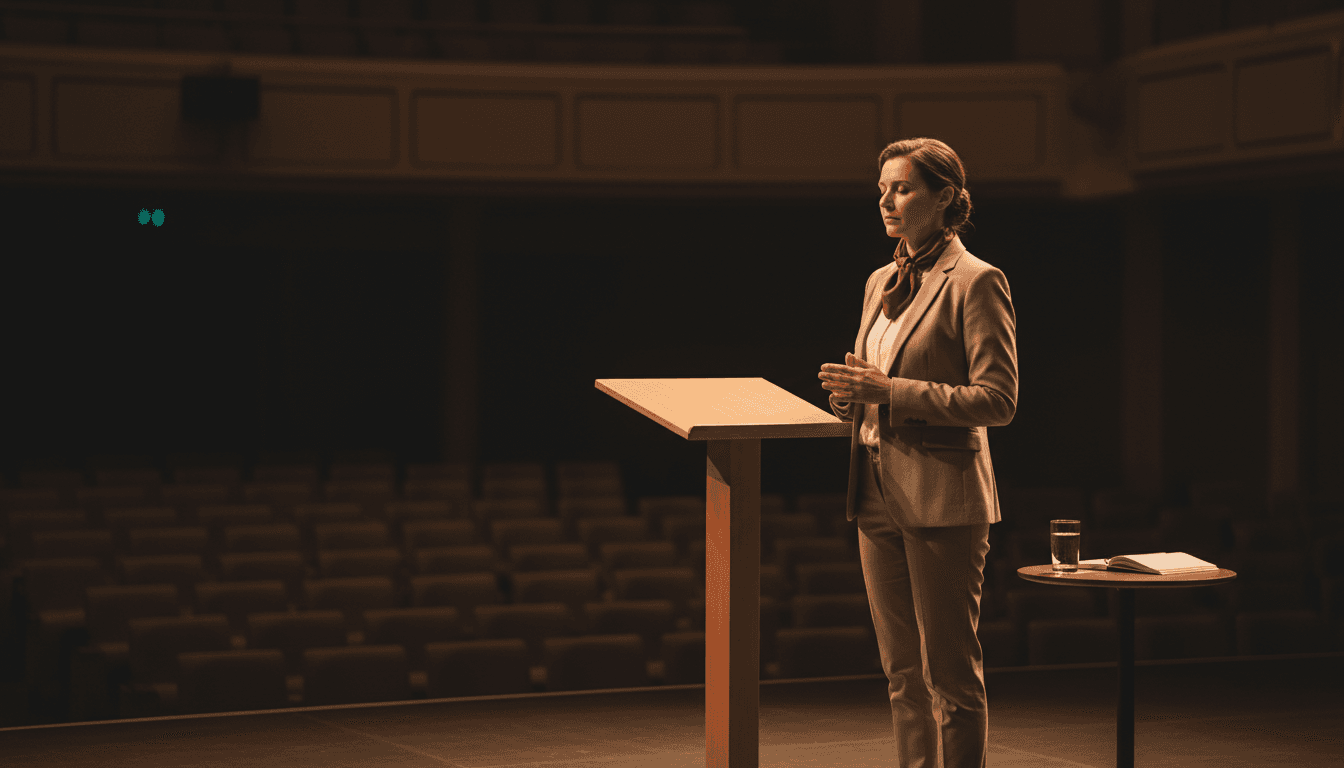
The first 60 seconds of a speech determine whether your audience leans in or tunes out—and it's exactly when anxiety hits hardest. To start a speech without being nervous, use a combination of physiological resets (like controlled breathing and power posing), mental reframing techniques, and rehearsed power openers that give your brain a confident script to follow. These methods neutralize the fight-or-flight response before you reach the podium, so you open with authority instead of apology.
What Is Speech-Opening Anxiety?
Speech-opening anxiety is the acute spike of nervousness that occurs in the moments just before and during the first 30–60 seconds of a presentation or speech. It's distinct from general public speaking fear because it's concentrated in a narrow window—the transition from silence to speaking—when your body's stress response is at its peak and you have no momentum yet.
Unlike ongoing presentation jitters, speech-opening anxiety often manifests as a racing heart, shaky voice, blanking on your first line, or rushing through your opening remarks. According to the National Institute of Mental Health, approximately 73% of the population experiences some degree of glossophobia (fear of public speaking), and the opening moments are consistently reported as the most anxiety-inducing phase.
Method 1: The Physiological Reset (Calm Your Body First)
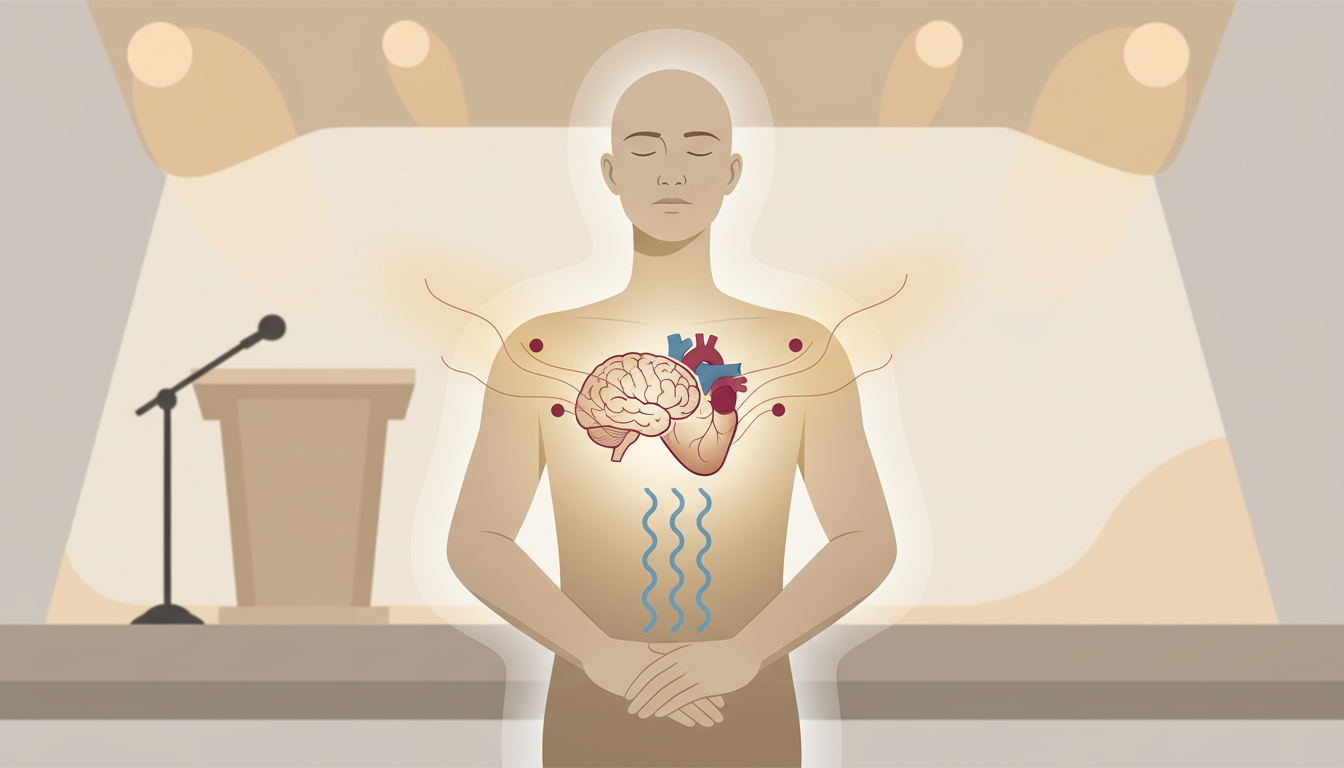
Your nervous system doesn't distinguish between a keynote speech and a genuine threat. The sweaty palms, shallow breathing, and racing heart you feel before speaking are your sympathetic nervous system doing exactly what it was designed to do. The key is to interrupt that response before you open your mouth.
Box Breathing: The 90-Second Nervous System Override
Box breathing is a technique used by Navy SEALs and first responders to regulate the autonomic nervous system under extreme stress. Here's how to use it in the five minutes before your speech:
- Inhale through your nose for 4 seconds.
- Hold your breath for 4 seconds.
- Exhale slowly through your mouth for 4 seconds.
- Hold at the bottom of the exhale for 4 seconds.
- Repeat for 4–6 cycles.
A 2023 study published in Cell Reports Medicine by Stanford neuroscientist Dr. Andrew Huberman found that cyclic physiological sighing (a variation of structured breathing) reduced self-reported anxiety more effectively than mindfulness meditation after just five minutes. This isn't a nice-to-have—it's a physiological override that lowers cortisol and slows your heart rate in real time.
The Power Pose Reset
Before you walk to the front of the room, spend two minutes in a high-power pose—feet shoulder-width apart, hands on hips or arms extended overhead. Harvard Business School researcher Amy Cuddy's foundational research showed that high-power posing for two minutes increased testosterone by 20% and decreased cortisol by 25% in participants.
Even if you're skeptical of the hormonal claims, the behavioral effect is well-documented: people who pose expansively before high-stakes situations report feeling significantly more confident. Do this in a hallway, a restroom, or behind a stage curtain. For a deeper dive into how body language shapes perception, read our guide on how to look confident with body language.
The Physical Tension Release
Anxiety lives in your muscles. Thirty seconds before you speak, try this sequence:
- Clench both fists as tightly as possible for 5 seconds, then release.
- Shrug your shoulders up to your ears, hold for 5 seconds, then drop them.
- Press your tongue to the roof of your mouth for 3 seconds, then relax your jaw.
This progressive muscle relaxation technique tricks your nervous system into a parasympathetic (calm) state. It's invisible to anyone watching and takes under 30 seconds.
Method 2: The Mental Reframe (Change What Nervousness Means)
Most people try to eliminate nervousness. Professional speakers do something different: they reinterpret it. The physical sensations of anxiety and excitement are nearly identical—elevated heart rate, adrenaline surge, heightened alertness. The difference is the label your brain assigns.
Anxiety Reappraisal: "I'm Excited"
Research by Alison Wood Brooks at Harvard Business School found that people who said "I am excited" before a stressful performance task performed significantly better than those who tried to calm down. The study, published in the Journal of Experimental Psychology, showed that reappraising anxiety as excitement improved singing performance, public speaking scores, and math test results.
Here's how to apply it: In the 60 seconds before you speak, say to yourself (or even out loud), "I'm excited about this." Don't fight the adrenaline. Redirect it. Your body is giving you energy—use it as fuel, not friction.
The "First 30 Seconds" Visualization
Elite athletes don't just visualize winning—they visualize the process. Apply the same principle to your speech opening:
- Close your eyes for 30 seconds before your turn.
- See yourself walking to the front of the room with deliberate, unhurried steps.
- Hear yourself delivering your first sentence in a steady, measured tone.
- Feel the podium or table under your hands.
This isn't wishful thinking. A meta-analysis published in Psychological Bulletin found that mental imagery practice improved performance outcomes across 116 studies. When your brain has already "done" the opening once, the real thing feels like a replay rather than a first attempt.
Ready to Speak With Unshakeable Authority? The techniques in this article are just the beginning. The Credibility Code gives you a complete system for commanding any room—from boardrooms to keynote stages. Discover The Credibility Code
Method 3: The Rehearsed Power Opener (Script Your First Line)
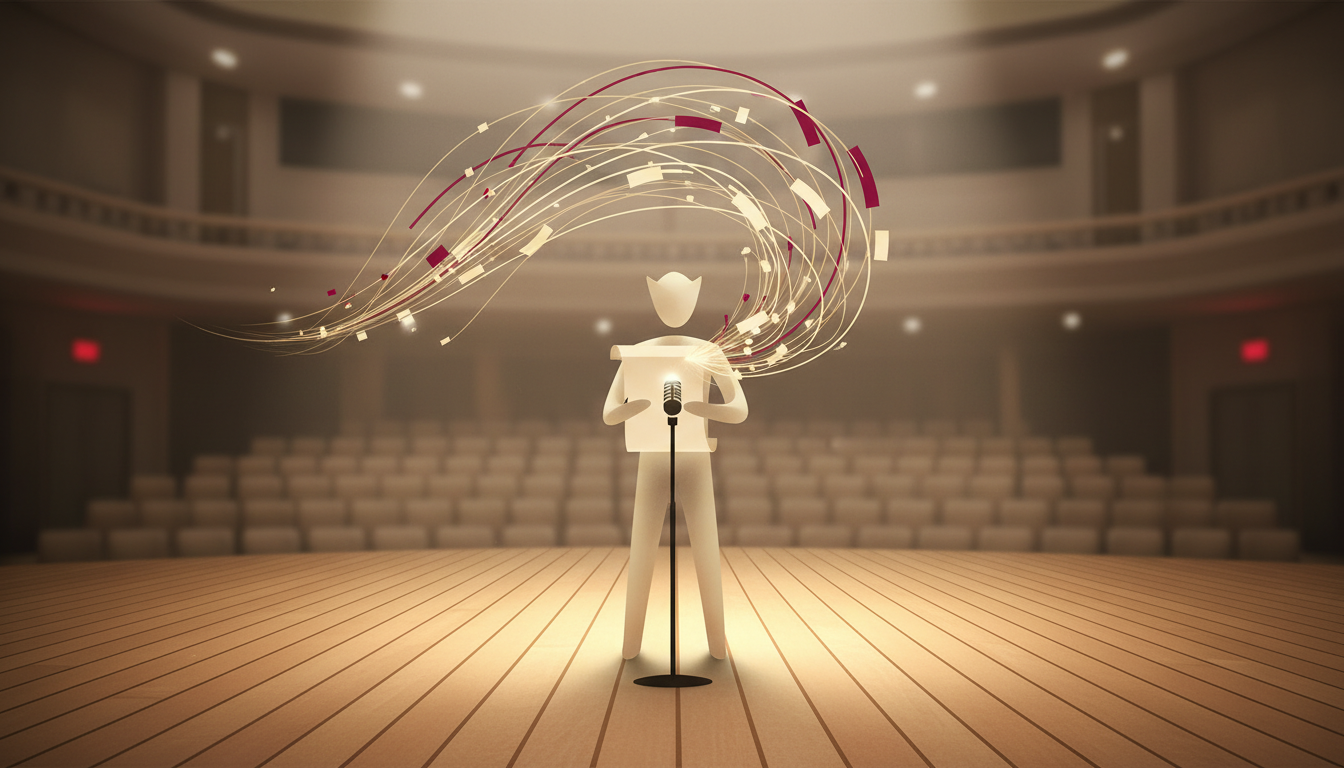
The single most effective way to neutralize opening anxiety is to memorize your first sentence word for word. Not your whole speech—just the first line. When you know exactly what you're going to say, your brain doesn't have to search for words during the moment of peak stress.
Five Proven Opening Formulas
Professional speakers rarely improvise their openings. Here are five frameworks that work in any professional context:
- The Bold Statement: "Eighty percent of what you learned about leadership in business school is wrong." (Provokes curiosity, establishes authority.)
- The Question: "When was the last time you left a meeting and thought, 'That was worth every minute'?" (Engages the audience immediately.)
- The Story Drop: "Three years ago, I stood in front of a room like this one and completely froze." (Vulnerability creates instant connection.)
- The Data Hook: "Companies that communicate effectively are 3.5 times more likely to outperform their peers. Let me show you why." (Credibility through evidence.)
- The Pause-and-Scan: Say nothing for 3–5 seconds. Make eye contact with three people. Then begin. (Silence signals control.)
For a deeper exploration of confident openings, see our full guide on how to start a presentation with confidence.
Why Memorizing One Sentence Changes Everything
When you have your first sentence locked in, you eliminate the "blank page" moment that triggers panic. Your brain has a clear instruction: say this. Once you've delivered that first line, momentum takes over. Most speakers report that their anxiety drops by 50% or more after their first 15 seconds of speaking.
Think of it like a pilot's pre-flight checklist. The checklist doesn't fly the plane—but it gets you through the most error-prone phase of the flight.
Method 4: The Pre-Speech Routine (Build a Ritual)
Consistency reduces anxiety. When you follow the same routine before every speech, your brain begins to associate that sequence with "I've done this before and it went fine." Over time, the routine itself becomes a calming trigger.
Build Your 10-Minute Pre-Speech Protocol
Here's a sample protocol used by professional speakers and executives:
| Time Before Speech | Action |
|---|---|
| T-10 minutes | Review your opening sentence and closing sentence only |
| T-7 minutes | Box breathing (4 cycles) |
| T-5 minutes | Power pose (2 minutes) |
| T-3 minutes | Physical tension release sequence |
| T-1 minute | Anxiety reappraisal: "I'm excited about this" |
| T-0 | Walk to the front. Pause. Deliver your memorized first line. |
The specific actions matter less than the consistency. Your brain craves predictability under stress. Give it a pattern to follow. For a comprehensive look at managing pre-presentation nerves, explore our article on how to calm nerves before a presentation.
Anchor Your Routine to a Physical Object
Some speakers use a physical anchor—a specific pen they hold, a watch they touch, or a particular spot they stand on before beginning. This is a form of classical conditioning. Over time, the object or action becomes associated with the calm, focused state you've built through your routine.
This isn't superstition. It's applied behavioral psychology, and it's why athletes have pre-game rituals that look identical every single time.
Method 5: Vocal Warm-Up and Pacing Control
A shaky voice is often the first visible sign of nervousness—and it creates a feedback loop. You hear your voice waver, which makes you more nervous, which makes your voice waver more. Breaking this cycle requires vocal preparation and deliberate pacing.
The 3-Minute Vocal Warm-Up
Before any speech, warm up your voice the way a singer warms up before a performance:
- Hum at a comfortable pitch for 30 seconds, feeling the vibration in your chest and face.
- Say "mmmm-AHHH" five times, starting low and sliding up in pitch.
- Read your opening sentence aloud three times, each time slightly slower and lower in pitch.
According to research from the Royal Academy of Music, vocal warm-ups reduce perceived vocal strain by up to 40% and improve tonal quality—both of which signal confidence to your audience.
The Deliberate Slow-Down
Nervous speakers rush. It's one of the most universal tells. Counter this by applying the "Half-Speed Rule" for your first three sentences: speak at roughly half the speed you think is appropriate. What feels painfully slow to you will sound measured and authoritative to your audience.
Pair this with intentional pauses. A 2–3 second pause after your opening statement communicates control and gives your audience time to absorb your words. For more on this technique, read our guide on how to pause effectively in public speaking.
If you want to develop a voice that commands attention beyond just your opening, our article on how to control your voice when nervous presenting covers the full vocal toolkit.
Method 6: Environmental Control and Audience Connection
Much of speech anxiety comes from the unknown—unfamiliar rooms, unfamiliar faces, unfamiliar technology. Eliminating as many unknowns as possible before you speak dramatically reduces your stress response.
Arrive Early and Own the Space
Get to the room 15–30 minutes before your audience. Walk the space. Stand where you'll be speaking. Test any technology. Adjust the lighting if you can. This transforms an unfamiliar environment into your space.
A 2019 study in the Journal of Environmental Psychology found that environmental familiarity significantly reduced physiological stress markers in participants facing performance tasks. Simply being in the room beforehand changes your relationship to it.
The Three-Person Anchor Technique
Before you begin, identify three friendly faces in the audience—one on the left, one in the center, one on the right. During your opening, make eye contact with these three people in sequence. This does two things:
- It turns a faceless crowd into three individual conversations.
- It slows you down naturally, because you're connecting rather than performing.
Professional speakers call these "anchor points." They transform a monologue into a series of micro-connections, which is far less intimidating than addressing a wall of strangers. For more strategies on commanding a room, check out our guide on how to speak with confidence in meetings.
Turn Every Speaking Moment Into a Career Advantage. The Credibility Code gives you the frameworks, scripts, and confidence systems that top professionals use to own every room they walk into. Discover The Credibility Code
Putting It All Together: Your First 60 Seconds, Step by Step
Here's what a confident speech opening looks like when you combine all six methods:
10 minutes before: You review your memorized opening line. You do four cycles of box breathing. You hold a power pose for two minutes. You do your tension release sequence. You say, "I'm excited about this." 1 minute before: You hum quietly to warm your voice. You identify your three anchor faces. The moment arrives: You walk to the front with unhurried steps. You pause for 3 seconds. You make eye contact with your first anchor person. You deliver your rehearsed opening line at half speed, in a low, steady voice.By the time you finish your first sentence, your anxiety has already begun to dissipate. Momentum carries you forward. The hardest part is over.
Frequently Asked Questions
How long does speech anxiety typically last?
For most speakers, the acute anxiety spike lasts 30–90 seconds after you begin speaking. Research from the University of Wolverhampton found that self-reported anxiety levels drop by approximately 50% within the first minute of a speech. This is why having a strong, rehearsed opening is so critical—you only need to manage the anxiety for a very short window before your body's stress response naturally subsides.
Is it better to memorize your entire speech or just the opening?
Memorize only your first 1–2 sentences and your closing line. Memorizing an entire speech increases anxiety because any deviation from the script feels like a failure. A memorized opening gives you a confident launch point, while the rest of your speech can follow a structured outline. This approach gives you both security and flexibility.
Speech anxiety vs. general anxiety: what's the difference?
Speech anxiety (glossophobia) is a situational response triggered specifically by the act of speaking before an audience. General anxiety disorder is a persistent condition affecting daily life across many contexts. Speech anxiety typically resolves once the speaking event ends, while general anxiety does not. If your anxiety extends well beyond speaking situations, consider consulting a mental health professional alongside using these techniques.
Can introverts become confident public speakers?
Absolutely. Introversion is about energy preference, not ability. Many of the world's most compelling speakers—including Susan Cain, Bill Gates, and Warren Buffett—identify as introverts. Introverts often excel at preparation and deep thinking, which are enormous advantages in public speaking. The methods in this article are especially effective for introverts because they rely on preparation and routine rather than spontaneous extroversion. For more, see our guide on how to build leadership presence as an introvert.
What should I do if I blank out during my speech opening?
Pause. Take a breath. Look at your notes. This sequence feels like an eternity to you but reads as a deliberate, composed pause to your audience. Having your first sentence memorized makes blanking far less likely, but if it happens, silence is always better than filler words or apologies. The audience doesn't know your script—they only know what you show them.
Do beta-blockers or anti-anxiety medications help with speech anxiety?
Some professionals use beta-blockers (like propranolol) to manage the physical symptoms of performance anxiety, such as rapid heartbeat and trembling hands. These require a prescription and medical guidance. The behavioral techniques in this article address the same symptoms without medication and build long-term resilience. Many speakers find that consistent use of pre-speech routines eventually eliminates the need for pharmaceutical support entirely.
Your Credibility Starts the Moment You Open Your Mouth. The Credibility Code is a complete system for professionals who want to communicate with authority, presence, and unshakeable confidence—whether you're giving a keynote, leading a meeting, or navigating a tough conversation. Discover The Credibility Code
Ready to Command Authority in Every Conversation?
Transform your professional communication with proven techniques that build instant credibility. The Credibility Code gives you the frameworks top leaders use to project confidence and authority.
Discover The Credibility CodeRelated Articles

How to Open a Speech Memorably: 11 Proven Openers
To open a speech memorably, lead with a technique that disrupts your audience's autopilot within the first 30 seconds. The most effective openers include a bold, surprising statement, a vivid story, a provocative question, a striking statistic, or a powerful quote. Top executives and thought leaders rarely start with "Thank you for having me" — they start with a moment that commands attention, earns trust, and sets the emotional trajectory for everything that follows. The 11 techniques below giv
Handle Public Speaking Mistakes Gracefully: Pro Recovery
To handle public speaking mistakes gracefully, pause instead of panicking, acknowledge the error briefly without over-apologizing, then redirect your audience's attention forward. The key insight most speakers miss: audiences judge you far more on your *recovery* than on the mistake itself. A composed, even slightly humorous recovery can actually boost your credibility—because it signals confidence, self-awareness, and the kind of poise that audiences instinctively trust. Below, you'll find exac

How to Speak Confidently in Front of Executives
Speaking confidently in front of executives requires a shift in how you prepare, structure, and deliver your message. Lead with the conclusion first, keep your points concise and data-driven, and project calm authority through steady pacing and deliberate pauses. Manage nerves by reframing the conversation as a strategic exchange — not a performance. Executives respect clarity, brevity, and conviction far more than polish or perfection.