
How to Sound Confident in a Presentation: 9 Vocal Shifts
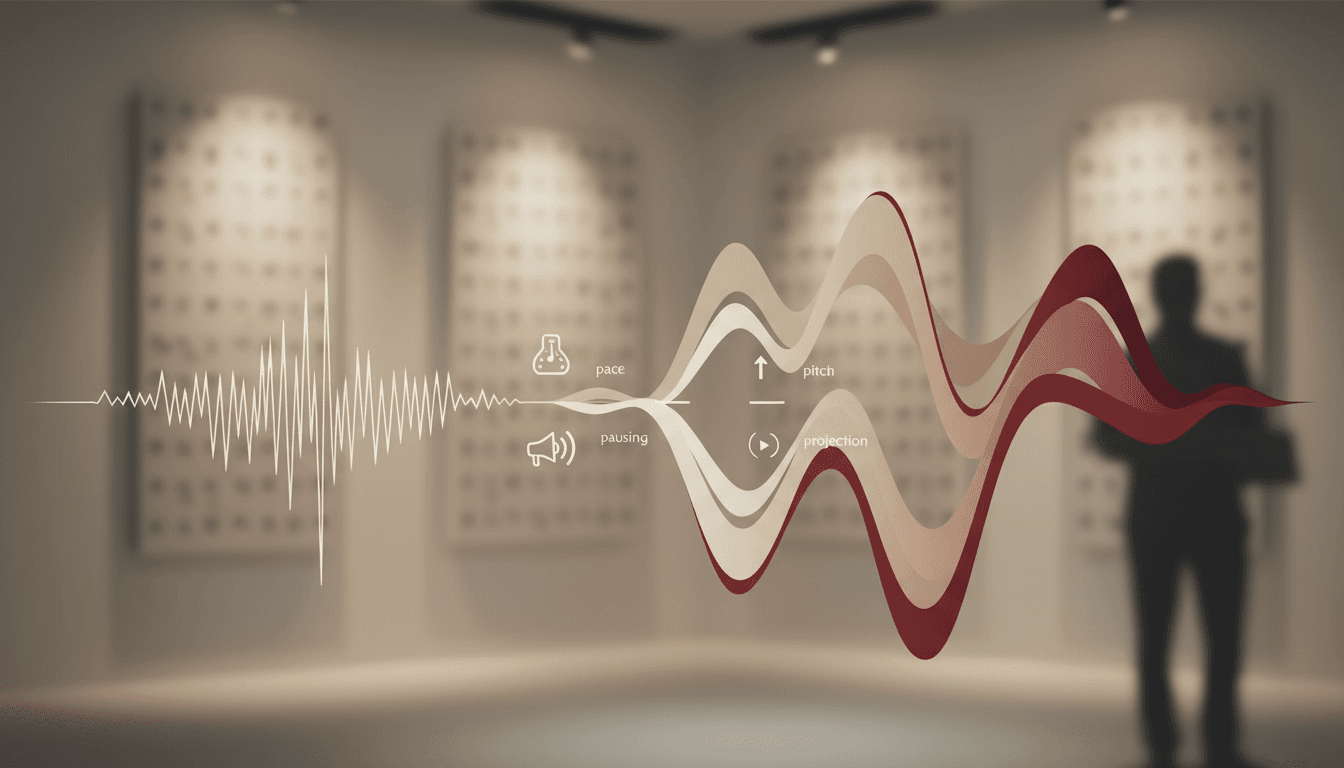
To sound confident in a presentation, focus on nine specific vocal shifts: lower your pitch at the end of sentences, slow your pace by 20%, use strategic pauses of 2–3 seconds, project from your diaphragm, eliminate filler words, vary your vocal range, articulate consonants crisply, front-load key words with emphasis, and match your volume to the room. These changes are learnable and produce immediate results—even when you're nervous inside.
What Does It Mean to "Sound Confident" in a Presentation?
Sounding confident in a presentation means your voice communicates authority, clarity, and composure—independent of how you actually feel. It's the vocal equivalent of a firm handshake: listeners trust you before they've even processed your words.
Vocal confidence isn't about being loud or aggressive. It's about deliberate control over pace, pitch, projection, and pausing so your voice signals credibility. Research from the University of Wolverhampton found that vocal qualities account for up to 38% of a speaker's perceived credibility—more than the actual words used (Mehrabian & Ferris, 1967, replication studies). When your voice sounds certain, your audience treats your ideas as certain.
This matters because most professionals don't lack knowledge—they lack the vocal delivery to match their expertise. The gap between what you know and how you sound is exactly where credibility leaks. These nine vocal shifts close that gap.
Why Your Voice Undermines You (Even When Your Content Is Strong)
The "Competence-Confidence Gap"
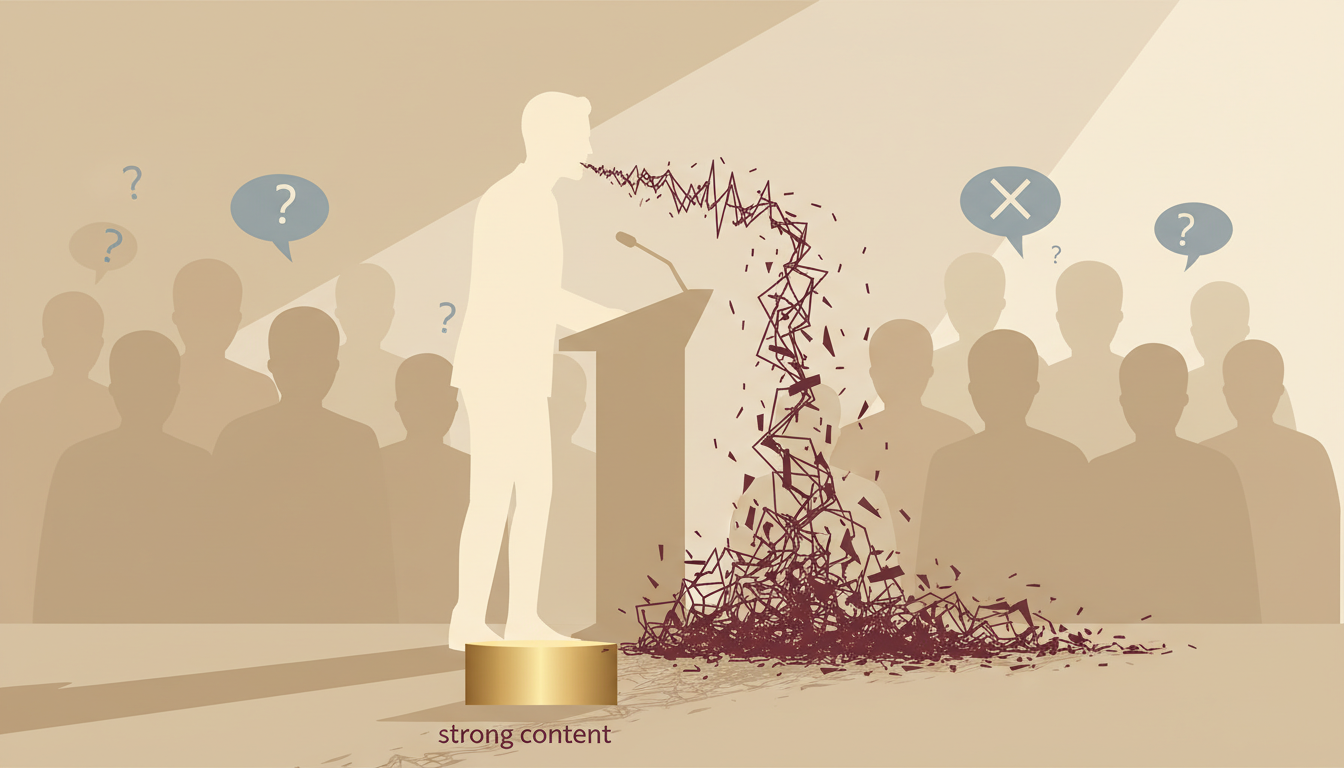
You've spent weeks preparing a quarterly review. Your data is airtight. Your recommendations are sound. But when you stand up to present, your voice rises at the end of statements, you rush through key points, and you fill every pause with "um." Your director nods politely—then asks your colleague to elaborate on the same point, and suddenly that person gets the credit.
This is the competence-confidence gap, and it's devastatingly common. A 2019 study published in the Journal of Experimental Social Psychology found that speakers who used a confident vocal tone were rated 20% more persuasive than those delivering identical content with uncertain vocal patterns (Van Zant & Berger, 2019).
How Audiences Actually Judge You
Audiences form judgments about your credibility within the first 30 seconds of hearing you speak. According to research from Princeton University, people assess trustworthiness from voice alone in as little as 500 milliseconds (Todorov et al., 2005). That means your opening sentence—not your third slide—determines whether the room leans in or checks out.
The vocal patterns that trigger "not confident" in listeners' brains include upspeak (rising intonation on statements), rapid pace, thin or breathy tone, excessive hedging language, and long stretches without pauses. The good news: every one of these patterns is a habit, and habits can be replaced. If you want a deeper dive into managing the anxiety that drives these habits, explore our guide on how to calm nerves before a presentation.
The 9 Vocal Shifts That Make You Sound Immediately More Confident
Shift 1: Drop Your Pitch at the End of Sentences
This is the single most impactful change you can make. When your pitch rises at the end of a declarative statement, it sounds like a question—and questions signal uncertainty.
Before: "We should move forward with this strategy?" (rising pitch) After: "We should move forward with this strategy." (falling pitch)Practice drill: Record yourself reading five sentences from your next presentation. On playback, mark every sentence where your pitch rises. Then re-record, deliberately dropping your pitch on the final two words of each sentence. Exaggerate the drop at first—it'll feel unnatural, but listeners will hear it as authoritative.
Shift 2: Slow Your Pace by 20%
Nervous presenters speak an average of 170–190 words per minute. Confident speakers hover around 130–150 words per minute, according to research from the National Center for Voice and Speech. The slower pace signals that you believe your words are worth hearing—and gives your audience time to absorb them.
Before: Rushing through a key recommendation in 15 seconds. After: Delivering the same recommendation in 20 seconds, with deliberate pacing on the most important phrases.Try this: Take one paragraph from your presentation. Time yourself reading it at your natural speed. Then re-read it, aiming for 20% longer. You'll notice you automatically sound more composed.
Shift 3: Use Strategic Pauses of 2–3 Seconds
The pause is the most underused tool in professional speaking. Most presenters fear silence, so they fill it with "um," "so," "you know," or rambling transitions. But a deliberate pause before or after a key point creates emphasis, signals confidence, and gives your audience a moment to process.
Before: "So basically um the data shows that we need to um pivot our approach going forward." After: "The data shows one thing clearly. [2-second pause] We need to pivot our approach."For a comprehensive breakdown of pause techniques, see our guide on how to pause effectively in public speaking. Strategic silence is one of the most powerful tools in your vocal toolkit.
Ready to Build Unshakable Presentation Confidence? These vocal shifts are just the beginning. The Credibility Code gives you the complete system for commanding any room—from boardroom updates to keynote stages. Discover The Credibility Code
Shift 4: Project From Your Diaphragm, Not Your Throat
Thin, breathy, or strained voices signal nervousness. A voice grounded in diaphragmatic support sounds full, resonant, and effortless—even at higher volumes.
How to find your diaphragmatic voice: Place one hand on your chest and one on your stomach. Take a deep breath. If your chest rises, you're breathing shallowly. Practice breathing so only your stomach hand moves. Now speak on that exhale. You'll feel the difference immediately—your voice will carry without strain.Practice this for five minutes daily in the week before a presentation. Speak your opening lines while maintaining diaphragmatic support. This single shift can transform a voice that sounds tentative into one that fills a conference room. For more on developing vocal power, check out how to develop a commanding voice at work.
Shift 5: Eliminate Filler Words Ruthlessly
"Um," "uh," "like," "you know," "basically," and "so" are credibility killers. A 2015 study from the University of Texas found that speakers who used fewer filler words were rated significantly higher on competence and professionalism (Brennan & Schober, 2015). One or two fillers per minute is normal. Ten or more per minute makes you sound unprepared.
The replacement technique: Every time you feel the urge to say "um," say nothing instead. Let the silence sit. This feels excruciating at first—but to your audience, that silence sounds like confidence.Practice drill: Record a 2-minute segment of your presentation. Count every filler. Then re-record with the goal of cutting fillers by half. Repeat until silence replaces every "um." Our article on how to stop using filler words in professional speaking walks through a full 30-day elimination plan.
Shift 6: Vary Your Vocal Range
Monotone delivery is the enemy of engagement. When every sentence sounds the same—same pitch, same pace, same volume—audiences tune out within minutes. Confident speakers use vocal variety to signal what matters.
The 3-level technique:- Level 1 (low, slow): For your most important conclusions. "This is the decision we need to make."
- Level 2 (conversational): For context and supporting points. Your default register.
- Level 3 (higher energy, slightly faster): For stories, examples, and moments of enthusiasm.
Map your next presentation and mark which sections get Level 1, 2, or 3 delivery. This intentional variation keeps audiences engaged and signals that you're in command of the material.
Advanced Vocal Shifts for High-Stakes Presentations
Shift 7: Articulate Consonants Crisply

Mumbled words signal low confidence. When you articulate consonants—especially at the ends of words—your speech sounds precise and deliberate. Compare "gonna talk about the projec'" with "going to talk about the project." The second version sounds like someone who expects to be taken seriously.
Focus especially on final consonants: the "t" in "project," the "d" in "recommend," the "k" in "risk." Over-articulate in practice so that normal delivery comes out crisp.
Shift 8: Front-Load Emphasis on Key Words
Confident speakers stress the words that carry meaning, not function words. This creates a rhythm that signals authority and makes your points more memorable.
Before: "We NEED to THINK about HOW we're GOING to HANDLE this." (emphasis scattered) After: "We need to think about how we're going to HANDLE this CHALLENGE." (emphasis on meaning-carrying words)Practice by underlining the two or three most important words in each sentence of your presentation, then deliberately giving those words more weight, volume, and duration.
Shift 9: Match Your Volume to the Room
Speaking too softly forces your audience to work to hear you—and subconsciously, they resent it. Speaking too loudly feels aggressive. Confident presenters calibrate their volume to fill the space without overwhelming it.
The calibration technique: Before your presentation, stand at the front of the room and speak a sentence at your normal volume. Ask someone at the back if they can hear you clearly. Adjust until you're at "comfortable hearing" level for the farthest listener, then add 10% more volume. That's your presentation baseline.According to a study in Speech Communication journal, speakers who matched their volume appropriately to the room were rated 15% higher on perceived confidence than those who spoke too quietly (Niebuhr et al., 2016).
How to Practice These Vocal Shifts Before Your Next Presentation
The 5-Day Vocal Confidence Drill
Day 1 – Record and Diagnose: Record yourself delivering a 3-minute segment of your presentation. Listen for: upspeak, filler words, pace, monotone, and thin projection. Score yourself on each of the 9 shifts. Day 2 – Pitch and Pace: Re-record the same segment, focusing only on dropping pitch at sentence endings and slowing pace by 20%. Compare to Day 1. Day 3 – Pauses and Fillers: Re-record, this time inserting a 2-second pause before every key point and replacing every filler with silence. Day 4 – Projection and Articulation: Practice with diaphragmatic breathing. Over-articulate consonants. Record and compare. Day 5 – Full Integration: Deliver the segment incorporating all 9 shifts. Record. Compare to Day 1. You'll be stunned by the difference.This 5-day drill takes 15–20 minutes per day and produces measurable improvement. For a broader framework on building your presentation presence, see our guide on how to start a presentation with confidence.
The "Power Sentence" Warm-Up
Before any presentation, speak these three sentences aloud using all 9 shifts:
- "I'm here to share something important." (Slow, low pitch, diaphragmatic projection)
- "The evidence is clear." [2-second pause] (Crisp articulation, emphasis on "clear")
- "Here's what I recommend." (Falling pitch, confident volume, no fillers)
This 30-second warm-up primes your vocal muscles and your mindset. It's the vocal equivalent of a power pose—and it works.
Go Beyond Vocal Shifts—Build Complete Presentation Authority. The Credibility Code gives you the frameworks, scripts, and practice systems to sound confident in every professional scenario, not just presentations. Discover The Credibility Code
Common Vocal Mistakes That Destroy Presentation Credibility
The "Apology Opening"
Starting with "Sorry, I know this is a lot of information" or "I'm not really an expert on this, but..." tells your audience to discount everything that follows. Replace apology openings with authority openings: "I'm going to walk you through three findings that will change how we approach this project."
The Speed Spiral
When nervousness hits, pace accelerates. As pace accelerates, breathing gets shallow. As breathing gets shallow, your voice gets thinner. As your voice gets thinner, you sound less confident—which makes you more nervous. This is the speed spiral, and the only way to break it is to consciously slow down at the first sign of rushing. Anchor yourself with a pause, take a diaphragmatic breath, and resume at your practiced pace.
The Volume Fade
Many presenters start strong and gradually lose volume as they move through their material—especially during data-heavy sections or when they sense the audience losing interest. This volume fade signals that even you don't think the content is worth hearing. Maintain consistent volume throughout, and actually increase volume slightly for your conclusions and recommendations. If you want a full system for maintaining composure under pressure, explore how to speak with poise under pressure.
Frequently Asked Questions
How long does it take to sound more confident in presentations?
Most professionals notice a significant difference within 5–7 days of focused practice using vocal drills. The 9 shifts described above target specific, mechanical habits—not deep personality changes. Record yourself on Day 1 and Day 5, and you'll hear measurable improvement. Full mastery, where confident delivery becomes automatic even under pressure, typically takes 4–8 weeks of regular practice.
Can you sound confident in a presentation even if you're nervous?
Absolutely. Confidence is a vocal performance, not an emotional state. Your audience can't feel your racing heart—they can only hear your voice. By controlling pitch, pace, pausing, and projection, you can sound completely composed while feeling anxious inside. The vocal shifts work regardless of your internal state. For more on this, see our guide on how to sound confident in a presentation even if you're not.
What's the difference between sounding confident and sounding arrogant?
Confidence sounds grounded: steady pace, moderate volume, downward pitch at sentence endings, and strategic pauses. Arrogance sounds performative: overly loud volume, dismissive tone, interrupting questions, and exaggerated emphasis. The key difference is receptiveness—confident speakers welcome questions and listen actively, while arrogant speakers signal that they don't value input. Vocal confidence invites trust; arrogance repels it.
How do I stop my voice from shaking during a presentation?
Voice shaking is caused by shallow breathing and tension in the throat muscles. The fix is diaphragmatic breathing—breathe deeply into your belly, not your chest, and speak on the exhale. Before your presentation, do 10 slow belly breaths. During the presentation, use pauses to reset your breathing. Physical grounding also helps: press your feet firmly into the floor and relax your shoulders. Within 60–90 seconds, the shaking typically subsides.
Does vocal confidence matter more than body language in presentations?
Both matter, but research suggests vocal qualities have a slightly stronger impact on perceived credibility than body language alone. The 38% figure from Mehrabian's research specifically addresses vocal tone's contribution to emotional communication. In practice, the two reinforce each other—a confident voice paired with confident body language creates a powerful compound effect. Start with voice, since it's easier to control consciously.
What are the best vocal warm-up exercises before a presentation?
Start with 10 diaphragmatic breaths. Then hum at a comfortable pitch for 30 seconds to warm your vocal cords. Next, practice tongue twisters for articulation: "Red leather, yellow leather" repeated five times. Finally, deliver your opening three sentences using all 9 vocal shifts at full presentation volume. This 3-minute routine prepares your voice physically and mentally. Pair it with our methods for calming nerves before speaking for maximum impact.
Your Voice Is Your Most Powerful Leadership Tool. The 9 vocal shifts in this article will transform how you sound in your next presentation—but they're just one chapter of the full Credibility Code system. Inside, you'll find the complete framework for building authority, commanding rooms, and communicating with unshakable confidence in every professional scenario. Discover The Credibility Code
Ready to Command Authority in Every Conversation?
Transform your professional communication with proven techniques that build instant credibility. The Credibility Code gives you the frameworks top leaders use to project confidence and authority.
Discover The Credibility CodeRelated Articles

How to Speak Confidently in Front of Executives
Speaking confidently in front of executives requires a shift in how you prepare, structure, and deliver your message. Lead with the conclusion first, keep your points concise and data-driven, and project calm authority through steady pacing and deliberate pauses. Manage nerves by reframing the conversation as a strategic exchange — not a performance. Executives respect clarity, brevity, and conviction far more than polish or perfection.

Handle Public Speaking Mistakes Gracefully: Pro Recovery
To handle public speaking mistakes gracefully, pause instead of panicking, acknowledge the error briefly without over-apologizing, then redirect your audience's attention forward. The key insight most speakers miss: audiences judge you far more on your *recovery* than on the mistake itself. A composed, even slightly humorous recovery can actually boost your credibility—because it signals confidence, self-awareness, and the kind of poise that audiences instinctively trust. Below, you'll find exac

How to Sound Confident in a Presentation: 9 Pro Secrets
To sound confident in a presentation, focus on three pillars: vocal delivery, language structure, and psychological preparation. Slow your speaking pace by 10–15%, eliminate hedging phrases like "I think" or "sort of," and anchor your opening with a declarative statement rather than an apology. Use strategic pauses instead of filler words, drop your pitch at the end of sentences, and structure your content around no more than three core points. Confidence is less about feeling fearless and more