
Control Nervous Energy Before Public Speaking: 9 Methods

What Is Nervous Energy Before Public Speaking?
Nervous energy before public speaking is the physiological and psychological arousal your body produces in response to a perceived social threat. It manifests as a racing heart, shallow breathing, sweaty palms, a shaky voice, and rapid thoughts—all driven by your sympathetic nervous system's fight-or-flight response.
Here's what most advice gets wrong: nervous energy isn't a problem to solve. It's fuel to redirect. Research from Harvard Business School found that speakers who reframed their anxiety as excitement performed significantly better than those who tried to calm down. The goal isn't to eliminate the energy—it's to control where it goes.
The difference between a speaker who looks terrified and one who looks commanding often comes down to a single skill: nervous energy management. Both feel the same adrenaline. One has learned to channel it.
Why Generic "Just Relax" Advice Fails
The Suppression Paradox

Telling yourself to "just calm down" before a presentation is like telling yourself not to think about a red elephant. Psychologists call this ironic process theory—the more you try to suppress a thought or feeling, the stronger it becomes. A study published in the Journal of Experimental Psychology confirmed that thought suppression leads to a rebound effect, intensifying the very state you're trying to eliminate.
When you step up to present quarterly results to your leadership team and your inner voice is screaming "relax, relax, relax," your brain interprets that command as confirmation that something is wrong. The anxiety escalates.
Why Your Body Resists Calm-Down Commands
Your nervous system doesn't respond to verbal instructions the way your conscious mind does. Once your amygdala has triggered the stress response, your prefrontal cortex—the rational, language-processing part of your brain—has limited control over the cascade of cortisol and adrenaline flooding your system.
This is why the nine methods below focus on physiological interventions and cognitive reframes rather than willpower. You need techniques that speak your nervous system's language. If you've ever struggled with how to stop your voice shaking during a presentation, you know that willpower alone isn't enough.
9 Evidence-Based Methods to Channel Nervous Energy
Method 1: The Physiological Sigh (Immediate Calm in 30 Seconds)
Neuroscientist Dr. Andrew Huberman at Stanford University popularized this technique, which research shows is the fastest voluntary way to reduce physiological arousal. Here's how it works:
- Double inhale through your nose—one full breath, then a short second sip of air on top
- Long, slow exhale through your mouth, taking twice as long as the inhale
- Repeat 2-3 times
The double inhale reinflates the tiny air sacs (alveoli) in your lungs that collapse when you're stressed, maximizing carbon dioxide offloading on the exhale. A 2023 study in Cell Reports Medicine found that just five minutes of cyclic physiological sighing significantly reduced anxiety and improved mood compared to mindfulness meditation.
When to use it: In the 60 seconds before you walk to the front of the room. It works backstage, in your car, or even at your seat during the presentation before yours.Method 2: Cognitive Reappraisal—Relabel Anxiety as Excitement
Harvard Business School professor Alison Wood Brooks conducted a landmark study showing that participants who said "I am excited" before a public speaking task performed better, were rated as more persuasive, and felt more confident than those who said "I am calm."
Why? Anxiety and excitement are physiologically almost identical—both involve elevated heart rate, adrenaline, and heightened alertness. Trying to move from anxiety to calm requires a massive physiological shift. Moving from anxiety to excitement only requires a cognitive shift.
The practice: Before your next presentation, say out loud (or firmly to yourself): "I'm excited about this." Repeat it three times. Then focus on one specific thing you're genuinely looking forward to—sharing a result you're proud of, revealing a new insight, or connecting with your audience.This technique pairs powerfully with the strategies in our guide on how to sound confident in a presentation even when nervous.
Method 3: Somatic Grounding—The 5-4-3-2-1 Reset
Somatic exercises pull your attention out of anxious thought loops and anchor it in physical sensation. The 5-4-3-2-1 technique is widely used in clinical psychology for acute anxiety:
- 5 things you can see (the projector, the podium, the exit sign)
- 4 things you can touch (your notes, the table surface, your jacket fabric, your feet on the floor)
- 3 things you can hear (the air conditioning, audience murmur, your own breathing)
- 2 things you can smell (coffee, the room)
- 1 thing you can taste (water, mint)
This exercise activates your parasympathetic nervous system by redirecting neural resources away from the threat-detection circuitry. It takes about 90 seconds and can be done silently while seated.
Method 4: Progressive Muscle Tension and Release
This isn't the 20-minute relaxation exercise from a yoga class. This is a rapid, targeted version designed for professionals who have three minutes before they're on.
The sequence:- Clench both fists as tightly as possible for 5 seconds
- Release and notice the contrast for 5 seconds
- Press your feet hard into the floor for 5 seconds, then release
- Squeeze your shoulder blades together for 5 seconds, then release
- Tighten your entire core for 5 seconds, then release
According to the American Psychological Association, progressive muscle relaxation reduces cortisol levels and has been shown to lower state anxiety in pre-performance situations. The key insight: your nervous system cannot maintain a full stress response while your muscles are actively releasing tension. It's a physiological impossibility.
Ready to Transform Your Speaking Presence? These techniques are just the beginning. Discover The Credibility Code — the complete playbook for building unshakable authority in every professional conversation, presentation, and high-stakes moment.
Method 5: The Pre-Speech Power Ritual
Elite performers—athletes, musicians, trial lawyers—don't wing their pre-performance routine. They follow a ritual. Research published in Organizational Behavior and Human Decision Processes found that performing a pre-task ritual reduced anxiety and improved performance, even when participants knew the ritual had no inherent power.
Build your 5-minute ritual by choosing one element from each category:| Category | Options |
|---|---|
| Physical reset | Physiological sighing, muscle tension-release, power pose |
| Cognitive prime | Excitement reappraisal, visualization, intention statement |
| Sensory anchor | Specific song, scent, physical object (pen, watch) |
A senior director I've observed uses this exact sequence: two physiological sighs, says "I'm the right person to deliver this message," and clicks her pen three times. It takes 45 seconds. She's done it before every board presentation for two years. Her body now associates that sequence with confident delivery.
For more on building commanding presence through ritual and habit, explore our framework on how to develop a commanding presence through daily practices.
Method 6: Strategic Movement and Spatial Anchoring
Nervous energy is physical energy with nowhere to go. If you stand rigid behind a podium, that energy manifests as fidgeting, swaying, or a trembling voice. The solution: give it somewhere productive to go.
Before your talk:- Walk briskly for 2-3 minutes (even pacing a hallway works)
- Do 10-15 calf raises or wall push-ups in a restroom stall
- Shake your hands vigorously for 10 seconds, then let them hang
- Move deliberately to different spots in the room when transitioning between points
- Use purposeful hand gestures—open palms, counting on fingers, framing gestures
- Plant your feet when making a key point, then move when transitioning
A 2019 study in Frontiers in Psychology found that speakers who used purposeful movement were rated as 32% more confident and 28% more persuasive than those who stood still. Movement metabolizes adrenaline. Stillness traps it.
For a deeper dive into how your body communicates authority, see our guide on confident body language for public speaking.
Method 7: The Arrival Technique—Own the Room Before You Speak
Most speakers rush to the front, fumble with their notes, and launch into their content while still settling in. This broadcasts nervous energy to the audience before a single word is spoken.
The Arrival Technique reverses this:- Walk to your speaking position at a deliberate, unhurried pace
- Place your materials down and arrange them calmly
- Look at the audience for 2-3 seconds before speaking—make eye contact with three friendly faces
- Take one breath (a subtle physiological sigh)
- Begin with your opening line—not "Um, so, hi everyone" but a strong, rehearsed first sentence
Those 5-8 seconds of silence before you speak feel like an eternity to you. To your audience, they signal confidence, authority, and control. This is the same principle behind executive speaking cadence techniques that command attention.
Method 8: Cognitive Defusion—Unhooking from Anxious Thoughts
Borrowed from Acceptance and Commitment Therapy (ACT), cognitive defusion doesn't try to change anxious thoughts—it changes your relationship to them. Instead of fighting "I'm going to forget everything" or "They'll see right through me," you observe these thoughts without engaging.
Three rapid defusion techniques:- Name it: "I notice I'm having the thought that I'll forget my material." This creates distance between you and the thought.
- Silly voice: Mentally repeat the anxious thought in a cartoon character's voice. This sounds absurd, but research from the University of Queensland found it significantly reduces the emotional impact of negative self-talk.
- Thank your brain: "Thanks, brain, for trying to protect me. I've got this." Acknowledging the protective intent of anxiety disarms it.
This approach is particularly valuable if you tend to communicate emotionally under pressure and want to separate feelings from performance.
Method 9: Targeted Visualization—Mental Rehearsal That Actually Works
Generic "imagine yourself succeeding" advice is too vague to be useful. Effective visualization is specific, multi-sensory, and process-focused rather than outcome-focused.
The 3-minute targeted visualization protocol:- Close your eyes and picture the exact room where you'll speak
- See yourself walking to the front using the Arrival Technique
- Hear your opening line delivered in your strongest voice
- Feel your feet planted on the floor, your hands relaxed at your sides
- Visualize a challenging moment—a tough question, a technology glitch—and see yourself handling it calmly
- End with the audience's response—nodding, applause, a colleague saying "Great presentation"
A meta-analysis published in Psychological Bulletin found that mental practice improves performance across domains, with the strongest effects when visualization includes both the process (how you'll perform) and potential obstacles (what could go wrong and how you'll respond).
Build Unshakable Speaking Confidence The techniques in this article are powerful individually—but they're transformative when they're part of a complete system. Discover The Credibility Code and learn the full framework for commanding authority in presentations, meetings, and every professional interaction.
Building a Pre-Speaking Routine That Sticks
The 30-Minute Countdown Protocol

Here's how to combine these nine methods into a practical pre-speaking routine:
| Time Before Speaking | Action | Method |
|---|---|---|
| 30 minutes | Targeted visualization (3 min) | Method 9 |
| 20 minutes | Strategic movement—brisk walk or calf raises | Method 6 |
| 10 minutes | Progressive muscle tension-release | Method 4 |
| 5 minutes | Pre-speech power ritual | Method 5 |
| 2 minutes | Physiological sighing (3-5 cycles) | Method 1 |
| 1 minute | Cognitive reappraisal: "I'm excited" | Method 2 |
| Walking up | The Arrival Technique | Method 7 |
You don't need all nine methods every time. Experiment to find the three or four that work best for your physiology. The key is consistency—your nervous system learns through repetition. After practicing the same routine before five or six presentations, your body will begin associating those cues with confident delivery automatically.
Adapting for Different Speaking Contexts
These methods scale to different situations:
- Team meeting presentation: Methods 1, 2, and 8 can be done silently at your seat
- Conference keynote: Use the full 30-minute protocol
- Impromptu speaking request: Methods 1 and 7 (the physiological sigh and Arrival Technique) can be deployed in under 15 seconds
- Virtual presentations: Methods 1-4 work perfectly off-camera before you begin; see our guide on leadership presence in virtual meetings
The Long Game: Reducing Baseline Nervous Energy Over Time
Exposure-Based Confidence Building
The single most effective long-term strategy for reducing public speaking anxiety is graduated exposure—speaking more often, in progressively higher-stakes settings. According to the National Institute of Mental Health, exposure-based approaches have a success rate of approximately 80-90% for specific phobias, including public speaking fear.
Start small: volunteer to give a 2-minute update in your next team meeting. Then a 5-minute department presentation. Then a 15-minute cross-functional briefing. Each successful experience recalibrates your brain's threat assessment. What once triggered a full fight-or-flight response gradually becomes routine.
For a structured approach to building this skill, our guide on overcoming fear of public speaking at work provides a complete progression framework.
Daily Practices That Lower Your Anxiety Baseline
You can reduce your overall nervous energy setpoint—the level of physiological arousal you carry into any speaking situation—through consistent daily practices:
- 5 minutes of cyclic physiological sighing daily (the Stanford study showed cumulative benefits)
- Regular cardiovascular exercise (a 2018 meta-analysis in Depression and Anxiety found that regular exercise reduced anxiety symptoms by 20-30%)
- Vocal warm-ups before any speaking day—humming, lip trills, reading aloud for 3 minutes
These aren't quick fixes. They're infrastructure. Over weeks and months, they fundamentally change how your body responds to speaking situations.
Frequently Asked Questions
How long before a speech should I start managing nervous energy?
Begin your pre-speaking routine 20-30 minutes before you're on. This gives your body enough time to shift from high arousal to focused alertness. The physiological sigh and cognitive reappraisal techniques can be used in the final 60 seconds, but physical methods like progressive muscle release and strategic movement need at least 10-15 minutes to take full effect.
Is nervous energy before public speaking actually helpful?
Yes—when channeled correctly. The adrenaline and cortisol that cause nervous energy also sharpen focus, increase vocal energy, and enhance memory recall. Research from the University of Rochester found that moderate arousal improves performance on complex tasks. The problem isn't the energy itself—it's when it overwhelms your ability to think clearly and speak fluidly.
Nervous energy vs. public speaking anxiety: what's the difference?
Nervous energy is a normal, temporary physiological response that most speakers experience and can manage with the techniques in this article. Public speaking anxiety (glossophobia) is a persistent, intense fear that significantly impairs functioning and may require professional intervention such as cognitive behavioral therapy. If your fear prevents you from accepting speaking opportunities or causes panic attacks, consider working with a therapist who specializes in performance anxiety.
Can beta-blockers or supplements help control nervous energy?
Beta-blockers (like propranolol) block adrenaline's effects on the heart and are sometimes prescribed off-label for performance anxiety. They can reduce physical symptoms—racing heart, trembling hands—but don't address the cognitive component. They also require a prescription and have side effects. The behavioral techniques in this article address both the physical and mental dimensions without medication. Always consult a physician before using any pharmaceutical approach.
What's the fastest technique if I only have 60 seconds?
The physiological sigh combined with cognitive reappraisal. Take two double-inhale-long-exhale cycles (15 seconds), then say firmly to yourself "I'm excited about this" three times (10 seconds), then use the Arrival Technique as you approach your speaking position. This 30-second sequence addresses both the physiological and cognitive dimensions of nervous energy and can be done anywhere without anyone noticing.
How do I control nervous energy during the speech, not just before?
If anxiety spikes mid-presentation, use these in-the-moment techniques: plant your feet firmly (grounding), take a deliberate pause and sip water (buys time for a physiological sigh), make eye contact with a friendly face (activates social connection circuitry), and move to a different spot in the room (metabolizes adrenaline). For more on this, read our guide on how to speak with poise under pressure.
Your Next Presentation Deserves a Different Outcome. You've just learned nine evidence-based methods to transform nervous energy into commanding presence. But controlling pre-speech nerves is just one piece of the credibility puzzle. Discover The Credibility Code — the complete system for building authority, confidence, and influence in every professional interaction. From boardrooms to town halls, this is how professionals become the voice that commands every room.
Ready to Command Authority in Every Conversation?
Transform your professional communication with proven techniques that build instant credibility. The Credibility Code gives you the frameworks top leaders use to project confidence and authority.
Discover The Credibility CodeRelated Articles
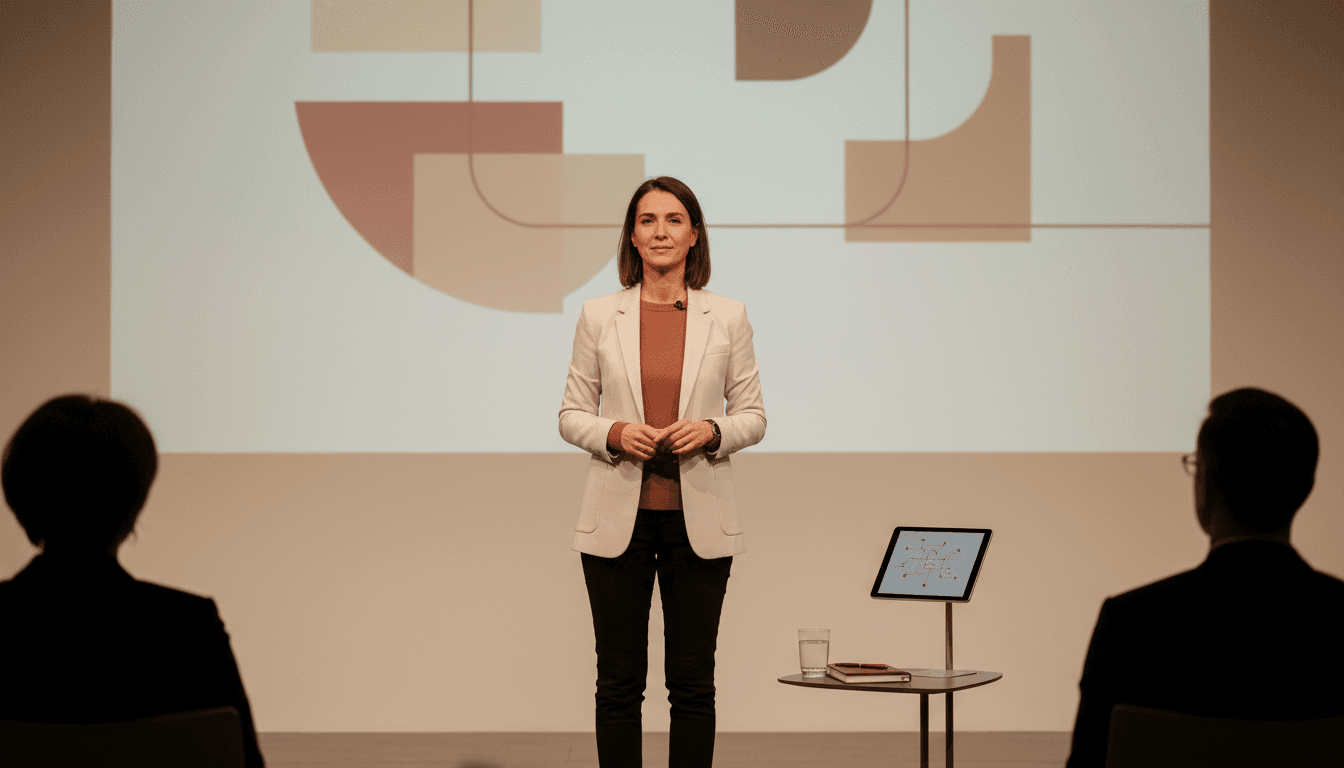
How to Calm Nerves Before a Presentation: 11 Proven Methods
To calm nerves before a presentation, use a combination of physiological techniques and cognitive strategies. Start with two to three cycles of physiological sighs (double inhale through the nose, long exhale through the mouth) to lower your heart rate in real time. Then reframe your anxiety as excitement — a technique called cognitive reappraisal — which research shows improves performance more than trying to "calm down." Finally, run a 10-minute power priming routine that combines visualizatio
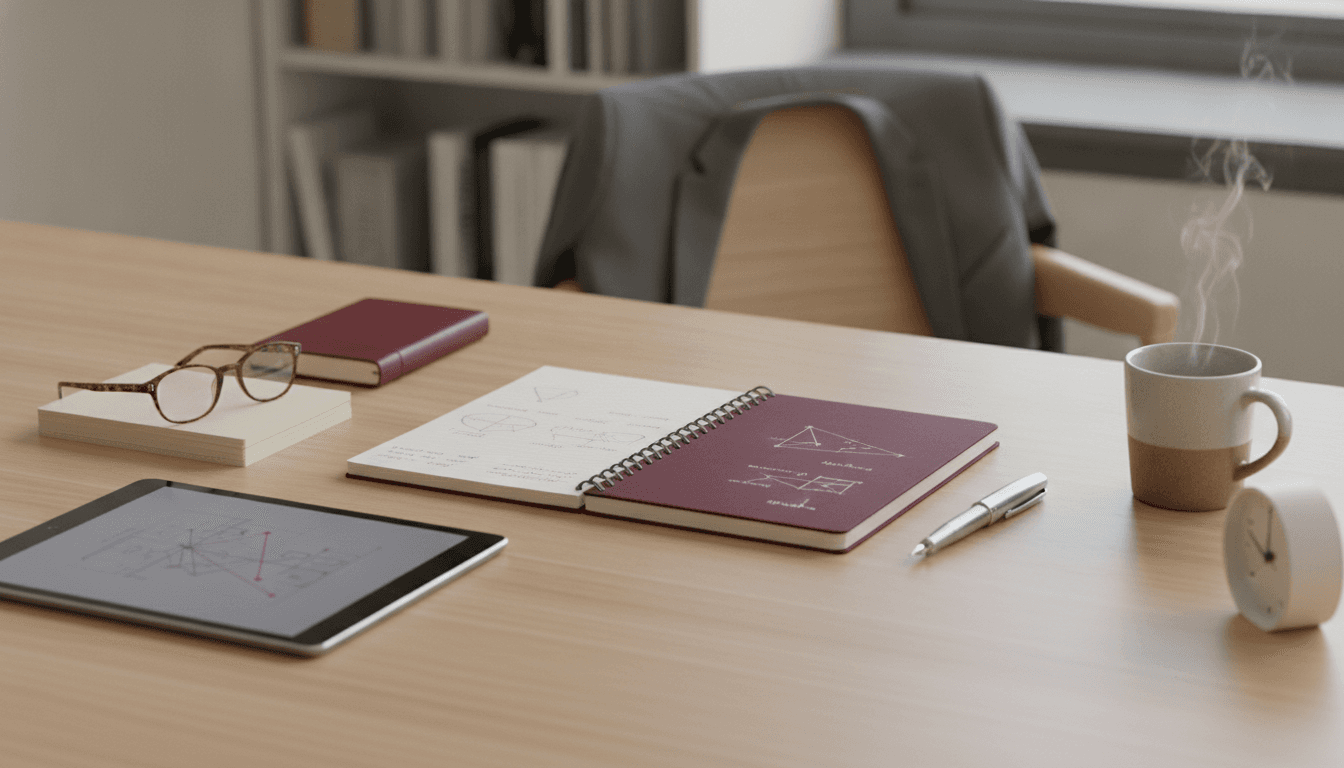
How to Prepare for a High-Stakes Presentation
To prepare for a high-stakes presentation, start 7–10 days out with deep audience analysis, then build a clear message architecture around one core thesis. Rehearse in three phases—content familiarity, delivery refinement, and full simulation—while layering in anxiety management techniques like controlled breathing and power posing. On the day of, follow a pre-performance ritual that anchors your confidence. The goal isn't perfection; it's commanding presence backed by rigorous preparation.
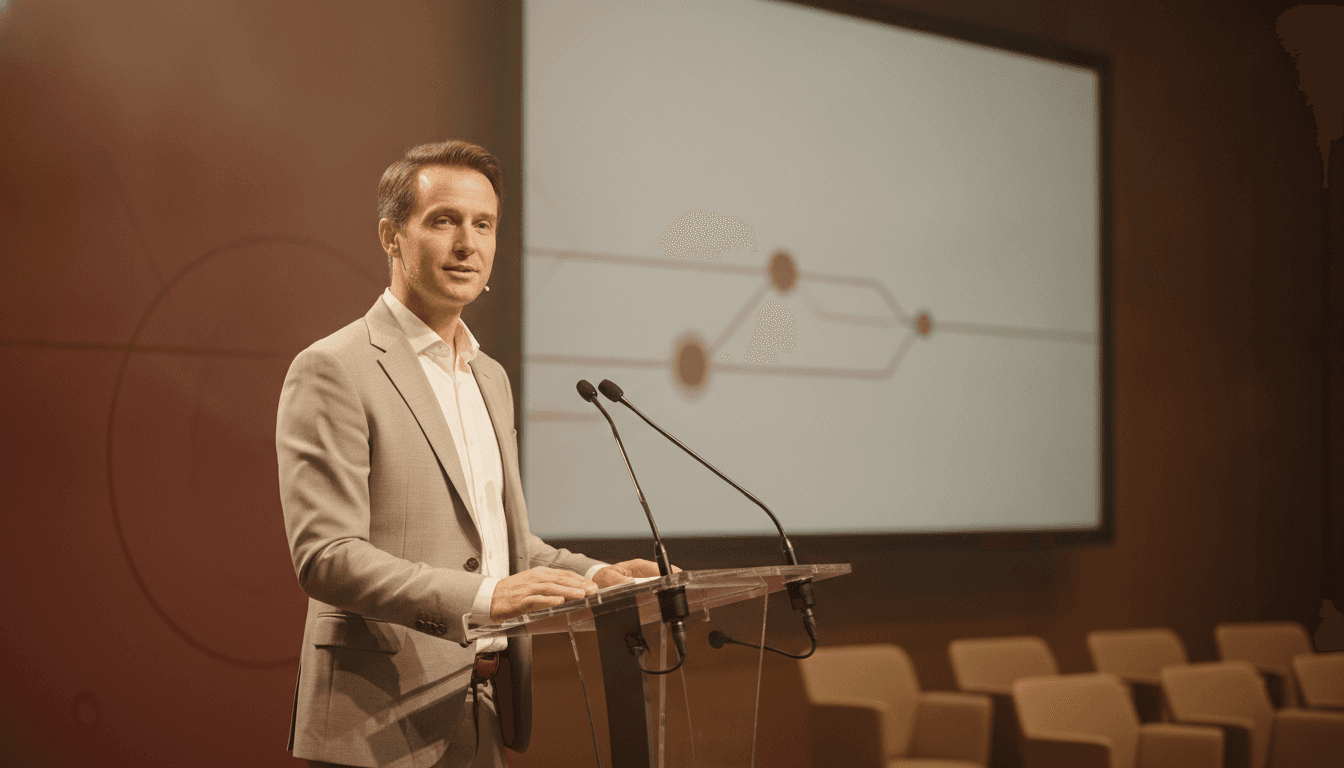
How to Stop Rushing When Presenting: 6 Pro Fixes
You rush through presentations because your nervous system interprets public speaking as a threat, triggering a fight-or-flight response that accelerates your heart rate, breathing, and speech. To stop rushing when presenting, use these six proven fixes: breath anchoring before and during your talk, strategic pausing at key transitions, chunking your content into digestible segments, audience-focused eye contact to regulate pace, mental rehearsal at half-speed, and physical grounding techniques.