
Negotiation Confidence for Introverts: A Quiet Guide

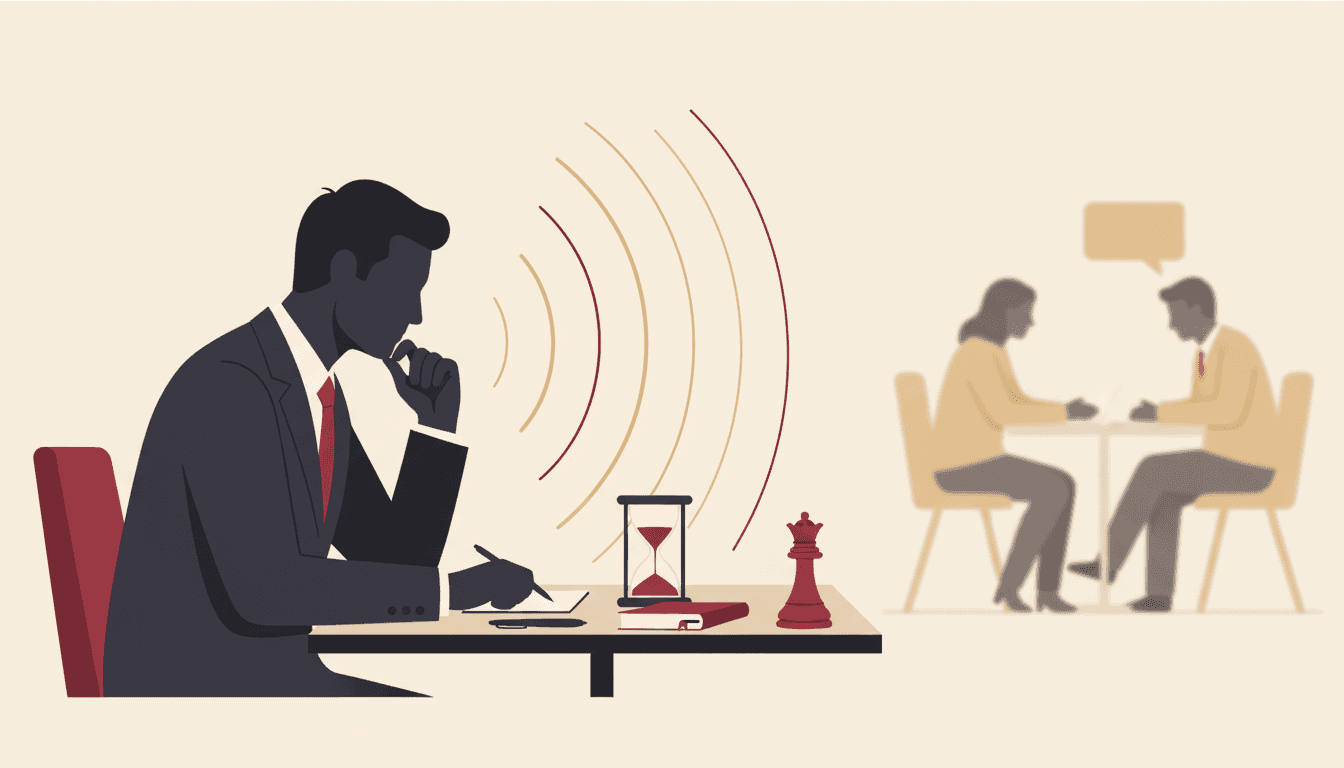
Negotiation confidence for introverts doesn't require becoming louder or more aggressive. Introverts can negotiate with remarkable effectiveness by leveraging their natural strengths: deep preparation, active listening, and strategic silence. This guide provides specific frameworks, scripted phrases, and tactical methods designed for professionals who prefer thoughtful communication over confrontational debate — so you can advocate for yourself firmly without performing extroversion.
What Is Negotiation Confidence for Introverts?
Negotiation confidence for introverts is the ability to advocate for your interests, hold your position, and reach favorable outcomes using deliberate preparation, structured communication, and calm composure — rather than relying on charisma, improvisation, or aggressive tactics. It's confidence built on substance, not volume.
Unlike the stereotypical image of a fast-talking dealmaker, introverted negotiation confidence looks like measured responses, well-researched positions, and a willingness to sit in silence while the other party processes your ask. It's not the absence of assertiveness — it's assertiveness expressed through precision.
Why Introverts Actually Have a Negotiation Advantage
Most negotiation advice is written for extroverts. It emphasizes quick thinking, verbal dominance, and commanding the room. But research tells a different story about what actually drives negotiation outcomes.

The Research Behind Quiet Negotiation Power
A study published in the Journal of Applied Psychology found that individuals who listen more and speak less in negotiations tend to achieve better outcomes because they gather more information about the other party's true priorities (De Rue et al., 2009). Introverts do this naturally.
Additionally, research from the Wharton School found that introverted leaders often outperform extroverted ones when working with proactive teams, because they're more likely to listen to and implement suggestions rather than dominate the conversation (Grant, Gino, & Hofmann, 2011). The same dynamic applies at the negotiation table.
Three Introvert Strengths That Win Negotiations
Deep preparation. Introverts tend to over-prepare, which is arguably the single greatest predictor of negotiation success. When you walk in knowing your market value, your BATNA (Best Alternative to a Negotiated Agreement), and three data points supporting your position, you don't need to improvise. Active listening. According to Harvard Business Review, the most effective negotiators spend 60% or more of their time listening rather than talking (Ames & Mason, 2015). Introverts are wired for this. You pick up on hesitations, qualifiers, and unstated concerns that extroverts talk right past. Comfort with silence. Most people rush to fill awkward pauses. Introverts are often more comfortable with quiet moments — and silence after a request is one of the most powerful negotiation tools available.If you want to deepen your leadership presence as an introvert, these same strengths apply far beyond the negotiation table.
The Introvert's Pre-Negotiation Preparation Framework
Preparation is where introverts turn anxiety into advantage. The more thoroughly you prepare, the less you need to rely on spontaneous verbal performance during the actual conversation.
The 5-Layer Preparation Stack
Use this framework before any negotiation — salary, project scope, resources, or role responsibilities:
Layer 1: Know Your Number (and Your Range)Define three figures: your ideal outcome, your acceptable outcome, and your walk-away point. Write them down. Having concrete numbers eliminates the in-the-moment paralysis that comes from uncertainty.
Layer 2: Build Your Evidence FileGather 3-5 specific data points that support your position. For salary negotiations, this means market data from sources like Glassdoor, Payscale, or industry salary surveys. For project negotiations, this means timelines, resource benchmarks, or precedent from similar initiatives.
Layer 3: Map Their PrioritiesWhat does the other party actually care about? A hiring manager may care more about filling the role quickly than saving $5,000. A client may value delivery speed over cost. Understanding their priorities lets you frame your ask in terms of their interests.
Layer 4: Script Your Opening and Key PhrasesWrite out your opening statement and 3-5 key phrases word-for-word. This isn't about memorizing a speech — it's about having anchor language you can return to when nerves hit. (We'll cover specific scripts in the next section.)
Layer 5: Rehearse Your SilencePractice making your ask and then saying nothing. Set a timer for 10 seconds. That's how long you should be prepared to wait after stating your position. It will feel eternal. It will also work.
For a deeper set of drills you can run before any negotiation, explore these negotiation confidence exercises.
The Written Preparation Advantage
Here's something most negotiation guides overlook: introverts often communicate more precisely in writing than in spontaneous speech. Use this to your advantage.
Before a verbal negotiation, send a brief email or message that frames the conversation. For example: "I'd like to discuss my compensation during our meeting Thursday. I've done some research I'd like to share." This accomplishes two things — it sets the agenda on your terms, and it gives you a written anchor you've already crafted carefully.
According to a survey by Salary.com, 18% of professionals never negotiate their salary, and the most commonly cited reason is discomfort with the conversation itself. Pre-framing the discussion in writing reduces that discomfort significantly.
If you want to sharpen how you communicate in writing with more authority, check out our guide on how to sound authoritative in emails.
Ready to Build Unshakable Professional Confidence? The Credibility Code gives you the exact frameworks, scripts, and strategies to communicate with authority — even when negotiation feels uncomfortable. Discover The Credibility Code
Scripted Phrases for Introverts Who Hate Confrontation
One of the biggest barriers for introverted negotiators isn't lack of skill — it's lack of language. When you don't have the words ready, anxiety fills the gap. These scripts give you exact phrases you can use, modify, or build from.

Opening the Negotiation
The opening sets the tone. You don't need to be aggressive. You need to be clear.
For salary negotiations:- "Based on my research into market rates for this role and my track record of [specific achievement], I'd like to discuss adjusting my compensation to [specific number]."
- "I've put together some data I'd like to walk through. I believe a salary of [range] more accurately reflects the value I'm contributing."
- "I want to make sure we deliver this at the quality level you expect. To do that with the current resources, I'd recommend adjusting the timeline to [specific date]."
- "I've mapped out what's realistic given our capacity. Here's what I'd propose."
Notice the pattern: each opener is grounded in data or outcomes, not feelings. You're not saying "I feel like I deserve more." You're saying "The evidence supports this position."
For more phrases you can use in various negotiation scenarios, see our collection of negotiation phrases that show confidence.
Holding Your Position Without Arguing
This is where many introverts fold. The other party pushes back, and the instinct is to immediately accommodate. Instead, use these phrases to hold firm without escalating:
- "I understand your perspective. I'd still like to find a way to get closer to [your number/ask]."
- "That's helpful context. Based on what I've shared, what flexibility do you have?"
- "I appreciate you being transparent about the constraints. Can we explore other ways to bridge the gap — whether that's [bonus, timeline, title, remote flexibility]?"
The key technique here is acknowledge, then redirect. You validate what they said without conceding your position. This feels natural for introverts because it's respectful and non-confrontational — but it's also strategically powerful.
Responding to Pressure Tactics
Sometimes the other party will use urgency, authority, or emotional pressure to get you to agree quickly. Here's how to respond without matching their energy:
- "I want to give this the consideration it deserves. Can I come back to you by [specific date]?"
- "I hear the urgency. Let me review what you've shared and respond thoughtfully."
- "I'd rather take a day to think this through than commit to something that doesn't work for either of us."
Buying time is not weakness — it's one of the most effective negotiation strategies that protect your credibility.
Strategic Silence: The Introvert's Most Powerful Negotiation Tool
Silence is uncomfortable for most people. That's exactly why it works. And introverts are uniquely positioned to wield it.
How Silence Creates Negotiation Leverage
When you make a request and then stop talking, you create psychological pressure on the other party to respond. Most people will fill the silence — often by making concessions, revealing information, or moving closer to your position.
A study from the University of Groningen found that even brief silences of four seconds or longer during negotiations led to more reflective and collaborative responses from the other party (Broekens et al., 2021). Four seconds. That's all it takes.
Here's the practical application:
- State your ask clearly and specifically.
- Stop talking.
- Maintain neutral, calm eye contact.
- Wait.
The first few times you do this, it will feel excruciating. Practice it in low-stakes conversations first — ask a question at a coffee shop and simply wait. The discomfort fades with repetition.
The Three Types of Strategic Silence
The Post-Ask Silence: You make your request, then go quiet. This is the most common and most powerful form. The Processing Silence: When the other party makes a counter-offer, don't respond immediately. Take 5-10 seconds to visibly consider it. This signals that you're evaluating carefully — not desperately accepting. The Disagreement Silence: When someone says something you disagree with, instead of immediately countering, pause. A brief silence followed by a calm, measured response carries far more weight than a rapid-fire rebuttal.If you tend to rush your responses under pressure, you might also benefit from learning how to stop rushing when presenting — the same pacing principles apply to negotiation.
Body Language During Silence
Silence only works if your body language supports it. If you look anxious, fidgety, or apologetic during a pause, you undermine the effect entirely.
During strategic silence:
- Keep your hands still — on the table or in your lap
- Maintain gentle eye contact (not a stare-down)
- Keep your posture upright and open
- Breathe slowly and visibly
For a comprehensive guide on projecting calm authority through your physical presence, explore body language that conveys authority.
Negotiating Firmly Without Performing Extroversion
There's a persistent myth that effective negotiation requires you to be bold, assertive, and dominant. But firmness and extroversion are not the same thing. You can hold your ground quietly.
The "Broken Record" Technique (Adapted for Introverts)
The classic assertiveness technique of calmly repeating your position works exceptionally well for introverts because it doesn't require new arguments or escalation. You simply return to your core message.
Example scenario: You're negotiating a raise and your manager says the budget is tight.- First response: "I understand budget constraints are real. Given my contributions to [specific project], I believe [amount] is a fair adjustment."
- If pushed back again: "I appreciate that. I'd still like to work toward [amount], even if we need to phase it in over two quarters."
- If pushed a third time: "I hear you. This is important to me, and I'd like us to find a path to [amount]. What would need to happen to make that possible?"
You haven't raised your voice. You haven't been aggressive. You've simply refused to abandon your position — and you've done it with respect and specificity.
The Email-First Negotiation Strategy
For introverts who find face-to-face negotiation especially draining, consider initiating the negotiation in writing. According to research from Columbia Business School, email negotiations can produce equivalent outcomes to in-person negotiations, particularly when the parties have an existing relationship (Morris et al., 2002).
Write a clear, concise email that:
- States your request specifically
- Provides 2-3 supporting data points
- Proposes next steps
- Invites a conversation to discuss
This gives you the advantage of crafting your message precisely while still opening the door for a verbal follow-up. It also creates a written record of your ask — which is strategically valuable.
If you want to strengthen your written communication overall, our guide on assertive communication in emails provides practical frameworks.
Your Quiet Confidence Deserves a System Behind It. The Credibility Code helps professionals like you build authority, negotiate effectively, and communicate with presence — without pretending to be someone you're not. Discover The Credibility Code
Managing Energy and Recovery Around Negotiations
Negotiations are socially and emotionally demanding. For introverts, the energy cost can be significant — and ignoring this reality leads to worse outcomes.
Pre-Negotiation Energy Management
Schedule your negotiation at a time when your energy is highest. For many introverts, this is morning, before the social demands of the day have accumulated.
Block 30 minutes before the negotiation with no meetings or calls. Use this time to:
- Review your preparation notes
- Practice your opening statement once out loud
- Do a brief breathing exercise (box breathing: 4 seconds in, 4 hold, 4 out, 4 hold)
- Visualize yourself making your ask and sitting in silence calmly
A 2019 study in the Journal of Experimental Social Psychology found that brief pre-performance rituals reduced anxiety and improved performance in high-pressure situations by up to 22% (Brooks et al., 2016). This isn't soft advice — it's performance optimization.
Post-Negotiation Recovery
After a negotiation, give yourself space to decompress. Don't schedule a team meeting or client call immediately afterward. Take 15-20 minutes to:
- Write down what was discussed and any commitments made
- Note what worked and what you'd adjust next time
- Allow yourself to process the emotional experience without judgment
This recovery period isn't indulgent — it's what allows you to sustain negotiation confidence over time rather than burning out and avoiding future negotiations altogether.
For broader strategies on managing nervous energy in professional settings, see our guide on how to project confidence when nervous at work.
Frequently Asked Questions
Can introverts be good negotiators?
Yes — and research supports this. Introverts bring deep preparation, superior listening skills, and comfort with silence, all of which are correlated with better negotiation outcomes. A Harvard Business Review analysis found that the most effective negotiators listen more than they talk, which aligns naturally with introverted communication styles. The key is leveraging these strengths rather than trying to mimic extroverted tactics.
How do I negotiate salary as an introvert?
Prepare a specific number backed by 3-5 market data points. Script your opening statement word-for-word. Deliver your ask clearly, then use strategic silence. If you receive pushback, use the "acknowledge and redirect" technique: validate their concern, then restate your position. Consider sending a pre-framing email before the conversation to set the agenda on your terms and reduce in-the-moment pressure.
Introvert vs. extrovert negotiation styles: which is more effective?
Neither style is inherently superior — effectiveness depends on preparation and strategy. Extroverts tend to dominate airtime, which can backfire if they reveal too much information. Introverts tend to listen more carefully and prepare more thoroughly, which often leads to better information gathering and more creative solutions. The most effective approach combines introvert-style preparation with clear, direct communication.
How do I handle aggressive negotiators as an introvert?
Don't match their energy. Use the "broken record" technique: calmly restate your position without escalating. Buy time with phrases like "I'd like to think about that and come back to you." Aggressive tactics rely on pressuring you into quick concessions — your willingness to slow down and pause neutralizes that pressure. For more on navigating tough dynamics, see our guide on how to negotiate when you feel intimidated.
What if I freeze up during a negotiation?
Freezing typically happens when you don't have prepared language to fall back on. Script your key phrases in advance and keep written notes visible during the conversation. If you freeze mid-negotiation, use a bridge phrase: "Let me take a moment to think about that" or "That's an important point — I want to respond thoughtfully." These phrases buy you time while signaling composure, not uncertainty.
How can I practice negotiation confidence before a real negotiation?
Start with low-stakes situations: negotiate a deadline extension, request a meeting time change, or ask for a discount at a vendor. Use the 5-Layer Preparation Stack for each practice scenario. Record yourself delivering your opening statement and listen back. Run through our negotiation confidence exercises to build the muscle before the stakes are high.
Turn Quiet Confidence Into Career Authority. The Credibility Code is the complete system for professionals who want to negotiate, communicate, and lead with credibility — on their own terms. No bravado required. Discover The Credibility Code
Ready to Command Authority in Every Conversation?
Transform your professional communication with proven techniques that build instant credibility. The Credibility Code gives you the frameworks top leaders use to project confidence and authority.
Discover The Credibility CodeRelated Articles
How to Negotiate as an Introvert: A Quiet Strength Playbook
Negotiating as an introvert doesn't require you to become louder, more aggressive, or someone you're not. Instead, it means leveraging the strengths you already have—deep preparation, active listening, strategic silence, and thoughtful communication—to secure outcomes that match your worth. This playbook gives you specific scripts, frameworks, and techniques designed for professionals who prefer substance over spectacle, proving that quiet confidence is one of the most powerful negotiation tools

Negotiation Confidence: 8 Tips to Hold Your Ground
Negotiation confidence comes down to preparation, emotional control, and strategic communication. The most effective negotiation confidence tips include anchoring with the first offer, using strategic silence, managing emotional triggers before they surface, and projecting certainty through body language and vocal tone. Whether you're negotiating a salary, a vendor contract, or a project deadline, these eight tactics will help you hold your ground and walk away with better outcomes—without damag

How to Negotiate Without Being Pushy: 6 Credible Moves
To negotiate without being pushy, shift from demanding to collaborating. The most effective negotiators don't pressure — they build credibility, ask calibrated questions, and anchor their requests in evidence. The six core moves are: lead with preparation, use collaborative framing, ask instead of demand, anchor with data, deploy strategic silence, and protect the relationship. These approaches let you advance your position firmly while making the other party feel respected, not steamrolled.