
How to Negotiate When You Feel Nervous: A Calm Guide

Negotiating when you feel nervous starts with accepting that nervousness is normal — then channeling it. Before any negotiation, prepare a confidence anchor: know your three strongest points, rehearse your opening line, and use a pre-negotiation breathing routine (box breathing for 90 seconds). During the conversation, rely on scripted phrases for high-anxiety moments, pause before responding, and focus on facts rather than feelings. Nervousness doesn't disqualify you from negotiating well — lack of preparation does.
What Is Negotiation Anxiety?
Negotiation anxiety is the emotional and physiological stress response — racing heart, shallow breathing, mental blanking — that professionals experience before or during a negotiation. It's driven by fear of rejection, conflict, or being perceived as unreasonable.
Unlike general workplace nervousness, negotiation anxiety is uniquely intense because the stakes feel personal. You're advocating for yourself, and your brain interprets potential rejection as a threat. According to research published in the Journal of Applied Psychology, approximately 20% of professionals actively avoid negotiations entirely due to anxiety, leaving significant value — salary, resources, opportunities — on the table.
Understanding this distinction matters. Negotiation anxiety isn't a character flaw. It's a predictable response that can be managed with the right framework, preparation, and in-the-moment techniques.
Why Nervousness Sabotages Negotiations (And Why It Doesn't Have To)
The Neuroscience Behind Negotiation Freeze
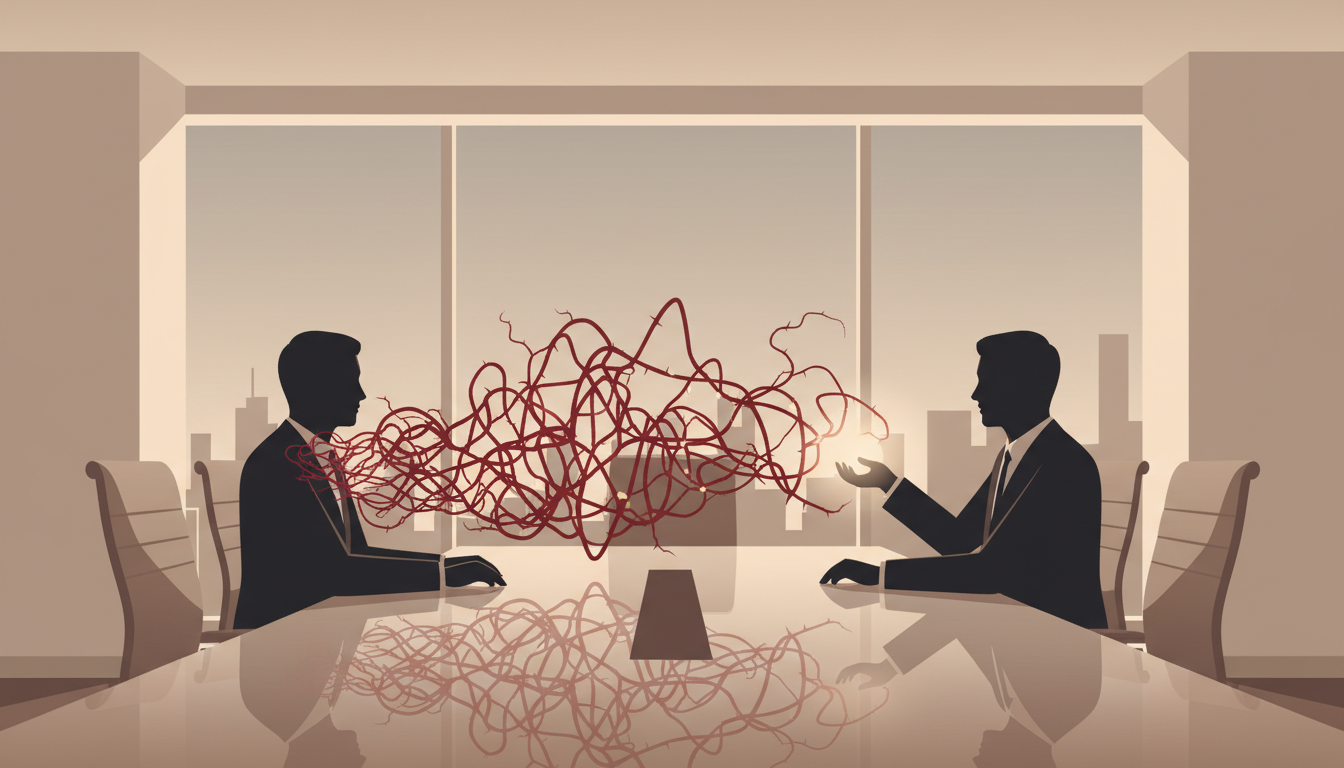
When you feel nervous before a negotiation, your amygdala — the brain's threat detection center — activates your fight-or-flight response. Cortisol floods your system. Your prefrontal cortex, responsible for strategic thinking and articulate speech, gets partially shut down.
This is why smart, capable professionals suddenly can't remember their talking points or blurt out "that's fine" when they meant to counter-offer. A 2019 study from Harvard Business School found that anxious negotiators achieved outcomes that were, on average, 12% worse than their calm counterparts — not because they lacked skill, but because anxiety impaired their cognitive flexibility.
The Real Cost of Avoiding Negotiation
The damage isn't just in bad outcomes — it's in the negotiations that never happen. Research from Carnegie Mellon University found that failing to negotiate a starting salary can cost a professional over $600,000 in cumulative earnings over a 30-year career.
Every time you avoid a negotiation because of nerves, you're not just losing that one opportunity. You're reinforcing a pattern where anxiety makes decisions for you. If you've been overlooked at work, the compounding effect of missed negotiations is often a major contributor.
Nervousness vs. Unpreparedness: The Critical Distinction
Here's what most people get wrong: they assume their nervousness means they're not ready. In reality, nervousness and unpreparedness are different problems with different solutions.
Nervousness is a physiological state. You manage it with breathing, rehearsal, and mindset techniques. Unpreparedness is a knowledge gap. You fix it with research, data, and practice. The professionals who negotiate well despite nerves are the ones who've prepared so thoroughly that their anxiety can't override their readiness.
The Pre-Negotiation Confidence Routine (The CALM Framework)
C — Clarify Your Three Anchors
Before any negotiation, identify three facts that support your position. These are your anchors — the points you return to when anxiety tries to pull you off course.
For a salary negotiation, your anchors might be: (1) market rate data from Glassdoor or Payscale, (2) a specific recent achievement with measurable results, and (3) the expanded scope of your role compared to when you were hired.
Write them on a notecard. Bring it with you. There's no rule that says you can't reference notes during a negotiation — in fact, it signals preparation.
A — Activate Your Body Before the Conversation
Physical state drives mental state. Forty-five minutes before your negotiation, do something that shifts your physiology.
A study published in Health Psychology by Amy Cuddy and colleagues found that adopting expansive body postures for just two minutes before a stressful social evaluation increased feelings of power and tolerance for risk. Whether or not you subscribe to "power posing" research, the principle is sound: your body influences your confidence.
Try this sequence 10 minutes before: stand up, roll your shoulders back, take five deep breaths (inhale for 4 counts, hold for 4, exhale for 6), and speak your opening line out loud once. This activates your parasympathetic nervous system and primes your voice. For more techniques on managing physical nervousness, see our guide on how to calm nerves before speaking.
L — Lock In Your Opening Line
The first 30 seconds of a negotiation set the tone. Anxious negotiators often stumble here because they haven't rehearsed a specific opening.
Script it. Memorize it. Here are two templates:
For salary negotiations: "Thank you for this conversation. I've done some research and want to discuss adjusting my compensation to reflect [specific contribution] and current market benchmarks." For project resource negotiations: "I appreciate the opportunity to discuss this. I want to make sure we set this project up for success, and I have a specific proposal for the resources we'll need."Notice: no apologies, no hedging, no "I was just wondering if maybe..." Your opening line is your anchor. Practice it until it feels natural.
M — Map Your Walk-Away Point
Knowing your walk-away point eliminates one of the biggest sources of negotiation anxiety: the fear of not knowing when to stop. Before you enter the room, decide the minimum acceptable outcome.
If you're negotiating salary, your walk-away point might be: "I won't accept less than $85,000 based on market data." If you're negotiating a deadline, it might be: "I need at least three additional weeks to deliver quality work."
Having this clarity means you're not making high-stakes decisions in real-time while your cortisol is elevated. The decision is already made. You're simply executing.
Your Negotiation Confidence Starts Before the Conversation — The CALM framework is just one of the strategies inside The Credibility Code, our complete system for communicating with authority in high-stakes professional moments. Discover The Credibility Code and build the presence that makes people take you seriously.
Scripted Phrases for High-Anxiety Moments
When You're Hit With an Unexpected Counter
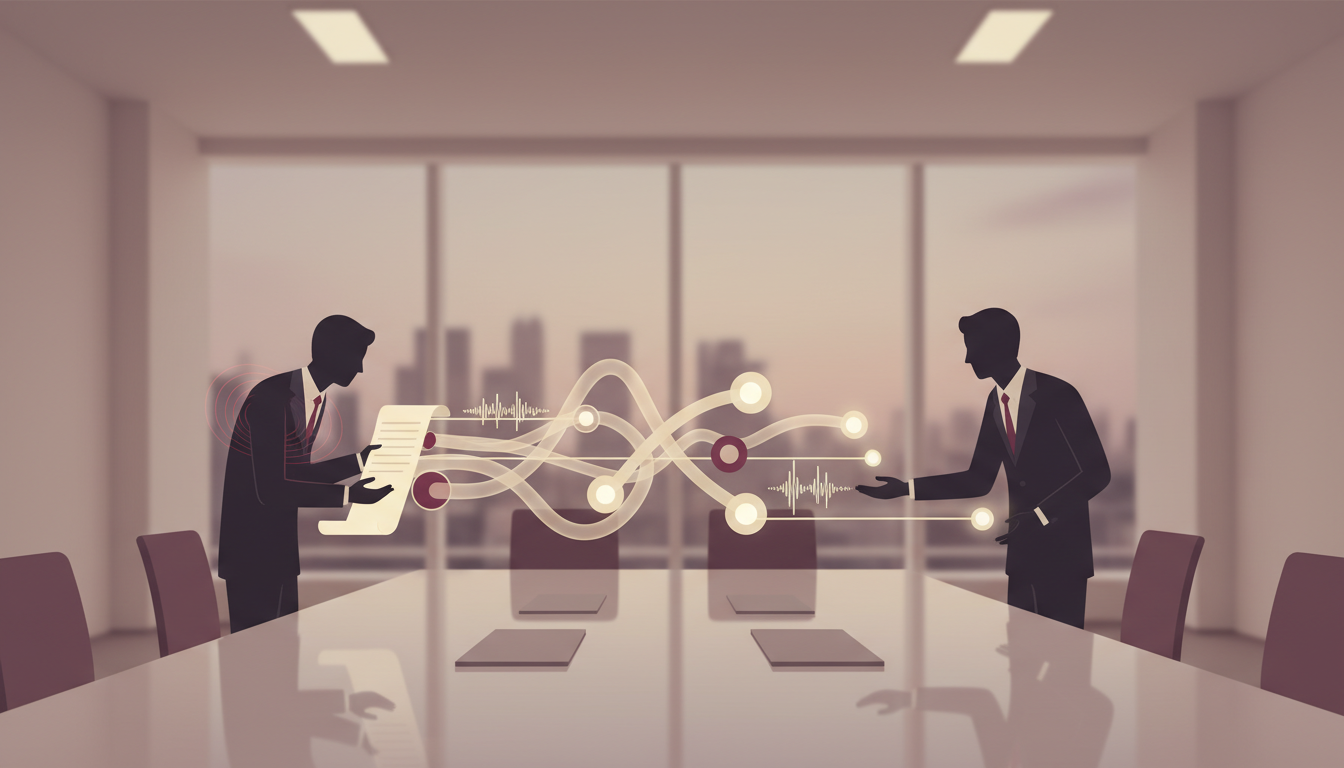
This is the moment most nervous negotiators crumble. Someone pushes back, and instead of responding strategically, you panic-agree or over-explain.
Use these phrases to buy time and maintain composure:
- "That's helpful to understand. Let me think about that for a moment." (Buys you 10-15 seconds to regroup.)
- "I appreciate you sharing that. Can you walk me through how you arrived at that number?" (Shifts the burden of justification.)
- "I hear you. Here's what I'd like to propose as an alternative." (Acknowledges without conceding.)
The key principle: you never have to respond immediately. A pause is not weakness — it's executive-level communication. Senior leaders pause constantly. It signals that you're thoughtful, not reactive.
When You Feel Your Voice Shaking
Voice tremor is one of the most common physical symptoms of negotiation anxiety. When it happens, don't try to power through it. Instead:
- Take a sip of water (always bring water to a negotiation).
- Drop your pitch slightly — nervous voices rise in pitch, which signals uncertainty.
- Slow your pace by 20%. Anxious speakers rush. Deliberate speakers command attention.
If you want a deeper dive into vocal control under pressure, our article on how to stop sounding nervous when speaking covers specific vocal techniques you can practice today.
When You Want to Cave Just to End the Discomfort
This is the most dangerous moment. Your anxiety is screaming: "Just say yes so this can be over." Recognize this impulse for what it is — your nervous system seeking relief, not your rational mind making a decision.
Use this phrase: "I want to give this the consideration it deserves. Can I follow up with you by [specific day]?"
This isn't stalling. It's strategic. According to a 2020 study from Columbia Business School, negotiators who took breaks or requested follow-up time achieved outcomes 9% better than those who felt pressured to decide on the spot.
The Composure Framework: Staying Calm During the Negotiation
Ground Yourself With Physical Anchors
During a negotiation, your mind will race. Your body can bring it back. Use discreet physical anchors to stay present:
- Press your feet firmly into the floor. Feel the ground beneath you.
- Place both hands flat on the table or your notebook. Open hands signal confidence and prevent fidgeting.
- If you're on a video call, sit with your back fully against the chair and keep your hands visible on the desk.
These micro-actions activate your parasympathetic nervous system and interrupt the anxiety spiral. They're also key components of confident body language that signal authority to the other party.
Use the "Fact-Feeling-Focus" Reset
When anxiety spikes mid-conversation, run this three-second internal reset:
- Fact: What is objectively true right now? ("They counter-offered at $78,000.")
- Feeling: What am I feeling? ("I'm disappointed and anxious.")
- Focus: What's my next strategic move? ("I'll reference my market data and counter at $85,000.")
This technique, rooted in cognitive behavioral principles, prevents emotional hijacking by forcing your prefrontal cortex back online. It takes less than five seconds and no one knows you're doing it.
Reframe Silence as Strategy
Nervous negotiators fill silence with concessions. They hear quiet and assume it means the other person is unhappy or that they need to offer more.
In reality, silence after you've stated your position is one of the most powerful negotiation tools available. Research from the INSEAD Business School found that negotiators who used strategic silence — pausing for 5-8 seconds after making a proposal — achieved better outcomes because the silence created psychological pressure on the other party to respond, not on the speaker to concede.
Practice this: make your point, then stop talking. Count to five in your head. Let the other person break the silence.
Turn Nervous Energy Into Negotiation Power — The Credibility Code gives you the exact scripts, frameworks, and confidence systems that transform high-anxiety professional moments into career-defining wins. Discover The Credibility Code and stop leaving value on the table.
Building Long-Term Negotiation Confidence
Start With Low-Stakes Practice
You don't build negotiation confidence by jumping into a salary conversation. You build it through repetition in lower-stakes environments.
This week, try these micro-negotiations:
- Ask for a better table at a restaurant.
- Negotiate a deadline extension on a low-priority task.
- Request a discount or upgrade at a hotel or service provider.
- Counter the first price offered when buying furniture or a car.
Each small win rewires your brain's association with negotiation. Instead of "negotiation = danger," your nervous system starts learning "negotiation = I can handle this." Over time, this practice builds the kind of assertiveness that carries into high-stakes professional settings.
Debrief Every Negotiation
After each negotiation — whether it went well or not — spend five minutes answering three questions:
- What did I do well?
- Where did anxiety take over?
- What will I do differently next time?
This debrief habit is what separates professionals who stay nervous forever from those who steadily build confidence. A study from Harvard Business Review found that professionals who reflected on their performance for just 15 minutes daily improved their effectiveness by 23% compared to those who didn't reflect at all.
Write your debriefs down. Over three months, you'll have a clear record of your growth — and concrete evidence that you can handle negotiations, even when nervous.
Build Your Credibility Stack
Long-term negotiation confidence isn't just about technique. It's about knowing — deeply, factually — that you bring value. This is your credibility stack: the accumulation of skills, results, and reputation that gives you genuine authority at the table.
Start documenting your wins. Keep a running file of projects delivered, problems solved, revenue generated, and positive feedback received. When negotiation time comes, you're not guessing at your value — you're referencing it. Our guide on how to build credibility at work walks you through this process step by step.
When your credibility is documented and clear, nervousness loses its grip. You're not asking for a favor — you're presenting a business case.
Frequently Asked Questions
Is it normal to feel nervous during a negotiation?
Absolutely. Nervousness during negotiation is a universal human response. Research from Harvard Business School shows that the majority of professionals experience some level of anxiety before negotiations. The difference between successful and unsuccessful negotiators isn't the absence of nerves — it's having a system for managing them. Preparation, scripted phrases, and breathing techniques can keep nervousness from controlling your outcomes.
How do I negotiate a salary when I feel nervous?
Prepare your three anchors: market rate data, a specific recent achievement, and the scope of your role. Script your opening line and rehearse it aloud. Use the CALM framework (Clarify, Activate, Lock In, Map) before the conversation. During the negotiation, pause before responding, reference your data, and remember that silence after stating your number is a power move, not an awkward gap. For detailed scripts, see our salary negotiation confidence guide.
Negotiation anxiety vs. being unprepared — what's the difference?
Negotiation anxiety is a physiological response (racing heart, sweaty palms, mental blanking) that happens even when you know your material. Being unprepared means you lack the data, research, or talking points to support your position. The fix for anxiety is breathing, rehearsal, and mindset techniques. The fix for unpreparedness is research and practice. Most people experience both simultaneously, which is why the CALM framework addresses both.
How can I stop my voice from shaking during a negotiation?
Voice shaking comes from tension in your vocal cords and shallow breathing. Before the negotiation, do 90 seconds of box breathing (inhale 4 counts, hold 4, exhale 4, hold 4). During the conversation, deliberately slow your speaking pace by 20%, drop your pitch slightly, and take sips of water to reset your throat. Placing your feet firmly on the floor also helps ground your nervous system and stabilize your voice.
What should I say when I don't know how to respond in a negotiation?
Use a bridge phrase to buy time: "That's a great point — let me consider that for a moment." Or: "I want to give that the thought it deserves. Can I come back to you by [specific date]?" You can also redirect: "Before I respond to that, can you help me understand how you arrived at that figure?" These phrases prevent panic-agreeing while keeping the conversation professional and collaborative.
How do I build long-term confidence in negotiations?
Start with low-stakes practice — negotiate small things daily (restaurant tables, minor deadlines, service upgrades). Debrief every negotiation by asking what went well, where anxiety took over, and what you'll change next time. Build a credibility stack by documenting your professional wins and contributions. Over time, your nervous system learns that negotiation is manageable, and your evidence file gives you genuine authority at the table.
Ready to Negotiate With Confidence — Not Just Cope With Nerves? — This article gave you the framework. The Credibility Code gives you the complete system — scripts, confidence routines, and communication strategies that transform how you show up in every high-stakes professional conversation. Discover The Credibility Code and start communicating like the authority you are.
Ready to Command Authority in Every Conversation?
Transform your professional communication with proven techniques that build instant credibility. The Credibility Code gives you the frameworks top leaders use to project confidence and authority.
Discover The Credibility CodeRelated Articles

How to Negotiate When You Feel Nervous: A Calm Framework
To negotiate when you feel nervous, start by reframing anxiety as activation energy—your body is preparing you to perform, not warning you to retreat. Then follow a structured calm framework: prepare your anchors (key numbers, talking points, and a walk-away point) before the conversation, use a scripted opener to bypass the hardest first 30 seconds, and deploy in-the-moment resets like tactical pauses and slow breathing to stay grounded. Nervousness doesn't disqualify you from negotiating well—

Negotiation Confidence for Women: Scripts That Work
Women who negotiate earn an average of $1 million more over their careers than those who don't — yet research shows women initiate negotiations four times less often than men. The gap isn't about skill; it's about navigating a real double bind where assertiveness is penalized differently. This guide gives you research-backed scripts, strategic framing techniques, and word-for-word language that projects authority without triggering backlash — across salary, role scope, resources, and flexible wo

How to Negotiate When You Feel Nervous: A Calm Method
To negotiate when you feel nervous, use a structured pre-negotiation ritual combined with grounding techniques and scripted anchor phrases. Nervousness isn't a flaw—it's a signal that the outcome matters to you. The key is channeling that energy into preparation rather than trying to eliminate it. By building a calm method around three pillars—physiological regulation, strategic preparation, and rehearsed language—you can project confidence and credibility even when your heart is racing. This ar