
How to Negotiate When You Feel Nervous: A Calm Framework

What Is Negotiation Anxiety?
Negotiation anxiety is the physiological and psychological stress response triggered by the anticipation or act of advocating for yourself in a high-stakes conversation. It typically manifests as a racing heart, shallow breathing, sweaty palms, a shaky voice, and cognitive fog—making it harder to think clearly and speak with authority.
Unlike general social anxiety, negotiation anxiety is specifically tied to the fear of conflict, rejection, or damaging a relationship. According to research published in the Journal of Applied Psychology, approximately 20% of people experience such high levels of negotiation anxiety that they avoid negotiations entirely—leaving significant money, opportunities, and career advancement on the table.
Why Nervousness Hijacks Your Negotiation Performance
The Physiology of Negotiation Stress
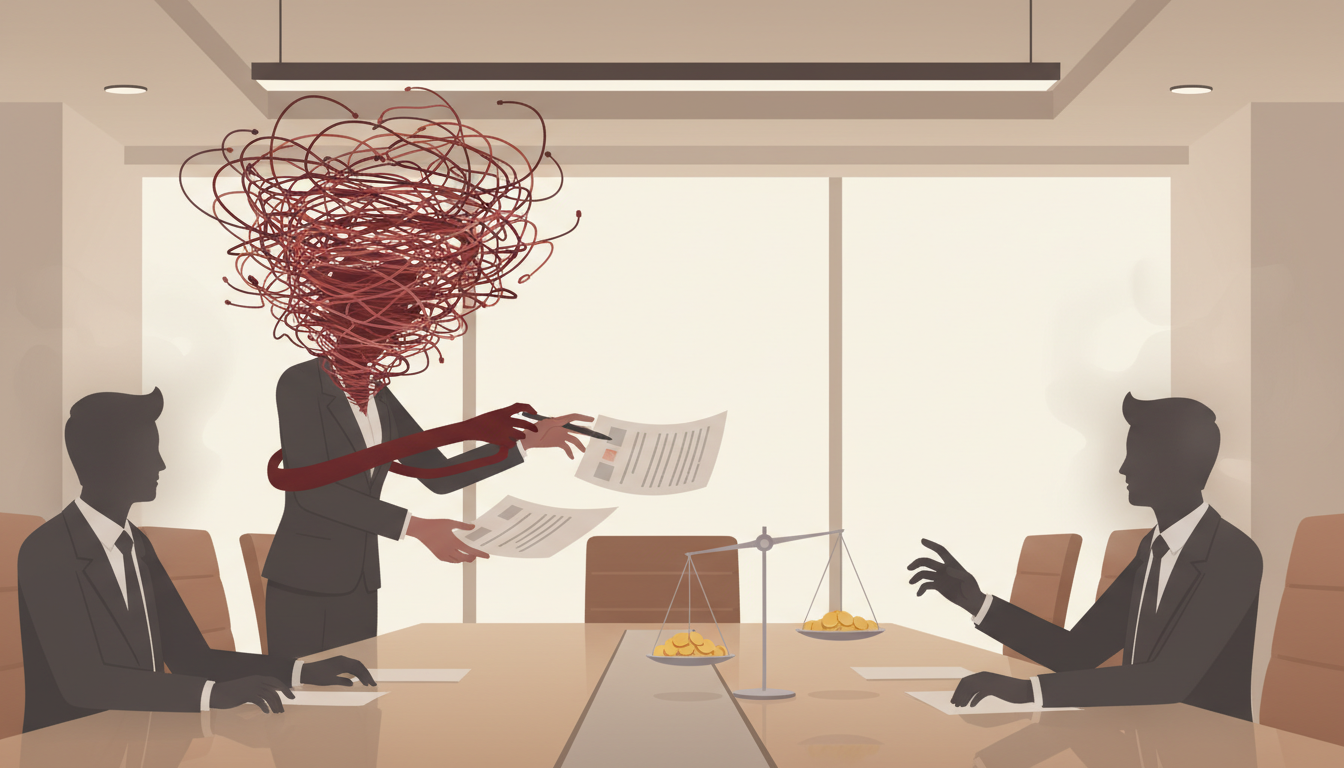
When you anticipate a negotiation, your amygdala—the brain's threat detection center—fires a stress response. Cortisol and adrenaline flood your system. Your prefrontal cortex, which handles strategic thinking and verbal fluency, gets partially shut down. This is why you might rehearse a perfect argument in the shower but go blank the moment your manager says, "So, what did you want to discuss?"
A 2019 study from Harvard Business School found that anxious negotiators made first offers that were 12% lower than their calm counterparts and were more likely to accept unfavorable terms quickly, just to end the discomfort. The problem isn't that you're nervous—it's that unmanaged nervousness makes you rush, concede, and under-communicate your value.
The Three Fear Triggers Behind Negotiation Anxiety
Most negotiation nervousness comes from one of three root fears:
- Fear of rejection — "They'll say no and I'll feel humiliated."
- Fear of conflict — "This will damage the relationship."
- Fear of exposure — "They'll realize I'm not worth what I'm asking for."
Understanding which fear drives your anxiety is the first step toward dismantling it. If you frequently struggle with the third trigger, you may also benefit from strategies for overcoming imposter syndrome at work.
Why "Just Be Confident" Is Useless Advice
Telling a nervous negotiator to "just be confident" is like telling someone in a cold pool to "just be warm." Confidence in negotiation isn't a feeling you summon—it's a byproduct of preparation, structure, and practiced technique. The framework below is designed to work with your nervousness, not against it.
The CALM Negotiation Framework: Step by Step
This four-phase framework—Clarify, Anchor, Launch, Manage—gives you a structured path through any negotiation, even when your hands are shaking.
C — Clarify Your Outcome Before the Conversation
Before you walk into any negotiation, write down three numbers or outcomes:
- Your ideal outcome — What you'd love to walk away with.
- Your realistic target — What the evidence supports.
- Your walk-away point — The threshold below which you'll decline.
This isn't optional. A study by the Negotiation Journal (2020) found that negotiators who defined specific targets before the conversation achieved outcomes that were 13% more favorable than those who entered with vague goals like "I want more money."
Example: You're negotiating a salary for a new role. Your ideal is $135K, your realistic target is $125K based on market data, and your walk-away point is $115K. Writing these down converts abstract anxiety into concrete decision points. When nervousness clouds your thinking mid-conversation, you can glance at your notes and know exactly where you stand.A — Anchor With Preparation Materials
Anchoring means entering the negotiation with external evidence that supports your position. This is critical for nervous negotiators because it shifts the conversation from "me asking for something" to "the data suggests this is appropriate."
Gather three types of anchors:
- Market data — Salary surveys, competitive offers, industry benchmarks.
- Performance evidence — Specific results, metrics, and contributions.
- Precedent — What others in similar roles or situations have received.
When you feel nervous, evidence becomes your backbone. You're not arguing your worth—you're presenting facts. For detailed scripts on this approach, see our guide on salary negotiation confidence scripts that command respect.
L — Launch With a Scripted Opener
The first 30 seconds of a negotiation are the hardest. Your cortisol is highest, your voice is most likely to waver, and cognitive fog is at its peak. The solution: don't improvise the opening. Script it, rehearse it, and deliver it from memory.
Here are three proven openers for different scenarios:
Salary negotiation:"Thank you for this offer—I'm excited about the role. I've done some research on the market and my experience level, and I'd like to discuss the compensation to make sure it reflects the value I'll bring. Can I share what I've found?"Project resource negotiation:
"I want to make sure this project succeeds, which is why I'd like to talk through the resources we'll need. I've put together a brief analysis showing what similar projects have required."Promotion conversation:
"I appreciate the time. I've been reflecting on my contributions over the past year, and I'd like to discuss how my role and compensation can evolve to match the scope of what I'm delivering."
Notice each opener does three things: expresses positive intent, frames the ask around evidence, and invites dialogue. None of them are aggressive. None of them apologize. If you tend to undermine yourself with hedging language, our guide on how to ask for what you want at work without apology goes deeper on this skill.
Ready to Build Unshakable Negotiation Confidence? The CALM framework is just one tool in a complete communication authority system. Discover The Credibility Code — the full playbook for professionals who want to be heard, respected, and taken seriously in every conversation.
M — Manage the Moment With In-Conversation Resets
Even with perfect preparation, nervousness will spike during the conversation. Here are four in-the-moment techniques to stay grounded:
1. The Tactical PauseWhen you feel your heart rate spike or your thoughts scatter, pause for 2-3 seconds before responding. This feels like an eternity to you, but to the other person, it looks like thoughtfulness. Research from Columbia Business School shows that negotiators who pause before responding are perceived as more confident and achieve better outcomes.
2. The Breath ResetTake one slow exhale—longer than your inhale—before your next sentence. This activates your parasympathetic nervous system and lowers cortisol within seconds. You can do this silently, mid-conversation, without anyone noticing.
3. The Redirect to EvidenceWhen emotions run high, redirect the conversation to your prepared materials: "Let me come back to the data I mentioned..." This buys you time and shifts the conversation from emotional to rational ground.
4. The Name-It-to-Tame-It TechniqueSilently label your emotion: "I'm feeling anxious right now." Neuroimaging research from UCLA shows that simply naming an emotion reduces amygdala activation by up to 50%. You don't say this out loud—you just acknowledge it internally, and it loosens the grip.
Pre-Negotiation Rituals That Reduce Anxiety by Up to 50%
The Power Prep Routine (30 Minutes Before)
Alison Wood Brooks at Harvard Business School found that reframing anxiety as excitement—saying "I'm excited" instead of "I'm calm"—improved negotiation performance by 22% in controlled studies. Your pre-negotiation ritual should leverage this finding.
The 30-Minute Power Prep:- T-minus 30 minutes: Review your three written outcomes (ideal, target, walk-away).
- T-minus 20 minutes: Read your scripted opener aloud twice—standing up, at full volume.
- T-minus 10 minutes: Do a 2-minute "box breathing" exercise (inhale 4 counts, hold 4, exhale 4, hold 4).
- T-minus 2 minutes: Say to yourself, "I'm excited about this conversation." Not "I'm calm." Excited.
This routine works because it addresses both the cognitive side (reviewing your preparation) and the physiological side (breathing and reframing). For more techniques on managing physical anxiety responses, check out how to calm nerves before speaking.
Vocal Warm-Ups That Prevent a Shaky Voice
A trembling voice is the most visible sign of nervousness, and it immediately shifts power dynamics. Two minutes of vocal warm-ups can prevent it:
- Hum at a low pitch for 30 seconds to relax your vocal cords.
- Say your opener at half speed, exaggerating each word. Then say it at normal speed—it will feel effortless by comparison.
- Drop your pitch slightly from your natural speaking voice. According to research from Quantified Communications, lower-pitched voices are perceived as 24% more authoritative and trustworthy.
Our full guide on developing a confident speaking voice for work provides daily drills to build lasting vocal authority.
How to Handle the Five Hardest Moments in a Nervous Negotiation
When They Push Back on Your First Ask
Pushback is not rejection—it's the beginning of the actual negotiation. Nervous negotiators often interpret the first "no" as a final answer and immediately concede. Instead, use this script:
"I understand your perspective. Can you help me understand what constraints you're working with? That way we can find something that works for both of us."
This response is calm, collaborative, and keeps the conversation going without caving.
When You're Hit With an Unexpected Counter-Offer
If they present a number or term you didn't anticipate, do not respond immediately. Say: "Thank you—I'd like to take a moment to consider that." Then use the tactical pause. You are never obligated to respond to a counter-offer on the spot. According to negotiation expert Chris Voss, the person who is most comfortable with silence holds the most power.
When You Feel the Urge to Over-Explain
Nervousness makes people talk too much. You justify, over-explain, and fill silence with words that weaken your position. After stating your ask, stop talking. Let the silence do the work. A good rule: make your point in two sentences or fewer, then wait.
When Emotions Start to Take Over
If you feel tears, anger, or overwhelming frustration building, use the redirect technique: "I want to make sure we're being thorough here—can we revisit the data?" This gives you time to compose yourself while keeping the conversation productive. For a deeper dive into emotional regulation during tough conversations, see our framework for leadership presence in difficult conversations.
When You're Negotiating With Someone Who Has More Power
Power imbalances amplify nervousness. The key is to remember that you are always negotiating because you have something the other party needs—your skills, your cooperation, your continued employment. Reframe the dynamic: you're not begging, you're solving a mutual problem. Our detailed guide on how to negotiate with someone who has more power provides specific tactics for these situations.
From Nervous to Commanding in Every Conversation — If negotiation anxiety is part of a broader pattern of workplace communication challenges, The Credibility Code gives you the complete system to build authority, presence, and confidence. Discover The Credibility Code and start transforming how people perceive and respond to you.
Building Long-Term Negotiation Confidence
The Post-Negotiation Debrief
After every negotiation—regardless of outcome—spend five minutes writing down:
- What went well.
- What triggered your anxiety.
- What you'd do differently next time.
This practice builds what psychologists call "self-efficacy"—the belief that you can handle future challenges based on evidence from past experience. Over time, your anxiety will decrease because your brain accumulates proof that you can survive and succeed in negotiations.
The Micro-Negotiation Practice Method
You don't build negotiation confidence in annual salary reviews. You build it in daily micro-negotiations: requesting a deadline extension, proposing a meeting time change, asking for a better table at a restaurant. Each small win trains your nervous system to associate negotiation with positive outcomes rather than threat.
A 2021 study in Organizational Behavior and Human Decision Processes found that people who practiced negotiation in low-stakes settings showed a 33% reduction in anxiety during high-stakes negotiations within eight weeks. Start small. Stack wins. Build the neural pathway.
Developing Assertiveness as a Sustainable Skill
Negotiation confidence doesn't exist in isolation—it's part of a broader assertiveness skill set. If you struggle to speak up in meetings, set boundaries, or advocate for your ideas, your negotiation anxiety is a symptom of a larger pattern. Addressing the root cause through daily assertiveness practices will make every negotiation easier over time.
Frequently Asked Questions
How do I stop my voice from shaking during a negotiation?
Vocal shaking comes from tension in the throat and shallow breathing. Before the negotiation, hum at a low pitch for 30 seconds and practice your opener aloud at half speed. During the conversation, take a slow exhale before speaking and drop your pitch slightly. Staying hydrated also helps—keep water nearby and take sips during natural pauses.
Is it okay to admit you're nervous in a negotiation?
Generally, no. Research from the Journal of Applied Psychology shows that expressing anxiety during a negotiation leads to worse outcomes because it signals lower confidence and invites the other party to push harder. Instead of admitting nervousness, channel that energy into preparation and use the CALM framework to manage symptoms invisibly.
Negotiation anxiety vs. imposter syndrome: what's the difference?
Negotiation anxiety is a situational stress response triggered by the act of advocating for yourself. Imposter syndrome is a persistent belief that you're unqualified or fraudulent, regardless of evidence to the contrary. They often overlap—imposter syndrome can intensify negotiation anxiety—but they require different interventions. Negotiation anxiety responds well to preparation and technique; imposter syndrome requires deeper mindset work around self-worth and evidence gathering.
How long before a negotiation should I start preparing?
For a major negotiation like a salary discussion or promotion conversation, begin preparing at least one week in advance. Use the first few days to gather market data, performance evidence, and precedent. Spend the last two days rehearsing your scripted opener and practicing with a trusted colleague. On the day of, follow the 30-Minute Power Prep routine outlined above.
Can nervousness actually help you negotiate better?
Yes—when managed properly. Moderate anxiety increases alertness, sharpens focus, and motivates thorough preparation. The key is keeping anxiety in the "activation zone" rather than letting it escalate into the "shutdown zone." The CALM framework is designed to keep your nervousness productive rather than paralyzing.
What's the best way to practice negotiation if I have no upcoming negotiation?
Use the micro-negotiation method: practice in low-stakes daily situations. Negotiate a hotel room upgrade, request a different project timeline, or ask for a discount on a service. Each small negotiation builds neural pathways that reduce anxiety in higher-stakes conversations. You can also role-play with a colleague or use our negotiation confidence exercises for structured practice.
Your Nervousness Isn't the Problem—Your System Is Every professional who negotiates well was once nervous about it. The difference is they built a system that works regardless of how they feel. Discover The Credibility Code — the complete playbook for communicating with authority, credibility, and calm confidence in every high-stakes conversation.
Ready to Command Authority in Every Conversation?
Transform your professional communication with proven techniques that build instant credibility. The Credibility Code gives you the frameworks top leaders use to project confidence and authority.
Discover The Credibility CodeRelated Articles

How to Negotiate When You Feel Nervous: A Calm Guide
Negotiating when you feel nervous starts with accepting that nervousness is normal — then channeling it. Before any negotiation, prepare a confidence anchor: know your three strongest points, rehearse your opening line, and use a pre-negotiation breathing routine (box breathing for 90 seconds). During the conversation, rely on scripted phrases for high-anxiety moments, pause before responding, and focus on facts rather than feelings. Nervousness doesn't disqualify you from negotiating well — lac

Negotiation Confidence for Women: Scripts That Work
Women who negotiate earn an average of $1 million more over their careers than those who don't — yet research shows women initiate negotiations four times less often than men. The gap isn't about skill; it's about navigating a real double bind where assertiveness is penalized differently. This guide gives you research-backed scripts, strategic framing techniques, and word-for-word language that projects authority without triggering backlash — across salary, role scope, resources, and flexible wo

How to Negotiate When You Feel Intimidated at Work
To negotiate when you feel intimidated at work, start by separating the emotional response from the strategic task. Prepare thoroughly by anchoring your request in data, not feelings. Use grounding techniques—slow breathing, deliberate pauses, and a pre-planned opening statement—to manage your nervous system in the moment. Then execute with a structured framework: state your position clearly, support it with evidence, and use silence as a tool. Intimidation is a psychological barrier, not a fact