
How to Communicate with Gravitas: 10 Daily Practices
What Is Gravitas in Professional Communication?
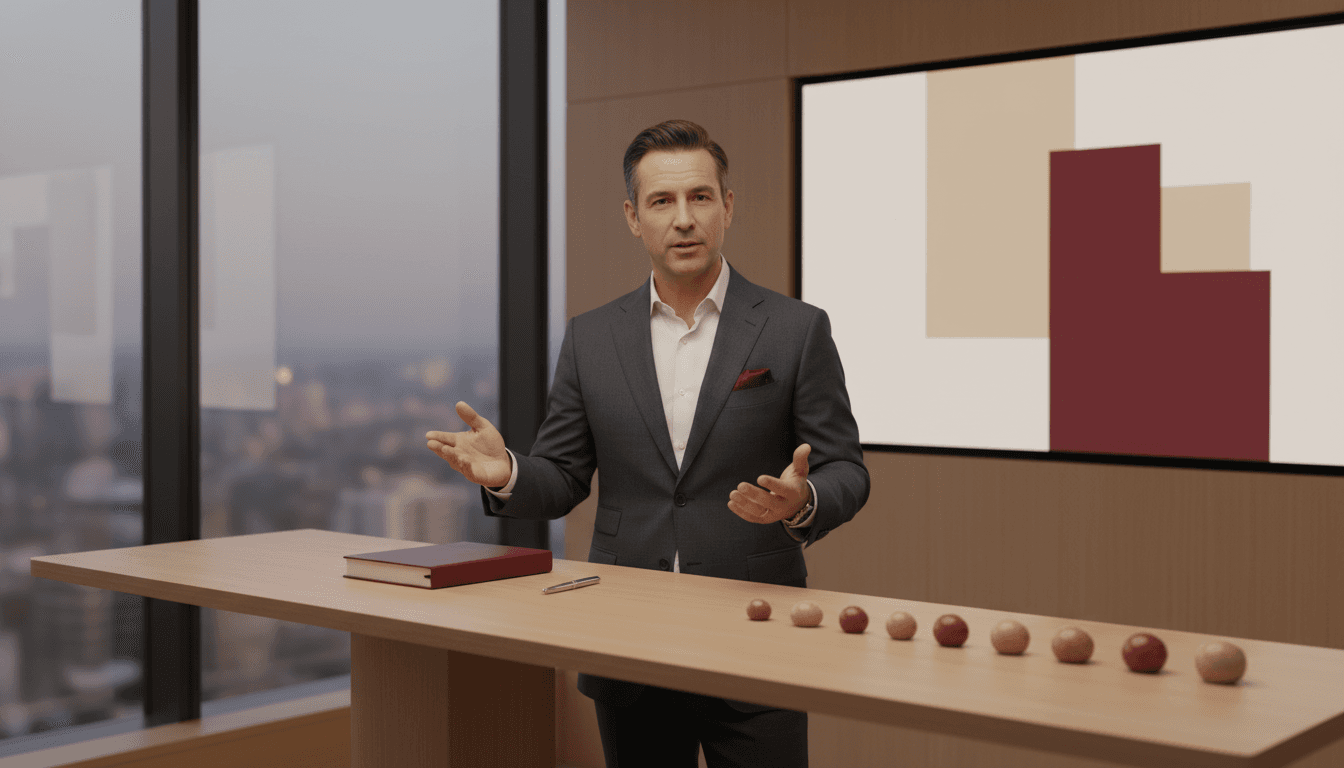
Gravitas is the quality of being perceived as substantive, credible, and worth listening to. In a professional communication context, it means your words carry weight—not because you speak loudly or dominate the room, but because you communicate with intention, clarity, and composure.
Unlike charisma, which draws people in through energy and warmth, gravitas earns attention through depth and steadiness. It's the reason some leaders can say three sentences in a meeting and shift the entire direction of a conversation, while others speak for five minutes and are immediately forgotten.
According to a study by the Center for Talent Innovation (now Coqual), gravitas is the single most important dimension of executive presence, accounting for 67% of what senior leaders say matters most when evaluating leadership potential. That statistic alone tells you: if you want to advance, learning how to communicate with gravitas isn't optional—it's essential.
Why Gravitas Matters More Than Ever in the Workplace
The Attention Economy Inside Your Organization

Every workplace is an attention economy. In meetings, emails, and hallway conversations, people are constantly deciding whether to listen to you or tune you out. A 2023 Microsoft WorkLab study found that the average attention span in meetings has dropped to roughly 10 minutes before participants disengage. Gravitas is what earns you those 10 minutes—and keeps people locked in beyond them.
When you communicate with gravitas, colleagues process your contributions differently. They remember what you said. They attribute ideas to you. They seek your opinion on important decisions. Without it, even brilliant insights get lost in the noise.
Gravitas vs. Volume: A Critical Distinction
Many professionals confuse gravitas with being loud, aggressive, or dominant. This is a costly misunderstanding. True gravitas is often quiet. It shows up as the person who waits, listens, and then delivers a single observation that reframes the entire discussion.
Consider two directors in the same leadership meeting. Director A speaks frequently, fills silence, and restates points others have already made. Director B listens for the first 15 minutes, takes one note, and then says: "The core issue isn't budget—it's alignment. Until we agree on the priority, the numbers don't matter." Director B has gravitas. Director A has volume. The room knows the difference instantly.
If you've ever felt overlooked despite contributing frequently, the issue may not be how much you speak—it's how you speak. For a deeper dive into this dynamic, explore why people don't take you seriously at work and how to fix it.
The Compound Effect of Daily Practice
Gravitas isn't built in a single presentation or one high-stakes meeting. It's built through hundreds of small, daily interactions. Each email, each meeting contribution, each one-on-one conversation is a deposit into your credibility account. Research from Harvard Business Review indicates that it takes an average of 7 positive leadership interactions for colleagues to update their perception of someone's competence. The practices below are designed to make every interaction count.
10 Daily Practices to Communicate with Gravitas
Practice 1: Choose Precise Words Over Filler
Gravitas starts with word choice. Every "sort of," "kind of," "I think maybe," and "just" dilutes your authority. Precise language signals that you've thought carefully before speaking.
Daily habit: Before your first meeting each day, review your key points and strip out hedging language. Instead of "I just wanted to maybe suggest we could consider..." say "I recommend we..." Instead of "I feel like this might not work," say "This approach has three specific risks."A study published in the Journal of Language and Social Psychology found that speakers who used fewer hedging phrases were rated 25-35% more credible by listeners, even when the content was identical. Words are free. Choosing better ones costs nothing and changes everything. For a complete breakdown of language upgrades, see how to stop sounding unsure when you speak at work.
Practice 2: Slow Your Pace by 20%
Speed signals nervousness. Deliberate pacing signals confidence and control. When you speak too quickly, your audience processes less, retains less, and respects the message less.
Daily habit: In your first conversation each morning, consciously slow your speaking rate. Most professionals speak at 150-170 words per minute. Aim for 130-140 in professional settings. You'll feel uncomfortably slow at first. Your audience will perceive you as more authoritative.Record yourself on a voice memo during a practice run of any talking point. Play it back. If you can't comfortably take notes while listening to yourself, you're speaking too fast.
Practice 3: Use the Strategic Pause
The pause is the most underrated tool in professional communication. A two-second pause before answering a question signals that you're thinking, not reacting. A pause after a key statement gives your words room to land.
Daily habit: When someone asks you a question in a meeting, take a full breath before responding. When you make an important point, stop talking for two seconds afterward. Resist the urge to fill silence.Consider this scenario: Your VP asks, "What's your recommendation?" Instead of immediately launching into an answer, you pause, make eye contact, and then say: "Based on the data from Q3, I recommend we consolidate the two teams." That pause didn't slow the meeting down. It elevated your response from a reaction to a recommendation. Learn more about this technique in how to pause effectively in public speaking.
Practice 4: Listen Longer Than You Think You Should
People with gravitas are exceptional listeners. They don't interrupt. They don't plan their response while someone else is talking. They absorb, process, and then respond with something that demonstrates they actually heard what was said.
Daily habit: In at least one conversation per day, practice listening for the full duration of the other person's point without formulating your response. When they finish, pause (Practice 3), then respond by referencing something specific they said before adding your perspective.This approach is especially powerful in difficult conversations, where the urge to defend or redirect is strongest. Listening with discipline in those moments is what separates leaders from participants.
Ready to Build Unshakable Professional Credibility? These daily practices are the foundation—but gravitas is just one dimension of commanding presence. Discover The Credibility Code to access the complete framework for building authority in every professional interaction.
Practice 5: Ground Your Physical Presence
Your body communicates before your mouth opens. Fidgeting, swaying, crossing your arms, or avoiding eye contact all undermine gravitas before you say a word.
Daily habit: Before entering any meeting room (or joining a video call), do a 10-second body scan. Plant both feet flat on the floor. Drop your shoulders. Open your chest. Make your first gesture intentional, not nervous. On video, position your camera at eye level and sit back slightly in your chair rather than leaning forward anxiously.Research from Princeton University found that people form judgments about competence and trustworthiness within 100 milliseconds of seeing someone—far before any words are exchanged. Your physical presence is the first chapter of your gravitas story. For a comprehensive guide, read how to look confident with body language.
Practice 6: Lead with Evidence, Not Opinion
Opinions are common. Evidence is rare. Professionals who consistently ground their statements in data, examples, and specifics are perceived as more substantive and credible.
Daily habit: Before any meeting where you plan to contribute, prepare at least one data point, case study, or concrete example to support your position. Instead of "I think we should change our approach," say "Our conversion rate dropped 12% after the last change. I recommend we revert and test a smaller variation first."This doesn't mean drowning people in numbers. It means anchoring your perspective in something verifiable. One well-placed data point does more for your gravitas than ten minutes of abstract reasoning.
Practice 7: Structure Your Thoughts Before Speaking
Rambling is the enemy of gravitas. When you speak without structure, your audience has to work harder to find your point—and most won't bother.
Daily habit: Use the Point-Reason-Example-Point (PREP) framework every time you contribute in a meeting:- Point: State your position clearly.
- Reason: Explain why in one sentence.
- Example: Provide one specific piece of evidence.
- Point: Restate your position.
Example: "We should delay the launch by two weeks. (Point) The QA team identified three critical bugs that affect checkout. (Reason) Last quarter, we shipped with a similar bug and lost $40K in abandoned carts. (Example) Two weeks now saves us significant revenue and customer trust. (Point)"
This framework works in meetings, emails, and presentations. For more on structuring your communication for maximum impact, explore how to present ideas clearly at work.
Practice 8: Manage Your Vocal Tone
A rising intonation at the end of statements turns every point into a question. A monotone delivery puts people to sleep. Gravitas lives in the space between—a steady, grounded tone that drops slightly at the end of declarative statements.
Daily habit: During your morning commute or before your first call, read a paragraph aloud from any business article. Focus on ending each sentence with a downward inflection. Record yourself and listen back. Notice where your pitch rises unnecessarily and correct it.Your voice is an instrument. Like any instrument, it improves with daily practice. For a deeper exploration of vocal authority, see how to develop a commanding voice at work.
Practice 9: Ask Powerful Questions
People with gravitas don't just deliver answers—they ask the questions that change the direction of conversations. A well-placed question demonstrates strategic thinking and signals that you're operating at a higher level than the surface discussion.
Daily habit: In at least one meeting per day, ask one question that reframes the conversation. Use this formula: "What would need to be true for [proposed action] to succeed?" or "What's the risk we're not discussing?"These questions do two things: they demonstrate that you're thinking beyond the immediate topic, and they position you as someone who sees around corners. Senior leaders notice this. According to a 2022 survey by Development Dimensions International (DDI), leaders who ask strategic questions are rated 2.1x more likely to be seen as high-potential talent by their superiors.
Practice 10: Close Every Conversation with Clarity
How you end a conversation shapes how people remember you. Trailing off, ending with "so, yeah..." or letting conversations dissolve into small talk undermines the gravitas you built during the discussion.
Daily habit: End every significant conversation with one of these closers:- The summary close: "To confirm—we're aligned on X, and I'll deliver Y by Friday."
- The commitment close: "I'll send a follow-up by end of day with the three options we discussed."
- The directional close: "Based on this conversation, my recommendation is X. I'll put together the supporting analysis."
This practice is especially critical in communicating with senior leadership, where executives value people who drive toward clarity rather than letting discussions meander.
Building a Gravitas Routine: How to Stack These Practices
The Morning Gravitas Check-In (2 Minutes)
You don't need to practice all ten habits simultaneously. Start each morning by choosing three to focus on. Before your first meeting, ask yourself:
- What's my key message today, and can I say it in one sentence?
- Which practice do I want to improve this week?
- Where's my biggest opportunity to demonstrate gravitas today?
This two-minute check-in creates intentionality. Over time, the practices become automatic.
The Weekly Gravitas Audit (10 Minutes)
Every Friday, spend 10 minutes reviewing your week. Ask:
- Which conversations went well? What practice was I using?
- Where did I lose authority or get overlooked? What was missing?
- What's one specific moment I want to handle differently next week?
This reflection loop is what separates people who read about gravitas from people who actually build it. For a broader system of daily confidence-building, see daily workplace confidence exercises that actually work.
Turn Daily Practices Into Lasting Authority. The 10 practices in this article are your starting point. The Credibility Code gives you the complete system—scripts, frameworks, and advanced strategies for building authority that compounds over your entire career. Discover The Credibility Code and start building gravitas that sticks.
Common Mistakes That Destroy Gravitas
Over-Explaining and Over-Qualifying
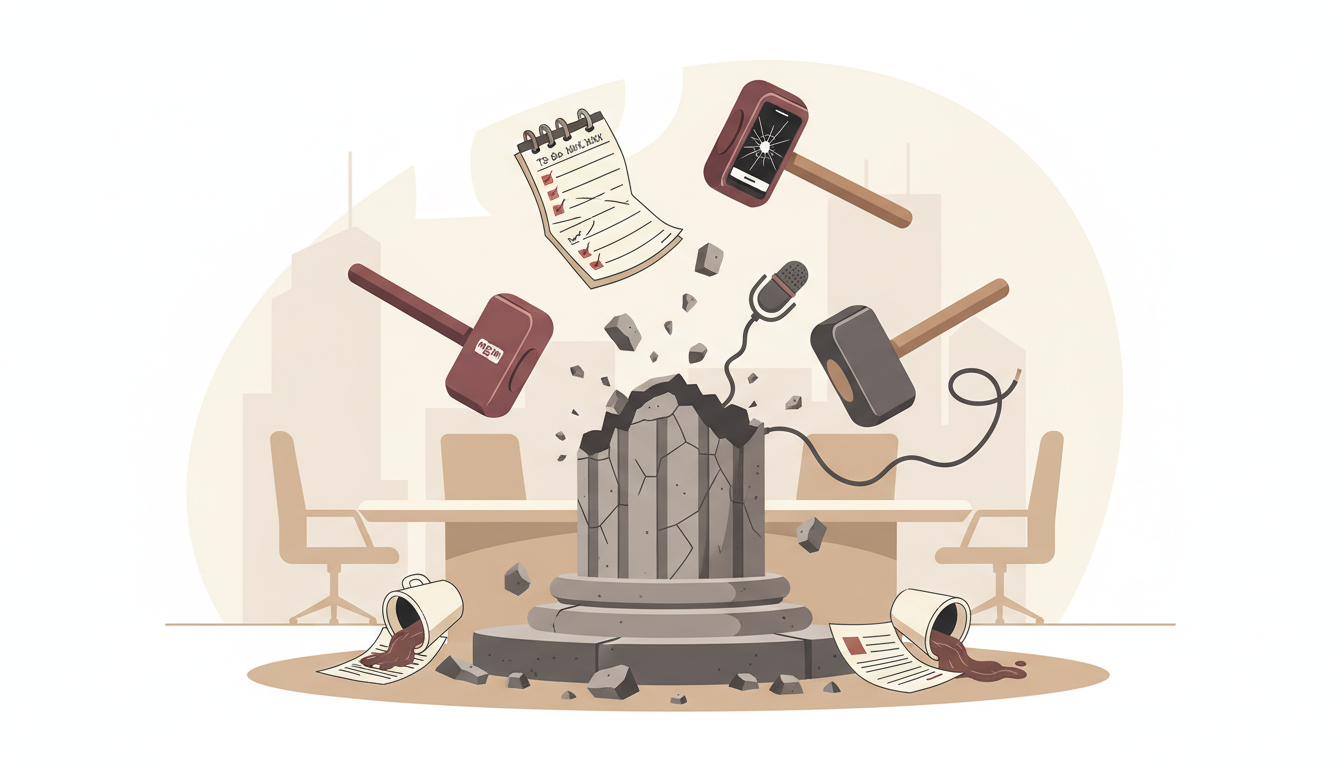
When you explain your reasoning at length or add qualifiers like "this might be wrong, but..." you signal uncertainty. Gravitas requires you to state your position and trust that your preparation supports it. If someone wants more detail, they'll ask. Let them.
Confusing Gravitas with Rigidity
Gravitas is not about being stiff, cold, or unapproachable. The most effective leaders combine substance with warmth. They can make a decisive recommendation and then ask a colleague how their weekend was. Rigidity signals insecurity. Gravitas paired with genuine human connection signals confidence.
Trying to Sound Smart Instead of Being Clear
Using jargon, complex sentence structures, or obscure references to impress people is the opposite of gravitas. Clarity is the hallmark of someone who truly understands their subject. As Einstein reportedly said, "If you can't explain it simply, you don't understand it well enough." The most commanding communicators use the simplest language in the room.
Frequently Asked Questions
What is gravitas in communication?
Gravitas in communication is the quality of being perceived as substantive, credible, and authoritative when you speak. It's not about volume or dominance—it's about delivering your message with clarity, composure, and intention so that people take your words seriously. Gravitas combines what you say (precise language, evidence-based reasoning) with how you say it (steady tone, confident pacing, grounded body language).
How long does it take to develop gravitas?
Most professionals notice a shift in how others respond to them within 2-4 weeks of consistent daily practice. However, building a lasting reputation for gravitas takes 3-6 months of sustained effort. Research from the Center for Creative Leadership suggests that meaningful behavioral change in communication style becomes habitual after approximately 66 days of deliberate practice. Start with 2-3 practices and add more as each becomes natural.
Gravitas vs. charisma: What's the difference?
Charisma draws people in through energy, warmth, and personal magnetism. Gravitas earns respect through substance, composure, and depth. Charismatic communicators make you feel inspired; communicators with gravitas make you feel informed and confident in their judgment. The most effective leaders combine both, but gravitas is weighted more heavily in executive presence assessments—accounting for 67% of what matters according to Coqual research.
Can introverts have gravitas?
Absolutely. Introverts often have a natural advantage in developing gravitas because many of the core practices—listening deeply, thinking before speaking, choosing words carefully—align with introverted tendencies. Gravitas doesn't require you to be the loudest voice in the room. It requires you to be the most intentional one. For tailored strategies, explore how to build leadership presence as an introvert.
How do I communicate with gravitas in virtual meetings?
Virtual gravitas requires extra attention to three areas: your visual setup (camera at eye level, neutral background, good lighting), your vocal delivery (slightly slower pace and more deliberate pauses to compensate for audio lag), and your verbal structure (use the PREP framework since virtual audiences lose focus faster). Avoid multitasking visibly, look directly at your camera when making key points, and use shorter, more structured contributions.
How do I practice gravitas without seeming arrogant?
The key distinction is intention. Arrogance centers on elevating yourself; gravitas centers on serving your audience with clarity and substance. Practice gravitas by focusing on being helpful and clear rather than impressive. Ask questions, acknowledge others' contributions, and ground your authority in evidence rather than self-promotion. For more on this balance, read build career authority without being self-promotional.
Your Gravitas Journey Starts Today. You now have 10 specific daily practices to communicate with more authority, substance, and presence. But gravitas is just one piece of the credibility puzzle. Discover The Credibility Code—the complete playbook for professionals who want to be heard, respected, and remembered in every room they enter.
Ready to Command Authority in Every Conversation?
Transform your professional communication with proven techniques that build instant credibility. The Credibility Code gives you the frameworks top leaders use to project confidence and authority.
Discover The Credibility CodeRelated Articles

How to Communicate With Gravitas at Work: 8 Key Shifts
Communicating with gravitas at work means speaking with a deliberate blend of authority, composure, and substance that makes people stop and listen. It requires eight specific shifts: leading with your conclusion, eliminating hedging language, slowing your delivery, grounding your body language, using strategic silence, choosing precise words, anchoring claims in evidence, and holding your ground under pressure. These shifts transform you from someone who shares ideas into someone whose ideas sh

How to Communicate with Gravitas: A Practical Guide
Communicating with gravitas means speaking with a combination of authority, composure, and intentional weight that makes people stop and listen. To develop it, focus on five core areas: choose precise, confident language; control your vocal delivery (pace, tone, pauses); regulate your emotions under pressure; use strategic silence instead of filling space; and anchor every statement in substance over style. Gravitas isn't about being loud—it's about being unmistakably credible every time you spe

How to Speak With Gravitas: 9 Shifts That Command Respect
Speaking with gravitas means communicating with a weight and authority that makes people stop, listen, and take you seriously. It's not about being loud or dominating—it's about making every word count. To speak with gravitas, you need to make nine deliberate shifts: slow your pace, lower your pitch, eliminate filler words, use declarative language, pause with purpose, anchor your body language, lead with insight, speak concisely, and own the room's silence. These shifts transform how others per