
A Professional Communication Framework for Influence

A professional communication framework for influence is a repeatable structure you use to organize your message so it lands with clarity, credibility, and persuasive power in any workplace interaction. The most effective model is the PEIA framework: Position–Evidence–Impact–Ask. It works across emails, meetings, presentations, and one-on-ones by forcing you to lead with a clear stance, back it with proof, connect it to what stakeholders care about, and close with a specific request. Below, you'll learn exactly how to apply it.
What Is a Professional Communication Framework for Influence?
A professional communication framework for influence is a structured method for organizing your ideas so they consistently move people toward action. Instead of improvising your way through high-stakes conversations, you follow a deliberate sequence—stating your position, supporting it with evidence, linking it to meaningful impact, and making a clear ask.
Think of it as a communication operating system. It doesn't change what you say—it changes how you sequence and deliver your message so it earns attention, builds credibility, and drives decisions. According to a 2023 study published in the Harvard Business Review, professionals who use structured communication approaches are 40% more likely to have their proposals approved by senior leaders compared to those who present ideas without a clear framework.
The PEIA Framework: Position–Evidence–Impact–Ask
The PEIA framework is the backbone of this entire approach. Each letter represents one step in a communication sequence designed to sound strategic rather than scattered.
Position: Lead With Your Point
Most professionals bury their main idea. They start with context, backstory, or caveats. The Position step flips that habit. You open with a clear, direct statement of what you believe, recommend, or propose.
Example: Instead of saying, "So I've been looking at the Q3 numbers and there's some interesting data, and I think maybe we should consider…" you say: "I recommend we reallocate 15% of the Q3 marketing budget to our enterprise pipeline."Leading with your position signals confidence and respects your listener's time. It's one of the most important shifts you can make if you want to sound more strategic at work.
Evidence: Back It With Proof
Your position is only as strong as the evidence behind it. This step is where you provide data, examples, case studies, or precedent that support your recommendation. The key: choose two to three pieces of evidence, not ten. Overloading weakens your argument.
Example: "Our enterprise leads convert at 3.2x the rate of SMB leads, and the average deal size is $47K higher. Last quarter, the team that piloted enterprise-focused spend saw a 28% increase in pipeline velocity."Research from the Edelman Trust Barometer (2024) found that 64% of decision-makers say they are more persuaded by data-backed arguments than by seniority or charisma alone. Evidence is the credibility engine of this framework.
Impact: Connect to What They Care About
This is the step most people skip—and it's the one that creates influence. Impact means explicitly connecting your recommendation to the outcomes your audience values. If you're talking to a CFO, connect to revenue or cost savings. If you're talking to an operations leader, connect to efficiency or risk reduction.
Example: "If we make this shift, we project an additional $1.2M in enterprise pipeline by end of Q4, which directly supports the board's growth target."Impact transforms your message from an opinion into a business case. It's also the step that distinguishes someone who communicates like a mid-level contributor from someone who communicates like an executive.
Ask: Close With a Specific Request
Every influential message ends with a clear ask. Not a vague "let me know what you think," but a specific next step. What do you want the listener to do, approve, or decide?
Example: "I'd like your approval to redirect $45K from the SMB display campaign to the enterprise ABM program starting August 1. Can we confirm that today?"A study by the University of Western Ontario found that messages ending with a specific call to action are 2.5x more likely to produce a response than those that end with an open-ended question. The ask is where influence converts into action.
Ready to Sound More Strategic in Every Conversation? The PEIA framework is just one tool inside The Credibility Code—a complete system for building authority and commanding presence at work. Discover The Credibility Code and start communicating with influence today.
Applying the PEIA Framework in Emails
Email is where most professionals lose credibility without realizing it. Long, unfocused messages get skimmed or ignored. The PEIA framework turns every email into a concise, action-oriented message.

Structure Your Email in Four Paragraphs
Map each PEIA step to a short paragraph. Your email should rarely exceed four to six sentences total for routine business communication. Here's how it looks in practice:
Subject line: Recommendation: Shift Q3 budget to enterprise pipeline Email body: Position: "I recommend we reallocate 15% of Q3 marketing spend to the enterprise pipeline." Evidence: "Enterprise leads convert at 3.2x the SMB rate, and the pilot team saw a 28% increase in pipeline velocity last quarter." Impact: "This positions us to add $1.2M in pipeline toward the board's Q4 growth target." Ask: "Can you approve this shift by Friday so we can brief the team Monday?"This approach aligns with the principles of writing emails that sound authoritative—direct, evidence-based, and action-oriented.
Avoid the "Warm-Up" Trap
Many professionals start emails with unnecessary preamble: "Hope you're doing well! I wanted to circle back on something we discussed last week…" In high-stakes communication, this signals uncertainty. The PEIA framework trains you to cut straight to your position.
According to a Boomerang analysis of over 300,000 emails, messages between 50 and 125 words received the highest response rates—above 50%. Brevity isn't rude. It's strategic.
Use Subject Lines That Signal Your Position
Your subject line is the first piece of your framework. Instead of vague subjects like "Quick question" or "Thoughts?", use your Position step as the subject line: "Recommendation: Consolidate vendor contracts for 12% savings." This primes the reader and sets the tone before they even open the message.
Applying the PEIA Framework in Meetings
Meetings are where influence is won or lost in real time. The PEIA framework gives you a structure to contribute with impact, even when you have limited airtime.
The 60-Second PEIA Contribution
In most meetings, you have about 60 seconds before attention shifts. PEIA lets you use that window strategically. Here's a scenario:
You're in a cross-functional meeting. The VP of Product asks for input on whether to delay a feature launch.
- Position: "I'd recommend we hold the launch by two weeks."
- Evidence: "Our beta testers flagged three critical UX issues, and our NPS for the beta dropped 18 points in the last sprint."
- Impact: "Launching with these issues risks a negative reception that could set back adoption targets for the quarter."
- Ask: "Can we align on a revised timeline by end of day tomorrow?"
That's a confident, complete contribution in under 30 seconds. It's a far cry from the rambling, hedge-filled responses that cause people to feel overlooked in meetings.
Handling Pushback Within the Framework
When someone challenges your position, don't abandon the framework—loop back through it. Acknowledge the pushback, then restate your evidence and impact.
Example response to pushback: "I hear the concern about timeline pressure. The data still shows that the three UX issues correlate with a significant NPS drop. If we launch now and adoption stalls, the cost of recovery is higher than a two-week delay. I'd still recommend the hold."This technique keeps you grounded and prevents the defensive spiraling that undermines credibility. If you want to go deeper on handling pressure in meetings, explore these proven methods for communicating with poise under pressure.
Using PEIA When You're Put on the Spot
Being caught off guard in a meeting is inevitable. PEIA gives you a mental scaffold to organize your thoughts in seconds. Even if you only hit two of the four steps, you'll sound more coherent than 90% of improvised responses.
A quick mental shortcut: "What's my position? What's one piece of evidence?" That alone will keep you from rambling. For more frameworks on handling surprise questions, see our guide on responding well when put on the spot.
Applying the PEIA Framework in Presentations
Presentations are the highest-visibility application of the PEIA framework. Whether you're presenting to your team or to the C-suite, PEIA gives your presentation a spine that audiences can follow.
Open With Position, Not Agenda
Most presentations begin with an agenda slide or a long introduction. Instead, open with your Position—the core recommendation or insight your audience needs to hear.
Example opener: "Our customer acquisition cost has increased 34% year over year. Today, I'm going to show you why, and recommend a channel strategy that brings it back in line within two quarters."That's a Position and a preview of Impact in two sentences. It immediately tells the audience why they should care. This approach is central to establishing credibility in a presentation fast.
Build Your Slides Around Evidence and Impact
Each section of your presentation should map to Evidence or Impact. For every data point or case study you include, ask: "Does this support my position? Does it connect to what this audience cares about?" If the answer to either is no, cut it.
Gallup research shows that only 29% of employees strongly agree that their leaders communicate a clear plan for the future. The professionals who stand out are those who structure their communication around a clear position and its tangible impact—not those who simply share more information.
Close With a Memorable Ask
Your final slide—or your final 30 seconds—should be your Ask. Make it concrete and time-bound. "I'm requesting approval to pilot this channel strategy in Q1 with a $200K budget. I'll report back with results at the March leadership review."
A strong close is what separates a presentation that informs from one that drives decisions. For more on high-impact closings, read our guide on closing a presentation with impact.
Want a Complete System for Commanding Any Room? The PEIA framework is powerful on its own, but it's even more effective when paired with the vocal authority, body language, and confidence strategies inside The Credibility Code. Discover The Credibility Code and build the kind of presence that makes people listen.
Applying the PEIA Framework in One-on-Ones and Negotiations
One-on-one conversations—with your manager, a peer, or a stakeholder—are where careers are shaped. PEIA works here too, especially when the conversation involves persuasion or negotiation.

Pitching an Idea to Your Manager
Suppose you want to propose a new process to your director. Here's how PEIA structures that conversation:
- Position: "I'd like to propose we switch our weekly status reports to a shared dashboard format."
- Evidence: "I surveyed the team—8 out of 10 said they spend over 45 minutes per week writing reports that rarely get read in full. A dashboard would auto-populate from our project management tool."
- Impact: "That's roughly 30 hours per month we'd recover across the team, which we could redirect toward the product backlog."
- Ask: "Can I build a prototype dashboard this week and present it at our next team meeting?"
This is clear, respectful, and persuasive. It positions you as someone who thinks like a leader—exactly the kind of communication that builds authority in your career.
Negotiating Resources or Priorities
In negotiations, PEIA keeps you from becoming emotional or reactive. You state your position, back it with evidence, connect it to shared goals (Impact), and make a specific request.
Example: You need an additional headcount for your team.- Position: "I'm requesting one additional senior analyst for Q2."
- Evidence: "Our team's workload has increased 40% since last year, and our average project turnaround has slipped from 5 days to 9."
- Impact: "Without this hire, we risk missing the product launch timeline, which is tied to $3M in projected revenue."
- Ask: "Can we open the requisition this week and target a start date by mid-March?"
For more negotiation strategies, explore our guide on negotiating project resources with confidence.
Adjusting PEIA for Difficult Conversations
In sensitive conversations—delivering feedback, pushing back on a decision, or raising a concern—the framework still applies, but you may soften the Position step slightly while keeping the structure intact.
Example (pushing back on a deadline):- Position: "I want to flag a concern about the April 15 deadline for the compliance audit."
- Evidence: "We're still waiting on data from two departments, and the review process alone takes 10 business days."
- Impact: "If we rush and submit an incomplete audit, we risk a regulatory flag that could delay the product launch."
- Ask: "Can we request a one-week extension and communicate the revised timeline to the steering committee today?"
Even in delicate situations, structure signals professionalism.
Common Mistakes That Weaken the PEIA Framework
Knowing the framework isn't enough—you also need to avoid the pitfalls that dilute its power.
Starting With Evidence Instead of Position
This is the most common mistake. Professionals often lead with data, hoping the audience will arrive at the same conclusion. They rarely do. Always lead with your position. Let the evidence serve it, not replace it.
Making a Vague Ask (or No Ask at All)
If you end with "Let me know your thoughts" or "Happy to discuss further," you've surrendered your influence. Every PEIA-structured message should end with a clear, specific request tied to a timeline.
Overloading the Evidence Step
Two to three strong data points are more persuasive than ten mediocre ones. A 2022 study from the Journal of Consumer Research found that adding weak arguments to a strong case actually reduced overall persuasiveness—a phenomenon called the "dilution effect." Edit ruthlessly.
Frequently Asked Questions
What is the best communication framework for workplace influence?
The PEIA framework—Position, Evidence, Impact, Ask—is one of the most effective professional communication frameworks for influence. It works because it forces you to lead with a clear stance, support it with data, connect it to outcomes your audience values, and close with a specific action. It applies across emails, meetings, presentations, and one-on-one conversations.
How is a communication framework different from a persuasion technique?
A communication framework is a structural tool for organizing your message. A persuasion technique is a tactic—like mirroring, anchoring, or storytelling—used within a message to increase its emotional or psychological impact. The PEIA framework gives you structure; persuasion techniques enhance specific moments within that structure. The two work best together.
Can I use the PEIA framework in emails?
Absolutely. Map each step to a short paragraph: open with your recommendation (Position), support it with one to two data points (Evidence), connect to the recipient's goals (Impact), and close with a specific request and timeline (Ask). This approach keeps emails concise and action-oriented—typically under 125 words.
How do I use a communication framework when I'm nervous?
Start by memorizing just two steps: Position and Ask. Even under pressure, if you can state what you recommend and what you need, you'll sound more coherent than most. Practice the full PEIA sequence in low-stakes situations first—team check-ins, internal emails—until it becomes automatic. For more strategies, read our guide on speaking up in meetings when you're nervous.
Does the PEIA framework work for senior executives?
Yes—in fact, senior executives prefer this style of communication. Executives are time-constrained and make dozens of decisions daily. A structured, concise message that leads with a recommendation and ends with a clear ask is exactly what they need. Research from McKinsey confirms that C-suite leaders consistently rank "clarity and brevity" as the top communication traits they value in direct reports.
What's the difference between PEIA and the Pyramid Principle?
The Pyramid Principle, developed by Barbara Minto at McKinsey, also advocates leading with your conclusion. PEIA builds on this by adding two critical elements: the Impact step (which ties your recommendation to audience-specific outcomes) and the Ask step (which converts communication into action). PEIA is more action-oriented and better suited for everyday workplace interactions beyond formal reports.
Turn Every Interaction Into an Opportunity to Lead. The PEIA framework gives you the structure—but true influence requires the confidence, presence, and authority to deliver it. The Credibility Code gives you the complete system: vocal authority, executive body language, assertive communication scripts, and the mindset shifts that make people take notice. Discover The Credibility Code and start building the kind of professional credibility that opens doors.
Ready to Command Authority in Every Conversation?
Transform your professional communication with proven techniques that build instant credibility. The Credibility Code gives you the frameworks top leaders use to project confidence and authority.
Discover The Credibility CodeRelated Articles

How to Be More Persuasive at Work: 7 Credibility-Based Tactics
To be more persuasive at work, shift from pushing your ideas to building credibility that pulls people toward them. The most persuasive professionals use seven core tactics: the problem-cost-solution framework, evidence framing, strategic concession, authority signaling, stakeholder pre-alignment, reciprocity anchoring, and the credibility close. These approaches earn lasting buy-in from peers, leadership, and cross-functional teams—without manipulation or pressure.
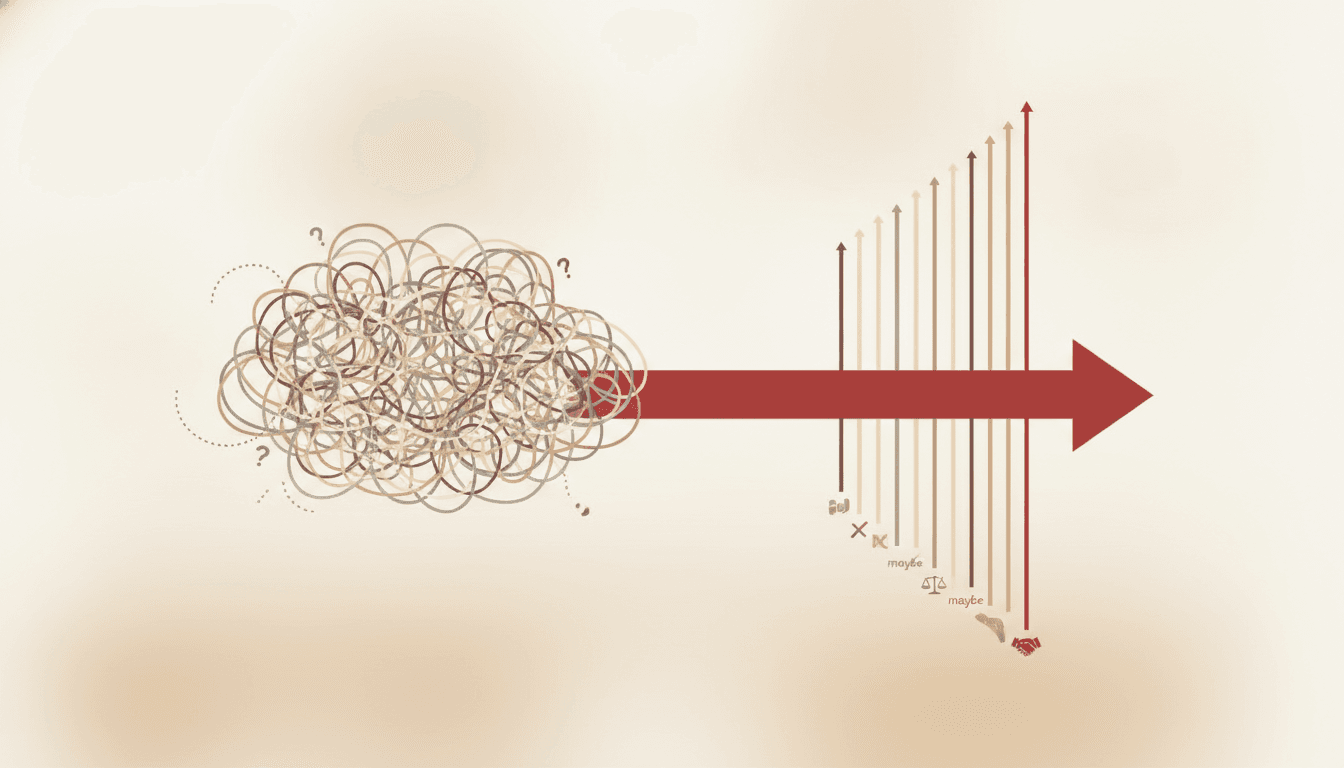
How to Stop Sounding Uncertain at Work: 12 Quick Fixes
To stop sounding uncertain at work, eliminate hedging phrases ("I think," "sort of," "maybe"), replace uptalk with downward inflection, cut excessive qualifiers, stop beginning sentences with apologies, and use direct declarative statements. These 12 quick fixes target the exact speech and writing patterns that undermine your credibility — and most can be implemented in your very next meeting or email.

How to Communicate With Impact at Work: 10 Daily Habits
Learning how to communicate with impact at work comes down to ten daily habits: leading with your conclusion first, replacing filler language with strategic pauses, structuring updates using a problem-solution-outcome framework, writing emails with clear action lines, using confident body language, asking high-value questions, giving specific feedback, closing conversations with next steps, preparing a "signature point" before meetings, and reviewing your communication wins each day. These small