
How to Build Credibility as a New Leader: 10 Fast Moves

What Is Leadership Credibility?
Leadership credibility is the perception that you are competent, trustworthy, and worth following. It's the invisible currency that determines whether people listen to your ideas, support your decisions, and commit to your vision.
Unlike authority — which comes from your title — credibility comes from your behavior. A 2023 study by the Center for Creative Leadership found that credibility is the single most important factor in whether employees willingly follow a leader, ranking above charisma, experience, and technical expertise. You can hold a director title and still lack credibility if your team doesn't trust your judgment or your word.
Credibility has three pillars: competence (you know what you're doing), consistency (you do what you say), and character (you act with integrity even when it's hard). New leaders who understand this framework move faster because they stop trying to "prove themselves" through dominance and start earning trust through demonstration.
Move 1-3: Establish Trust Before You Direct
The biggest mistake new leaders make is arriving with a 90-day plan full of changes before they understand the landscape. Your first priority isn't to fix things — it's to earn the right to change things.

Move 1: Lead with Listening Tours
In your first two weeks, schedule 30-minute one-on-one conversations with every direct report, key peer, and at least two senior stakeholders. Ask three questions:
- "What's working well that I should protect?"
- "What's the biggest obstacle slowing your work?"
- "What would you want me to know that I probably won't hear in meetings?"
This isn't passive — it's strategic. You're gathering intelligence, identifying landmines, and signaling respect simultaneously. According to research from Harvard Business Review, leaders who spend their first 90 days primarily listening are rated 32% more effective by their teams after six months compared to those who lead with immediate action plans.
Take notes. Reference what people told you in future conversations. Nothing builds credibility faster than proving you actually heard someone.
Move 2: Honor What Came Before You
Resist the urge to criticize your predecessor or dismantle existing processes on day one. Even if you were hired to "shake things up," your team has emotional investment in the systems they built.
Try this language: "I can see this process was designed to solve [specific problem]. As we grow, I'd like us to explore whether there are ways to evolve it — and I'll need your input on that."
This approach signals confidence without arrogance. For a deeper dive into this balance, read our guide on how to project authority without arrogance.
Move 3: Make Your Expectations Clear Early
Ambiguity kills credibility. Within your first three weeks, communicate your working style, communication preferences, and decision-making approach explicitly.
A simple framework: share a "How I Work" document with your team covering:
- How you prefer to receive updates (email, Slack, meetings)
- How you make decisions (consensus, consultative, directive)
- What earns your trust (honesty, ownership, follow-through)
- What concerns you (surprises, missed commitments, silence when there's a problem)
This transparency eliminates guesswork and positions you as someone who operates with clarity — a hallmark of executive-level communication.
Move 4-6: Demonstrate Competence Through Action
Trust gets you in the door. Competence keeps you there. These moves show your team and stakeholders that you can actually deliver.
Move 4: Identify and Deliver a Quick Win
Find one visible, achievable improvement you can deliver in your first 30 days. This isn't about grand strategy — it's about demonstrating momentum.
Example: Sarah, a newly promoted engineering director, noticed her team spent 45 minutes every Monday in a status meeting that could be replaced by a shared dashboard. She built the dashboard herself, freed up the time, and redirected it to a weekly problem-solving session. The team noticed. Her manager noticed. Credibility deposited.The key criteria for a good quick win:
- Visible to your team and at least one stakeholder above you
- Low-risk — doesn't require political capital you haven't earned yet
- Genuinely helpful — solves a real pain point, not a vanity project
Research from McKinsey's leadership transitions practice shows that new leaders who secure early wins within 30 days are 2.2 times more likely to be rated as successful at the 12-month mark.
Move 5: Show Your Work, Not Just Your Conclusions
New leaders often feel pressure to have all the answers. Ironically, showing your reasoning process builds more credibility than presenting polished conclusions.
When you make a recommendation, use this structure:
"Based on [data/input I gathered], I'm seeing [pattern]. I considered [alternative approach], but I'm recommending [action] because [specific reason]. Here's what I'd want to watch for as a risk."This structure signals strategic thinking, intellectual honesty, and decisiveness — all at once. It's a core skill covered in our guide on how to be seen as a strategic thinker at work.
Move 6: Own Your Knowledge Gaps Publicly
Nothing erodes credibility faster than faking expertise you don't have. Your team will see through it in days.
Instead, try: "I don't have deep experience in [area], and I know several of you do. I want to lean on that expertise as we make decisions here."
A 2022 study published in the Journal of Applied Psychology found that leaders who admitted uncertainty on specific topics were rated 22% higher in overall trustworthiness than those who projected confidence across all domains. Selective vulnerability isn't weakness — it's a credibility multiplier.
Ready to accelerate your leadership credibility? The Credibility Code gives you the exact communication frameworks, scripts, and strategies new leaders use to earn trust and authority fast. Discover The Credibility Code
Move 7-8: Communicate Like a Leader, Not a Manager
How you communicate in your first 90 days sets the tone for your entire tenure. Credible leaders speak differently — not louder, but with more precision, structure, and intention.

Move 7: Adopt the "Bottom Line Up Front" Communication Style
Senior leaders and stakeholders don't want your journey — they want your destination. Lead with your conclusion, then provide supporting context.
Instead of: "So I've been looking at the Q3 numbers and talking to the team, and there are some interesting trends, and I think we might need to consider..." Say: "I'm recommending we shift 15% of our Q3 budget to digital channels. Here's why — and here's the data behind it."This single shift in communication structure can dramatically change how people perceive your seniority and judgment. For a complete framework on this approach, see our guide on how to communicate with gravitas.
Move 8: Master the Language of Credibility
The words you choose either build or erode your authority. Research from our analysis of executive communication patterns shows that credible leaders consistently avoid hedging language and use precise, accountable phrasing.
Credibility-eroding phrases:- "I just wanted to check in..."
- "I might be wrong, but..."
- "Sorry, I think maybe we should..."
- "Does that make sense?"
- "I'm reaching out because..."
- "Based on the data, my recommendation is..."
- "I'd like to propose..."
- "What questions do you have?"
These aren't arrogant — they're clear. And clarity is the foundation of credibility. For a deeper exploration, check out our breakdown of words that undermine your credibility at work.
Move 9: Build Credibility With Senior Stakeholders
Your team's trust matters, but your credibility with the people above you determines your resources, autonomy, and longevity in the role.
Understand What Senior Leaders Actually Evaluate
Senior stakeholders assess new leaders on three criteria, whether they state them or not:
- Judgment — Do you escalate the right things and handle the rest?
- Reliability — Do you deliver what you commit to, on time?
- Signal-to-noise ratio — When you speak, is it worth listening to?
The fastest way to build upward credibility is to consistently deliver concise, structured updates that answer three questions: What's on track? What's at risk? What do I need from you?
According to a 2023 Gartner survey, 67% of senior executives said their top frustration with new leaders is "over-communication of details and under-communication of decisions." Flip that ratio and you'll stand out immediately.
Manage Up Without Being Political
Managing up isn't manipulation — it's professional communication. Keep your manager informed of wins (briefly), risks (early), and decisions (with your reasoning).
A practical cadence: Send a weekly 5-bullet email every Friday. Three bullets on progress, one on a risk or challenge, one on a decision you made or need input on. This rhythm builds trust through predictability and demonstrates you can communicate with senior leadership effectively.
Move 10: Build Peer Credibility Through Collaboration
Your peers — the other leaders at your level — are often the most overlooked credibility audience. But they control cross-functional cooperation, information flow, and informal influence.
Be a Resource, Not a Competitor
In your first 90 days, find at least two opportunities to help a peer succeed. Share relevant data. Offer your team's support on a cross-functional initiative. Publicly credit a peer's contribution in a meeting.
This isn't selfless — it's strategic. Peers who see you as collaborative will support your initiatives, share critical information, and advocate for you when you're not in the room.
Navigate Peer Conflicts With Composure
Inevitably, you'll face a disagreement with a peer who has more tenure, more relationships, or more political capital. How you handle this moment defines your credibility.
Use this framework:
- Acknowledge their perspective first — "I understand why you'd approach it that way, given [specific context]."
- Present your view with evidence — "I'm seeing different data that suggests [alternative]."
- Propose a path forward — "Could we test both approaches on a smaller scale and let the results decide?"
This approach demonstrates confidence without creating enemies. For more on navigating high-stakes disagreements, explore our guide on how to disagree with leadership without losing credibility.
Your first 90 days define your next 900. The Credibility Code gives you the exact frameworks, scripts, and communication strategies to build unshakable authority as a new leader — starting today. Discover The Credibility Code
The 90-Day Credibility Timeline
Here's how to sequence these 10 moves for maximum impact:
Days 1-14: Listen and Learn (Moves 1-2)- Complete listening tours with all key stakeholders
- Document existing processes, wins, and pain points
- Resist making changes
- Share your "How I Work" document
- Identify and begin executing your quick win
- Establish your weekly communication cadence with your manager
- Show your strategic reasoning publicly
- Adopt bottom-line-up-front communication
- Clean up hedging language
- Own knowledge gaps where appropriate
- Strengthen upward communication with senior stakeholders
- Build at least two meaningful peer alliances
- Deliver on your first significant commitment
By day 90, you should have a team that trusts your judgment, a manager who trusts your reliability, and peers who trust your character. That's credibility — and it compounds from there.
For a complementary perspective on this transition, see our detailed playbook on how to build authority as a new director in your first 90 days.
Frequently Asked Questions
How long does it take to build credibility as a new leader?
Most leadership research points to 90 days as the critical window. However, credibility isn't binary — it builds incrementally. You can establish initial trust in the first two weeks through listening and transparency. Deeper credibility, based on demonstrated competence and consistent follow-through, typically solidifies between 60 and 90 days. The key is that early missteps during this window are disproportionately costly and take months to recover from.
What is the difference between credibility and authority?
Authority is positional — it comes from your title, your reporting structure, and your organizational power. Credibility is perceptual — it comes from how people experience your competence, consistency, and character. You can have authority without credibility (people comply but don't trust you) or credibility without authority (people respect you but you lack formal power). The most effective leaders build both. For more on leading without formal power, see our guide on building authority at work without a title.
What destroys credibility fastest for new leaders?
Three behaviors destroy new leader credibility fastest: making promises you don't keep (even small ones), criticizing your predecessor or inherited team publicly, and pretending to have expertise you lack. A single broken commitment in your first 30 days can take months to repair. Consistency between your words and actions is the non-negotiable foundation of credibility.
How do you build credibility with a team that didn't want you as their leader?
Start by acknowledging the dynamic directly: "I know this transition wasn't what everyone hoped for, and I respect that." Then commit to earning trust through actions, not words. Prioritize one-on-one listening sessions, ask for their expertise genuinely, and deliver a visible quick win that benefits the team. Avoid trying to win everyone over — focus on the two or three informal influencers on the team and let trust spread organically.
Can introverts build leadership credibility as effectively as extroverts?
Absolutely. Research from Wharton professor Adam Grant shows that introverted leaders often outperform extroverted ones with proactive teams. Introverts tend to excel at listening deeply, making thoughtful decisions, and communicating with precision — all credibility accelerators. The key is ensuring your contributions are visible, even if you prefer not to dominate meetings. Strategic written communication and one-on-one relationship building are powerful credibility tools for introverted leaders.
How do you rebuild credibility after making a mistake as a new leader?
Own the mistake quickly, specifically, and without excessive self-flagellation. Use this formula: "I made the wrong call on [specific decision]. Here's what I've learned, and here's what I'm doing differently." Then follow through visibly. According to a 2021 study in The Leadership Quarterly, leaders who acknowledged errors transparently and took corrective action actually increased their credibility scores compared to pre-mistake levels. Vulnerability plus accountability equals trust.
Build unshakable credibility from day one. The Credibility Code is the complete system for new leaders who want to earn trust, communicate with authority, and command respect — without faking it. Inside, you'll find the exact scripts, frameworks, and daily practices that turn uncertain new leaders into confident authorities. Discover The Credibility Code
Ready to Command Authority in Every Conversation?
Transform your professional communication with proven techniques that build instant credibility. The Credibility Code gives you the frameworks top leaders use to project confidence and authority.
Discover The Credibility CodeRelated Articles

How to Build Professional Credibility Fast: A Proven Framework
Building professional credibility fast requires a deliberate combination of three elements: competence signals (demonstrating you know your stuff), consistency patterns (proving you're reliable over time), and communication authority (speaking and writing in ways that command respect). Whether you're stepping into a new role, switching industries, or joining a new team, you can accelerate credibility by stacking quick wins in these three areas within your first 30–90 days. Below is the complete

Career Authority After Promotion: How to Earn It Fast
You've got the new title — but career authority after promotion isn't automatic. To earn it fast, focus on three things in your first 90 days: reset how former peers perceive you, communicate upward with clarity and confidence to new stakeholders, and deliver visible early wins that prove you belong. Authority isn't granted by the org chart. It's built through deliberate communication, strategic visibility, and consistent follow-through in every interaction.
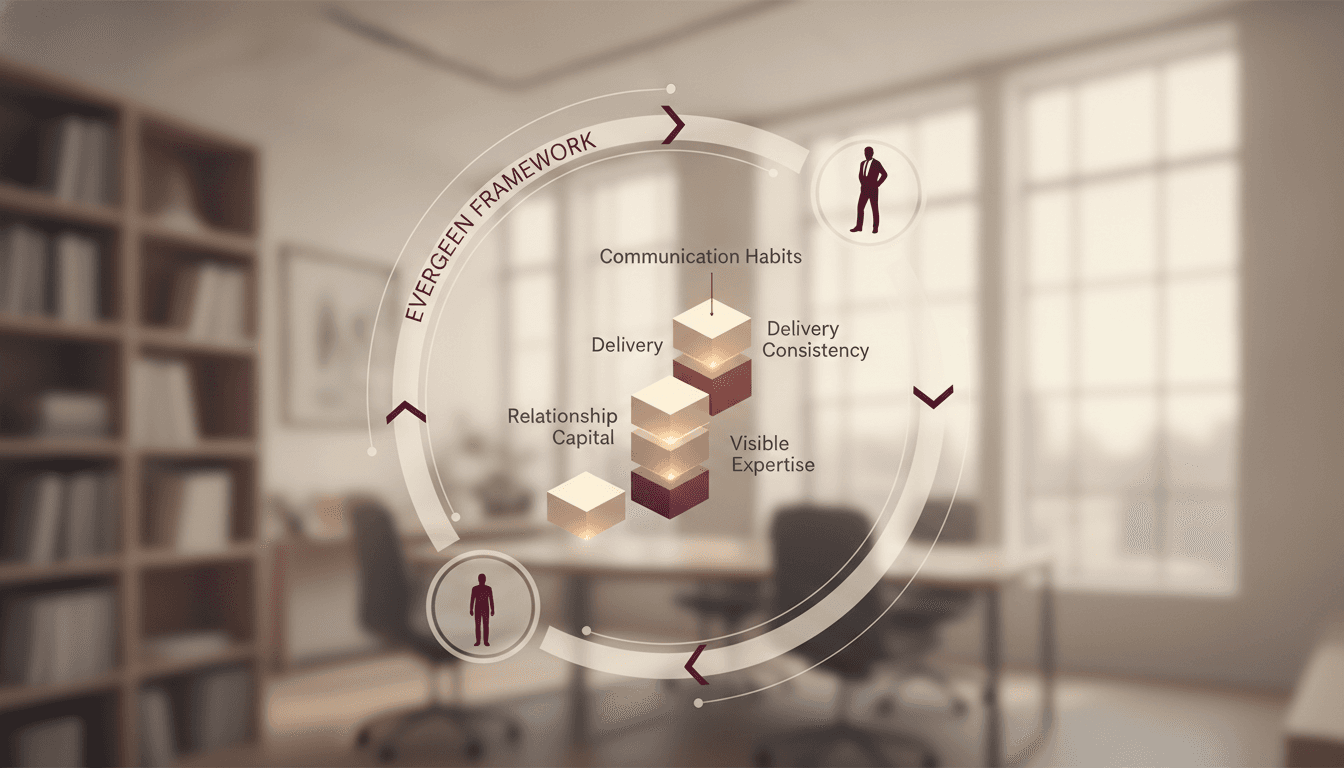
How to Build Professional Credibility at Work: A Complete System
Building professional credibility at work requires a deliberate system across five dimensions: consistent delivery on commitments, strategic communication that signals competence, visible expertise through knowledge sharing, relationship capital built on trust, and a professional presence that commands respect. Credibility isn't a single achievement — it's a compound asset you build through daily habits, starting from your first week and evolving through every career stage.