
Someone Took Credit for Your Idea? How to Respond
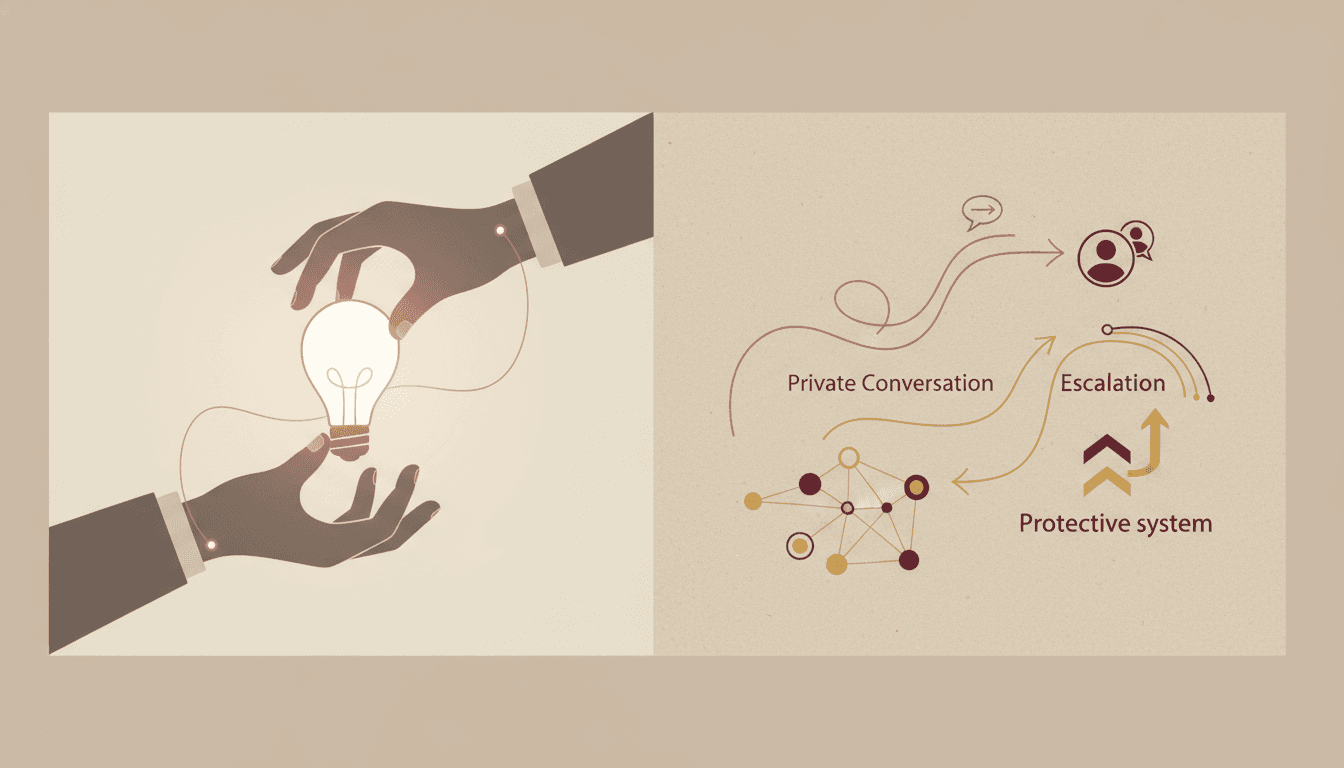
You're in a meeting when a colleague presents your idea as their own. Your stomach drops, your face heats up, and your mind races between outrage and self-doubt. This is one of the most common—and most damaging—workplace credibility threats professionals face. Here's exactly how to respond, whether it happens in real time or you discover it after the fact, without looking petty or insecure.
When someone takes credit for your idea, respond by calmly reclaiming ownership in the moment using a redirect phrase like, "I'm glad you're building on the concept I shared with you last week—let me add some context." If the moment has passed, address it privately with the person first, then loop in your manager with documentation. Going forward, create a paper trail by sharing ideas in writing before meetings, using pre-meeting emails and follow-up summaries to establish clear intellectual ownership.What Is Idea Credit-Taking in the Workplace?
Idea credit-taking occurs when a colleague, peer, or even a manager presents your original thought, strategy, or solution as their own—either deliberately or through carelessness—without acknowledging your contribution. It ranges from someone paraphrasing your suggestion in a meeting minutes after you said it, to a direct report presenting your framework to senior leadership with no attribution.
This isn't just an ego issue. A 2024 survey by Workhuman found that 67% of employees who felt their contributions went unrecognized were actively looking for new jobs. When your ideas are consistently attributed to someone else, it erodes your professional credibility, stalls your career trajectory, and damages your ability to be seen as a strategic thinker at work.
Why Responding Matters More Than You Think
The Hidden Career Cost of Staying Silent

Many professionals choose to let it go, reasoning that "the best idea wins" regardless of who gets credit. This is a costly miscalculation. Research from the Harvard Business Review (2023) shows that visibility of contribution is the single strongest predictor of who gets promoted in organizations—stronger than performance reviews or tenure.
Every time someone else gets credit for your idea and you stay silent, you reinforce a pattern. Decision-makers begin associating innovation with the person who spoke up, not the person who originated the thought. Over time, this creates a compounding credibility deficit that becomes increasingly difficult to reverse.
The Difference Between Petty and Professional
Here's the fear that keeps most people quiet: "If I speak up, I'll look insecure or territorial." This fear is understandable—but it's based on a false binary. There is a wide professional middle ground between saying nothing and making an accusatory scene.
The key distinction is how you reclaim credit. Petty responses focus on blame ("You stole my idea"). Professional responses focus on contribution ("Let me build on that, since I've been developing this concept"). The first makes you look small. The second makes you look like the authority you are. This is the same principle behind being assertive at work without being aggressive—it's about tone, framing, and composure.
When It's a Pattern vs. a One-Time Incident
Before responding, assess whether this is a single incident or a recurring pattern. A one-time occurrence might genuinely be accidental—someone may have internalized your idea from a previous conversation and forgotten the source. A pattern, however, signals either intentional behavior or a systemic visibility problem you need to address.
If it's happened more than twice with the same person, treat it as a pattern. If it's happening with multiple people, the issue may be less about theft and more about how you're presenting ideas so they don't get dismissed.
How to Respond in Real Time: In-Meeting Scripts
The Calm Redirect
This is your primary tool when someone presents your idea in a meeting as though it's theirs. The goal is to reclaim ownership without creating an adversarial moment.
Script 1 — The Build-On:"Thanks for raising that, [Name]. Since I originally proposed this approach in our Tuesday discussion, let me add some additional context that might help the group."
Script 2 — The Clarifying Anchor:"I'm glad this idea is gaining traction. When I first brought it up in [specific context], I was thinking about it from [angle]. [Name], how are you seeing it differently?"
Script 3 — The Collaborative Claim:"That's actually the framework I've been developing. [Name] and I discussed it briefly, and I'd love to walk the group through the full thinking behind it."
Notice what each script does: it names your contribution specifically, references a verifiable moment, and moves the conversation forward rather than backward. You're not accusing—you're clarifying.
The Ally Amplification Technique
According to a 2019 study published in the Academy of Management Journal, employees who had at least one "amplification ally" in meetings were 2.5 times more likely to receive proper credit for their contributions. This technique, first made famous by women in the Obama White House, works like this:
Before the meeting, ask a trusted colleague to reinforce your ownership if someone else claims your idea. Their line is simple: "Right—that builds on what [Your Name] presented last week. [Your Name], can you take us deeper?"
This third-party validation is more powerful than self-advocacy because it removes any perception of self-interest. Build a reciprocal amplification partnership where you do the same for them.
What to Do With Your Body Language
Your nonverbal response matters as much as your words. When someone takes credit for your idea, resist the urge to cross your arms, look away, or visibly deflate. Instead:
- Maintain an open posture and keep your hands visible on the table
- Make direct eye contact with the person and then with the decision-maker in the room
- Lean slightly forward when you speak your redirect—this signals authority, not defensiveness
Your physical composure signals that you're correcting a factual record, not having an emotional reaction. For more on this, explore our guide on body language cues that signal power.
Ready to Command Every Room You Walk Into? The scripts and strategies in this article are just the beginning. Discover The Credibility Code — the complete system for building unshakeable professional authority, from meetings to executive conversations and beyond.
How to Address It After the Fact: Private Conversations
Talking to the Person Directly

If you missed the moment in the meeting—or if a public redirect wasn't appropriate—address it privately within 24-48 hours. The longer you wait, the harder it becomes to raise without seeming like you've been stewing.
Use this three-part framework:
1. State the observation (not an accusation):"In yesterday's meeting, the workflow optimization idea was presented without reference to our earlier conversation where I shared it with you."
2. Name the impact:"When that happens, it affects my visibility with leadership and makes it harder for me to demonstrate the strategic thinking I'm contributing to the team."
3. Request a specific action:"Going forward, I'd appreciate it if we're both clear about where ideas originate when presenting to the group. And I'd like you to clarify with [manager's name] that this particular concept came from our discussion."
This conversation isn't about shaming—it's about setting a professional boundary. Most people will apologize and course-correct. If they get defensive or deny it, that tells you important information about whether this is someone who will do it again.
Escalating to Your Manager
If the private conversation doesn't resolve the issue—or if the credit-taker is your manager—you'll need to escalate. The key here is leading with documentation, not emotion.
What to bring:- The original email, Slack message, or document where you first articulated the idea (with timestamps)
- Meeting notes or agendas showing when you presented the concept
- A brief, factual summary of what happened
"I want to make sure my contributions are visible to the team. Here's a situation I want to flag: [factual description]. I have documentation showing the timeline. I'm not looking for conflict—I'm looking for a system that ensures contributions are properly attributed."
A Gallup (2023) workplace study found that managers who actively track and attribute individual contributions see 21% higher team productivity. Frame your request as something that benefits the entire team, not just you.
When It's Your Manager Taking Credit
This is the most delicate scenario. Your manager controls your performance reviews, project assignments, and promotion trajectory. Confrontation carries real risk.
Start by making your contributions undeniably visible to their peers and superiors through legitimate channels. Send pre-meeting summaries to the broader team. Volunteer to present your own work. Follow up meetings with written recaps that begin with "As I proposed in today's session..."
If the pattern continues, use skip-level meetings or mentorship relationships to ensure senior leaders know your work. This isn't going behind your manager's back—it's building authority without a title and ensuring your professional brand isn't dependent on one person's willingness to credit you.
Preventive Systems: How to Protect Your Ideas Going Forward
The Pre-Meeting Paper Trail
The single most effective prevention strategy is documenting your ideas before sharing them verbally. This creates an undeniable timestamp.
Before every meeting where you plan to share a new idea:- Send a brief email to your manager or the meeting organizer: "Ahead of tomorrow's meeting, I want to flag an approach I've been developing on [topic]. Here's a quick summary..."
- Include enough detail that the idea is clearly articulated, but save the full presentation for the meeting itself
- CC yourself or BCC a personal email for your records
This takes less than five minutes and creates bulletproof documentation. If someone later claims the idea, you have a timestamped record that predates the meeting.
The Follow-Up Summary Strategy
After meetings where you contribute ideas, send a follow-up email within the hour:
"Great discussion today. To recap the key points I raised: [list your specific contributions]. I'll continue developing [idea] and will share next steps by [date]."
This isn't just about protection—it's an executive communication habit that signals leadership presence in meetings. Senior leaders notice professionals who take ownership of follow-through.
Building Visible Thought Leadership
The best long-term defense against idea theft is becoming so visibly associated with your area of expertise that no one could credibly claim your ideas as theirs.
Tactical steps:- Write internal memos or white papers on topics in your domain
- Present at team or company all-hands on your area of expertise
- Create a recurring update or newsletter for stakeholders on your projects
- Document your frameworks and methodologies in shared team resources
A 2022 LinkedIn Workplace Learning Report found that professionals who regularly shared expertise internally were 34% more likely to be identified as "high-potential" by leadership. When you're the known expert, credit-taking becomes nearly impossible because everyone already associates the thinking with you.
For a complete system on this, see our guide on building a personal brand at work without social media.
Stop Letting Others Define Your Professional Value. Discover The Credibility Code — the step-by-step playbook for building the kind of authority that makes credit-stealing impossible. Frameworks, scripts, and daily practices included.
What to Avoid: Common Mistakes That Backfire
Publicly Accusing or Shaming
Never say "That was MY idea" in front of a group with an accusatory tone. Even if you're right, the emotional charge shifts the room's attention from the idea to the conflict—and you lose either way. According to organizational psychologist Dr. Tessa West (Columbia University), public accusations trigger defensive responses that make resolution nearly impossible and often damage the accuser's reputation more than the offender's.
Use the calm redirect scripts above instead. They accomplish the same goal—reclaiming credit—without creating a scene.
Over-Explaining or Apologizing
Don't soften your redirect with phrases like "I might be wrong, but I think I mentioned something similar..." or "Sorry, but I just wanted to point out..." These hedging phrases undermine your credibility and signal uncertainty about your own contribution. State your ownership clearly, factually, and move on.
Letting Resentment Build Silently
The worst response is no response. Swallowing your frustration meeting after meeting creates resentment that eventually leaks out—through passive-aggressive comments, disengagement, or an emotional outburst that seems disproportionate to a single incident. Address each occurrence as it happens using the frameworks above, and you'll never reach the boiling point.
If you've already been overlooked at work repeatedly, rebuilding visibility requires a more systematic approach.
Frequently Asked Questions
How do you respond when someone takes credit for your idea in a meeting?
Use a calm redirect that reclaims ownership without accusation. Say something like: "I'm glad that idea is resonating—when I first proposed it in [specific context], I was approaching it from [angle]. Let me add some additional detail." This acknowledges the moment, names your contribution, and moves the conversation forward productively. Follow up with a written summary after the meeting to document your contribution.
What's the difference between idea theft and idea building?
Idea theft is presenting someone else's concept as your own with no acknowledgment. Idea building is taking someone's starting concept and expanding it—with proper attribution. The key distinction is credit. Saying "Building on what Sarah proposed, I think we could also..." is collaboration. Saying "I've been thinking about an approach where we..." when Sarah told you that approach yesterday is credit-taking. Intent matters less than impact.
Should you confront someone who stole your idea at work?
Yes, but frame it as a professional conversation, not a confrontation. Address it privately within 24-48 hours using a three-part structure: state the factual observation, explain the professional impact, and request a specific corrective action. Most people will respond positively to a direct, non-accusatory conversation. If they don't, escalate to your manager with documentation.
How do you prevent coworkers from taking credit for your work?
Create a documentation habit: share ideas in writing before meetings, send follow-up recaps after discussions, and build visible thought leadership in your domain. Pre-meeting emails with timestamps are your strongest protection. Also cultivate amplification allies—colleagues who will publicly reinforce your ownership of ideas in group settings. Prevention is always more effective than correction.
How do you tell your boss that a coworker took credit for your idea?
Lead with documentation, not emotion. Bring timestamped emails or messages showing when you first articulated the idea. Say: "I want to ensure my contributions are visible. Here's a situation I want to flag, along with the documentation." Frame it as a request for better attribution systems on the team, not a personal complaint. This positions you as solutions-oriented rather than petty.
Is it worth speaking up when someone takes credit for a small idea?
It depends on the pattern. For a single, minor instance, letting it go may be the strategic choice. But if small instances are accumulating, they create a larger visibility problem. A good rule: if the idea would appear in a performance review, project summary, or promotion discussion, it's worth claiming. Consistent self-advocacy on small contributions prevents larger credit issues from developing.
Your Ideas Deserve to Be Heard—And Credited. Everything in this article—the scripts, the frameworks, the prevention systems—comes from the same credibility-building methodology inside The Credibility Code. If you're ready to build the kind of professional authority that ensures you're never overlooked again, Discover The Credibility Code and start transforming how you communicate, lead, and command respect at work.
Ready to Command Authority in Every Conversation?
Transform your professional communication with proven techniques that build instant credibility. The Credibility Code gives you the frameworks top leaders use to project confidence and authority.
Discover The Credibility CodeRelated Articles

How to Be More Assertive in Professional Emails (With Examples)
To be more assertive in professional emails, replace hedging language with direct statements, lead with your main point, use confident sentence structures, and state clear expectations with deadlines. Assertive emails aren't aggressive — they're clear, respectful, and impossible to misinterpret. The key shift is moving from "I was just wondering if maybe we could…" to "I'd like to move forward with X by Friday." Below, you'll find 15+ before-and-after rewrites covering the most common profession

How to Influence Without Formal Authority at Work
To influence without formal authority at work, focus on five core strategies: build deep credibility through expertise and reliability, map strategic relationships across the organization, communicate with precision and confidence, create coalitions around shared goals, and consistently deliver visible value. Influence without a title isn't about manipulation—it's about earning trust, demonstrating competence, and positioning yourself as someone whose perspective genuinely moves outcomes forward

How to Stop Sounding Unsure When Speaking at Work
To stop sounding unsure when speaking at work, eliminate five specific habits: uptalk (rising intonation on statements), hedging phrases ("I think," "sort of," "maybe"), excessive qualifiers ("just," "actually," "kind of"), over-apologizing before sharing ideas, and trailing off at the end of sentences. Replace each with direct, declarative language and practice deliberate pauses instead of filler. These shifts can be trained in as little as two weeks with daily practice.