
How to Be More Assertive in Professional Emails (With Examples)

What Is Assertive Email Communication?
Assertive email communication is a writing style that conveys your message with clarity, directness, and confidence — without crossing into aggression or rudeness. It means stating your needs, boundaries, and positions in language that respects both you and the reader.
Unlike passive emails that bury requests in apologies, or aggressive emails that demand and blame, assertive emails strike a balance: they're professional, specific, and leave no room for misinterpretation. Think of it as communicating with authority at work, but on the page instead of in person.
Why Most Professional Emails Sound Weak (And What It Costs You)
The Hidden Language of Uncertainty

Most professionals don't realize how much their emails undermine their credibility. A study published in the Journal of Language and Social Psychology found that hedging language — words like "just," "maybe," "I think," and "sorry to bother you" — significantly reduces perceived competence and authority in written communication.
Here's what weak email language looks like in practice:
- "Just checking in…" — signals you don't feel entitled to a response
- "Sorry to bother you, but…" — apologizes for having a legitimate need
- "I was wondering if maybe…" — buries your request under three layers of uncertainty
- "Does that make sense?" — implies your own message might be confusing
- "I could be wrong, but…" — discredits your point before you've made it
These phrases feel polite. But they signal to colleagues, managers, and executives that you're unsure of your own position. For a deeper dive into this pattern, see our guide on words that undermine your credibility at work.
The Real-World Impact on Your Career
According to a 2023 Grammarly and Harris Poll workplace communication survey, professionals spend an average of 19 hours per week on written communication, and 69% of business leaders said they'd be more likely to promote employees who communicate clearly and confidently. Your emails aren't just messages — they're a continuous performance review.
When your emails consistently sound uncertain, three things happen: people delay responding to you, your requests get deprioritized, and decision-makers form an unconscious impression that you lack leadership readiness. Learning to write like a senior leader starts with eliminating these patterns.
The Assertive Email Framework: 4 Principles That Change Everything
Principle 1: Lead With the Point, Not the Preamble
Passive emails bury the request. Assertive emails put it in the first sentence.
Before: "Hi Sarah, I hope you're doing well! I wanted to reach out because I've been thinking about the Q3 timeline and I was wondering if we could maybe discuss some adjustments since the team has been stretched a bit thin lately." After: "Hi Sarah, I'd like to adjust the Q3 timeline to account for current team capacity. Here's what I'm proposing."The assertive version saves the reader time and positions you as someone who thinks clearly. Research from the Nielsen Norman Group confirms that users typically read only 20% of text on a page — meaning your main point needs to appear in the first two sentences or it may not register at all.
Principle 2: Replace Hedging With Specifics
Vague language feels safe, but it weakens your position. Assertive communicators replace qualifiers with concrete details.
| Hedging Language | Assertive Alternative |
|---|---|
| "I think we might need more time" | "We need an additional two weeks to complete testing" |
| "It would be great if someone could…" | "I need the analytics report from David by Thursday" |
| "Maybe we should consider…" | "I recommend we move to Option B" |
| "I feel like this isn't working" | "This approach isn't meeting our targets. Here's the data." |
Notice that assertive language isn't rude. It's simply precise. You're replacing emotional cushioning with factual clarity.
Principle 3: State Expectations and Deadlines Explicitly
An assertive email always answers two questions: What do you need? and By when?
Before: "Could you send me those numbers when you get a chance?" After: "Please send the updated revenue figures by end of day Wednesday so I can include them in the Thursday board deck."The second version gives context (why you need it), a clear deadline (Wednesday EOD), and removes the phrase "when you get a chance" — which essentially tells the recipient your request isn't important.
Principle 4: Own Your Position Without Apologizing
Assertive professionals don't apologize for having needs, opinions, or boundaries. They state them as facts.
Before: "Sorry, but I don't think I can take this on right now. I'm really swamped and I feel bad but I just don't have the bandwidth." After: "I'm not able to take this on this week. My current priorities are [X] and [Y], which are due Friday. I can revisit this next Tuesday — would that work?"The assertive version declines without guilt, provides a reason rooted in priorities (not emotions), and offers an alternative. This is the foundation of being assertive at work without being aggressive.
Ready to Communicate With More Authority? These email shifts are just the beginning. Discover The Credibility Code — a complete system for building commanding presence in every professional interaction, from emails to executive conversations.
15 Before-and-After Email Rewrites for Common Scenarios
Scenario 1: Pushing Back on an Unrealistic Deadline
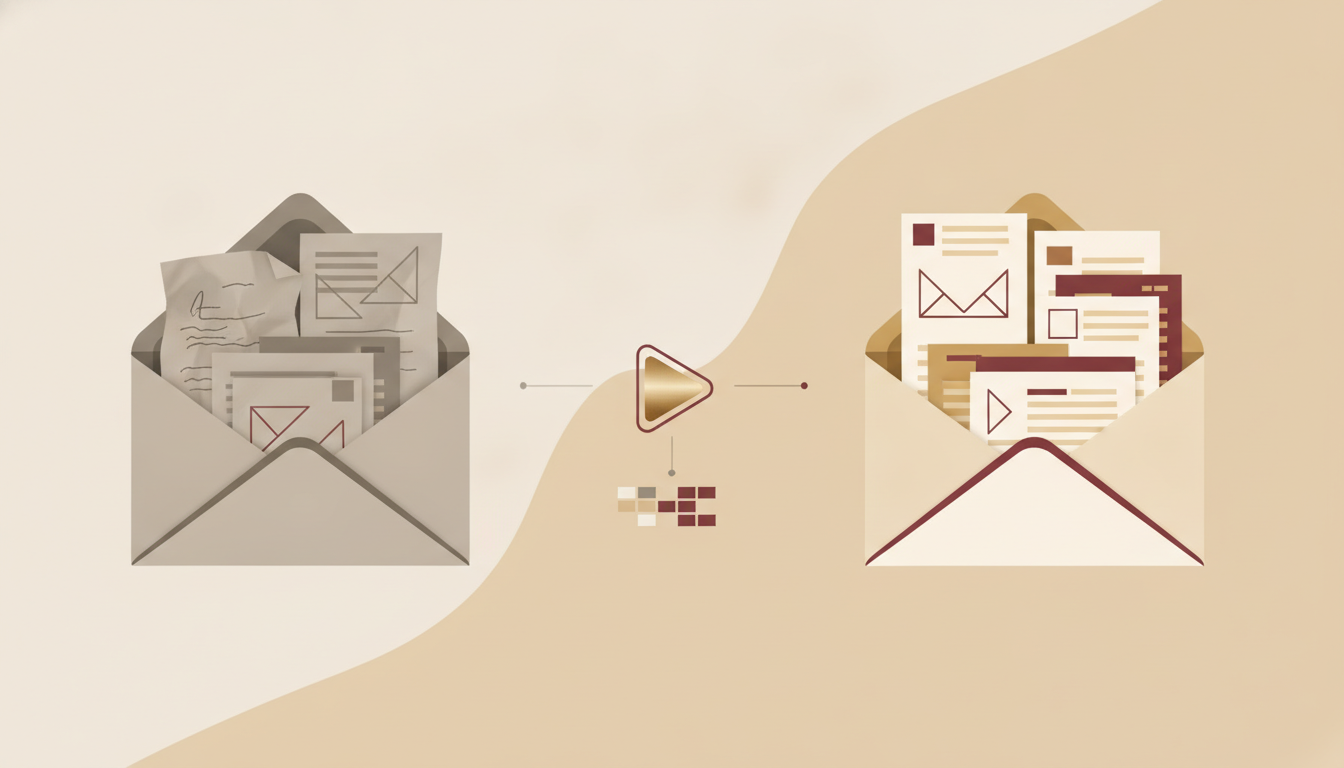
"Hi Mark, thanks for sending this over. I'm a bit concerned about the timeline — it seems really tight and I'm not sure we can realistically hit it. Would it be possible to maybe extend it a bit? Sorry if this causes any issues."
After:"Hi Mark, I've reviewed the timeline. To deliver quality work, the team needs until March 22 instead of March 15. This accounts for the compliance review, which takes 3-4 business days. I'll confirm the revised milestone schedule by tomorrow. Let me know if you'd like to discuss."
Why it works: States the need directly, provides a specific alternative date, backs it up with a reason, and offers a next step. For more on this, see our guide on negotiating deadlines professionally.Scenario 2: Declining a Request From a Peer
Before:"Hey Jess, thanks so much for thinking of me for this! I'd really love to help but I'm kind of drowning right now lol. I feel terrible saying no but I just can't swing it. Maybe next time??"
After:"Hi Jess, I appreciate you reaching out. I'm not available to take this on — I'm committed to [Project X] through the end of the month. I'd suggest reaching out to Priya on the analytics team, who has experience with this type of analysis."
Why it works: No apology, no guilt, no over-explaining. Offers a redirect, which is helpful without being self-sacrificing.Scenario 3: Escalating an Issue to Leadership
Before:"Hi Director Chen, sorry to bother you with this. I'm not sure if this is something I should bring to you, but there's been a bit of an issue with the vendor deliverables and I just wanted to flag it in case you think it's important."
After:"Hi Director Chen, I'm escalating a vendor issue that may impact our April launch date. Vendor X has missed two consecutive deliverables (March 3 and March 10). I've documented the delays and proposed remediation options below. I'd like 15 minutes this week to align on next steps."
Why it works: Leads with the business impact, provides evidence, and requests a specific action. This is how executives prefer to receive information — see our post on how to communicate with senior leadership.Scenario 4: Requesting Resources or Budget
Before:"Hi team, I was thinking it might be helpful if we could maybe get some additional support for the project? I know budgets are tight so I totally understand if it's not possible, but I thought I'd throw it out there."
After:"Hi team, I'm requesting one additional contractor for the duration of Phase 2 (April–June). Current workload analysis shows the team is at 120% capacity, which puts the June deadline at risk. The estimated cost is $18K. I've attached the capacity breakdown and a vendor recommendation for review."
Why it works: Quantifies the problem, specifies the ask, provides cost data, and attaches supporting evidence.Scenario 5: Following Up With a Senior Leader Who Hasn't Responded
Before:"Hi VP Martinez, just bumping this to the top of your inbox! I know you're super busy so no rush at all, but whenever you get a sec to look at this that would be amazing. Thanks so much!!"
After:"Hi VP Martinez, following up on my March 8 email regarding the Q3 budget allocation. I need your approval by March 18 to meet the procurement deadline. I've attached the one-page summary for quick review. Happy to discuss in our Thursday check-in if that's easier."
Why it works: References the original email, states the deadline and why it matters, makes it easy to act, and offers an alternative channel.Scenario 6: Correcting Misinformation in a Group Thread
Before:"Sorry, I might be wrong about this, but I think the numbers in the last email might not be totally accurate? I could be misremembering though."
After:"Quick correction on the figures shared below: the Q2 conversion rate was 3.2%, not 4.1%. I've confirmed this with the analytics dashboard (link attached). Want to make sure we're working from accurate data as we plan Q3."
Why it works: Corrects the record without attacking anyone, cites the source, and frames the correction as helpful to the group.Scenario 7: Setting a Boundary Around After-Hours Communication
Before:"Hey, I don't want to be difficult or anything, but I've noticed I've been getting a lot of messages after hours and it's been kind of stressful. Would it be okay if maybe we could try to keep things to business hours? Totally understand if that's not always possible though!"
After:"Hi team, to maintain sustainable productivity, I'll be responding to non-urgent messages during business hours (9 AM–6 PM). For urgent matters outside these hours, please call or text me directly. This ensures I can give focused attention to priorities during the workday."
Why it works: Frames the boundary as a professional practice (not a personal complaint), provides an exception for true urgency, and explains the benefit to the team.Scenario 8: Disagreeing With a Proposed Direction
Before:"I don't know, I guess I'm just a little worried about this approach? It seems like it might not work but I could be overthinking it. What does everyone else think?"
After:"I have a concern with the proposed approach. Specifically, consolidating the two teams before the system migration creates a dependency risk — if the migration is delayed, both teams are disrupted. I'd recommend completing the migration first, then consolidating. Here's a revised timeline showing how this would work."
Why it works: Names the concern, explains the risk with specifics, and proposes an alternative with supporting detail. This is the kind of confident communication that builds credibility.Words and Phrases to Cut (And What to Use Instead)
A 2019 study in Psychological Science found that people form impressions of competence from written communication within seconds. The words you choose in emails directly shape how authoritative you appear. Here's a quick-reference swap list:
Cut these immediately:- "Just" → delete entirely ("I just wanted to check" → "I'm checking")
- "Sorry to bother you" → "I'd like your input on"
- "I think maybe" → "I recommend" or "My assessment is"
- "Does that make sense?" → "Let me know if you have questions"
- "I'm no expert, but" → delete entirely, then state your point
- "Hopefully" → "I expect" or state the specific outcome
- "Kind of / sort of" → delete entirely
- "I feel like" → "The data shows" or "Based on my analysis"
- "Here's what I recommend."
- "To move forward, I need X by [date]."
- "I've reviewed the options and suggest we proceed with…"
- "Based on my analysis, the best path is…"
- "I'm confident this approach will…"
For a comprehensive guide to strengthening your email language, check out how to stop sounding unsure in emails.
Transform Your Professional Communication Assertive emails are one piece of the credibility puzzle. Discover The Credibility Code to master the complete system — from email authority to executive presence in meetings, negotiations, and beyond.
How to Adjust Assertiveness by Audience and Context
Emailing Peers vs. Senior Leaders
Assertiveness isn't one-size-fits-all. With peers, you can be direct and collaborative. With senior leaders, you need to be direct and concise — executives scan emails in seconds.
To a peer: "I need the campaign metrics by Thursday to finalize the report. Can you confirm you'll have them ready?" To a VP: "Requesting your approval on the attached Q3 budget by Friday, March 15. One-page summary is on page 1. Happy to discuss if needed."The VP version is shorter, leads with the action needed, and removes any unnecessary context. According to a 2022 Superhuman survey, the average executive receives 120+ emails per day — your email has roughly 11 seconds to make its point.
When the Relationship Is New or Sensitive
You can be assertive and warm simultaneously. Add a brief acknowledgment before your direct statement:
"I appreciate your flexibility on this project. Moving forward, I'd like to establish a weekly check-in cadence to keep alignment tight. I'm proposing Tuesdays at 2 PM — does that work for your schedule?"
This balances warmth with clarity. You're not asking if there should be check-ins — you're proposing when.
Cross-Cultural and Remote Considerations
In global teams, directness norms vary. A Harvard Business Review analysis found that communication styles rated as "appropriately assertive" in the U.S. can be perceived as aggressive in high-context cultures (Japan, India, Brazil). In remote or cross-cultural settings, pair directness with slightly more relational language and explicit context about why you're making a request.
Frequently Asked Questions
What is the difference between assertive and aggressive emails?
Assertive emails state your needs clearly while respecting the other person. Aggressive emails blame, demand, or use hostile language. For example, "I need this by Friday" is assertive. "You should have had this done already" is aggressive. The key difference is focus: assertive emails focus on the outcome you need, while aggressive emails focus on the other person's failure. Assertive communication builds respect; aggressive communication erodes trust.
How do I sound assertive without being rude to my boss?
Focus on facts, not feelings. State what you need, provide context for why, and offer a solution or alternative. For example: "I'd like to discuss adjusting the project scope. The current timeline doesn't account for the compliance review, which takes five business days. Here's a revised plan." This is respectful, specific, and solution-oriented — not rude. See our full guide on how to speak up to your boss without damaging trust.
Can assertive emails hurt my professional relationships?
No — when done correctly, assertive emails actually strengthen relationships. Research from the University of California shows that clear communicators are rated as more trustworthy and competent by colleagues. People prefer knowing where they stand. What damages relationships is passive-aggressive communication, not direct communication. Clarity is a form of respect.
How do I become more assertive in emails as an introvert?
Email is actually an introvert's best assertiveness tool because you have time to draft, edit, and refine before sending. Start by writing your email naturally, then go back and remove hedging words ("just," "maybe," "sorry"). Replace vague requests with specific ones. Use the before-and-after examples in this article as templates. Written communication removes the pressure of real-time interaction, giving introverts a natural advantage.
What are the most common words that make emails sound weak?
The top credibility-killing words are: "just," "sorry," "maybe," "I think," "kind of," "hopefully," "if that's okay," and "no worries if not." These words signal uncertainty and make your requests easy to ignore. Replace them with direct alternatives: "I recommend," "I need," "please send by [date]," and "I expect." For a complete list, read our post on how to stop undermining yourself at work.
How assertive should I be in emails vs. in-person communication?
Emails actually require more directness than in-person conversations because you can't rely on tone of voice, facial expressions, or body language to soften your message. What sounds perfectly natural in person ("Hey, could you maybe look at this?") reads as weak in writing. Compensate by being 10-15% more direct in emails than you would be face-to-face, while adding brief relational touches ("Thanks for your quick turnaround on this") to maintain warmth.
Your Emails Are Your Professional Reputation Every message you send either builds or erodes your credibility. The assertive email techniques in this article are drawn from the same frameworks inside The Credibility Code — the complete playbook for professionals who want to communicate with authority, earn respect, and advance with confidence. Discover The Credibility Code →
Ready to Command Authority in Every Conversation?
Transform your professional communication with proven techniques that build instant credibility. The Credibility Code gives you the frameworks top leaders use to project confidence and authority.
Discover The Credibility CodeRelated Articles
How to Be More Assertive in Emails: 12 Before & Afters
To be more assertive in emails, eliminate hedging language ("just," "I think," "sorry to bother you"), replace vague requests with specific actions and deadlines, and lead with your main point instead of burying it. Assertive emails aren't aggressive—they're clear, direct, and respectful. The 12 before-and-after rewrites below show you exactly how to transform passive, uncertain email language into messages that command attention and get results.

How to Communicate With Impact at Work: 10 Daily Habits
Learning how to communicate with impact at work comes down to ten daily habits: leading with your conclusion first, replacing filler language with strategic pauses, structuring updates using a problem-solution-outcome framework, writing emails with clear action lines, using confident body language, asking high-value questions, giving specific feedback, closing conversations with next steps, preparing a "signature point" before meetings, and reviewing your communication wins each day. These small

How to Sound Credible at Work: 9 Daily Shifts
To sound credible at work, focus on nine daily shifts across three dimensions: what you say (verbal precision), how you say it (vocal authority), and what you do while saying it (behavioral signals). Replace hedging language with direct statements, slow your speaking pace by 10–15%, lead with conclusions before details, and use grounded body language. These small, repeatable shifts compound over time, transforming how colleagues, managers, and executives perceive your competence and authority.