
Personal Brand for Newly Promoted Leaders: A 30-Day Plan

A personal brand for newly promoted leaders is a deliberate 30-day reset of how you communicate, show up, and signal authority so your professional reputation matches your new title. The plan covers four phases: auditing your current brand signals (days 1–7), updating external markers like your LinkedIn, email tone, and meeting behavior (days 8–14), re-introducing yourself to key stakeholders (days 15–22), and reinforcing your new identity through consistent, visible leadership actions (days 23–30). Without this reset, colleagues will default to seeing you as whoever you were before the promotion.
What Is a Personal Brand for Promoted Leaders?
A personal brand for promoted leaders is the intentional alignment of your communication style, professional visibility, and stakeholder relationships with the expectations of your new role. It is not about self-promotion—it is about closing the gap between the title on your business card and the way people actually experience you.
Think of it this way: your promotion changed your org chart position overnight. Your personal brand—how people perceive your authority, expertise, and leadership style—takes deliberate effort to catch up. A 30-day brand reset accelerates that process so you earn credibility in your new role fast, rather than spending months fighting the ghost of your old one.
Why Your Old Brand Will Hold You Back
The Perception Lag Problem
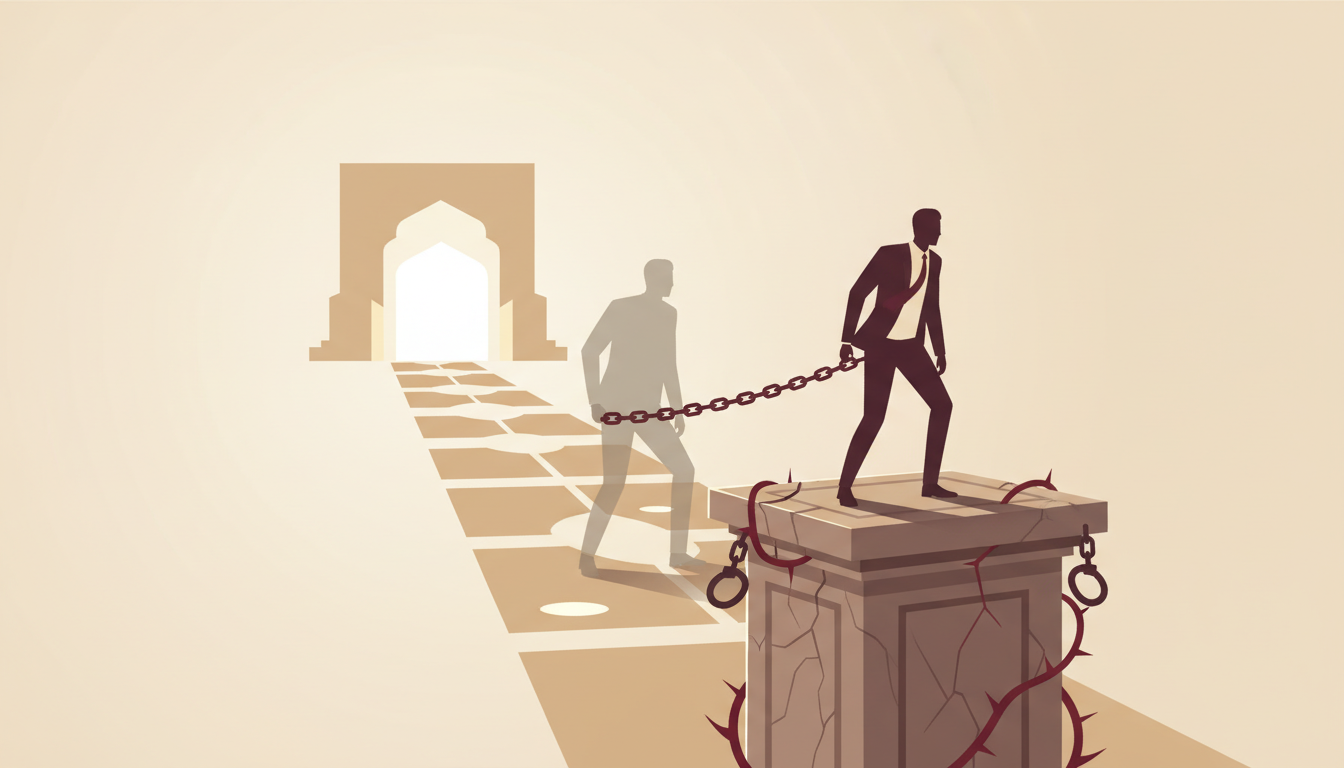
When you get promoted, your manager sees your potential. Your peers and direct reports see your history. Research from Leadership IQ found that 46% of newly promoted leaders are regarded as "disappointing" within 18 months—and a major driver is the failure to shift how others perceive them. Your old brand creates what organizational psychologists call "perception lag": people continue to treat you the way they always have, regardless of your new title.
Here's a scenario: Sarah was promoted from Senior Marketing Manager to VP of Marketing. In her first leadership meeting, she instinctively deferred to the CMO the same way she had as a peer-level contributor. She hedged her recommendations. She asked permission before sharing data. Within two weeks, two other VPs started routing decisions around her. Sarah didn't have a competence problem. She had a brand problem.
The Cost of Doing Nothing
If you skip the brand reset, three things happen. First, former peers struggle to see you as their leader. Second, senior leaders question whether the promotion was premature. Third, you unconsciously reinforce your old identity by defaulting to old communication habits.
According to a 2023 Gartner survey, new leaders who proactively manage their transition are 2.5 times more likely to meet performance expectations in their first year. The personal brand reset isn't vanity—it's a career survival strategy. For a deeper dive into building authority after a role change, explore our guide on career authority after promotion.
Phase 1: Audit Your Current Brand (Days 1–7)
Conduct a Brand Gap Analysis
Before you change anything, you need to see clearly where you stand. Use this three-step audit:
Step 1: Define your target brand. Write down 3–5 words you want people to associate with you in your new role. Not aspirational fluff—specific, observable qualities. Examples: "decisive," "strategic," "calm under pressure," "clear communicator." Step 2: Survey your current brand. Ask 5–8 trusted colleagues (a mix of peers, direct reports, and senior leaders) one question: "When you think of me professionally, what three words come to mind?" Don't explain why you're asking. Collect the data. Step 3: Identify the gaps. Compare the two lists. If your target brand is "strategic and decisive" but your current brand is "helpful and detail-oriented," you've found your reset priorities.Audit Your Digital Footprint
Your LinkedIn headline, profile summary, email signature, and any internal bios are still broadcasting your old role. A Harvard Business Review study found that professionals who update their digital presence within the first two weeks of a promotion are perceived as more legitimate in the new role by colleagues who check those profiles.
During this first week, screenshot your current LinkedIn profile, review your last 20 sent emails for tone patterns, and note how you're listed in any internal directories. Don't change anything yet—just document. You need the full picture before you act.
Identify Your Stakeholder Map
List every person whose perception of you matters in your new role. Group them into three tiers:
- Tier 1: Your direct manager, your direct reports, and any cross-functional leaders you'll partner with weekly.
- Tier 2: Senior executives you'll present to quarterly, key clients, and influential peers.
- Tier 3: Broader team members, external partners, and industry contacts.
Each tier will need a different re-introduction strategy in Phase 3. For now, simply map them.
Ready to Accelerate Your Leadership Transition? The Credibility Code gives you the exact frameworks, scripts, and communication strategies newly promoted leaders use to command authority from day one. Discover The Credibility Code
Phase 2: Update Your External Signals (Days 8–14)
Rewrite Your Digital Presence

Now it's time to change what people see before they interact with you. Start with LinkedIn—it's the first place colleagues, new stakeholders, and external contacts verify your credibility.
LinkedIn headline formula for promoted leaders: [New Title] | [What you drive] | [Who you serve]. Example: "VP of Marketing | Driving Revenue Growth Through Brand Strategy | B2B SaaS." Avoid listing your old title or using vague phrases like "passionate leader."Update your summary to lead with your current role and forward-looking vision, not a chronological career story. Your summary should answer: "What do I lead, what outcomes do I drive, and what perspective do I bring?"
Also update your email signature, internal bio, and any speaker profiles. These small signals compound. For more on building a credible professional presence online, read our framework on how to present yourself as an expert at work.
Shift Your Communication Style
This is where most new leaders fail. Your emails, meeting behavior, and verbal patterns are still calibrated to your old role. Here are three specific shifts to make during week two:
Email tone shift. Stop writing long, explanatory emails that justify your thinking. Senior leaders write shorter emails that state decisions and invite discussion. Compare: Old: "I was thinking we might want to consider adjusting the timeline because I noticed some resource constraints and wanted to get your thoughts." New: "I'm adjusting the project timeline to account for resource constraints. Here's the updated plan—let me know if you see issues."For a complete guide to this shift, see our post on how to sound more senior at work.
Meeting behavior shift. In your old role, you likely spoke to contribute information. In your new role, you need to speak to frame decisions, set direction, and synthesize others' input. Practice opening meetings with a clear statement of purpose and closing them with a defined next step. Language shift. Remove hedging language ("I think maybe," "I'm not sure but," "Does that make sense?"). Replace it with grounded language ("Here's my recommendation," "The data supports," "Let's move forward with"). A study by Quantified Communications found that leaders who use decisive language are rated 35% more competent by their audiences.Update Your Visual and Physical Presence
This isn't about buying a new wardrobe. It's about aligning your non-verbal signals with your new role. If you've been promoted to a director or VP level, observe how other leaders at that level carry themselves in meetings. Notice their posture, how they use space, and when they speak versus when they listen.
One practical move: choose a seat at the table that reflects your new role. Many newly promoted leaders continue sitting in their old spot—literally and figuratively on the periphery. Move to where decision-makers sit. For a comprehensive guide, check out our resource on body language for leadership presence.
Phase 3: Re-Introduce Yourself to Stakeholders (Days 15–22)
The Strategic Re-Introduction Framework
You don't announce your new brand. You demonstrate it through intentional interactions. Use the P-V-A framework for each stakeholder conversation during this phase:
- P (Perspective): Share your point of view on a challenge or opportunity relevant to their world. This signals strategic thinking.
- V (Value): Articulate specifically how your role creates value for them. Not what you do—what they gain.
- A (Ask): Request their input on something meaningful. This signals confidence (you're not threatened by their expertise) and builds partnership.
Here's how this looks in practice. You've been promoted to Director of Product. You schedule a 20-minute coffee with the VP of Sales (a Tier 1 stakeholder). Instead of saying, "Hey, I just wanted to connect since I'm in this new role," you say: "I've been looking at our product-market fit data, and I see an opportunity to better align our roadmap with the enterprise deals your team is pursuing. I'd love to get your perspective on where the biggest gaps are."
That's a re-introduction. You've demonstrated strategic thinking, shown how your role serves their goals, and invited collaboration—all without saying "I'm the new Director."
Re-Introduce Yourself to Former Peers
This is the hardest stakeholder conversation. Yesterday you were equals. Today you're their leader. According to a 2022 study published in the Journal of Applied Psychology, 60% of newly promoted managers report that managing former peers is their top challenge.
The key: address the shift directly, once, and then move forward through consistent behavior. A script that works: "I know this is a transition for both of us. I value our working relationship, and I want to be straightforward—my role now is to support you in doing your best work and to make decisions that move the team forward. I'd rather we talk openly about any weirdness than let it fester."
Then—and this is critical—immediately begin behaving as the leader. Don't oscillate between buddy and boss. Set clear expectations. Make decisions. Give feedback. Your brand is built through behavior, not declarations. Our guide on how to establish authority in a new team without ego provides additional scripts for this exact situation.
Manage Up: Re-Introducing Yourself to Senior Leadership
Your boss promoted you. But their peers—the other senior leaders—may not yet see you as one of them. During this phase, schedule brief one-on-one conversations with each senior leader you'll interact with regularly.
Come prepared with one insight about their function that shows you've done your homework, and one question that signals you're thinking at their level. Avoid asking questions that sound like you're still in your old role ("How does this process work?"). Instead, ask questions that demonstrate strategic curiosity ("I've noticed our customer acquisition cost is trending up—how is that affecting your team's planning for Q3?").
For more on communicating effectively at the executive level, see our post on how to communicate with senior leadership.
Phase 4: Reinforce and Sustain (Days 23–30)
Build Visible Leadership Habits
Your brand is now set in motion. The final phase is about building habits that reinforce it daily. Focus on three high-visibility behaviors:
1. Own a narrative. Choose one strategic theme that you will consistently champion. Maybe it's "customer-centricity" or "operational excellence" or "data-driven decisions." Reference it in meetings, emails, and presentations. Over time, people will associate you with that theme. This is how senior leaders build thought leadership internally. 2. Speak early in meetings. Research from the Wharton School shows that people who speak in the first five minutes of a meeting are perceived as more influential, regardless of what they say. Don't wait to be called on. Open with a framing statement or a question that sets the agenda. 3. Deliver visible wins. Identify one quick, meaningful result you can deliver in your first 30 days. It doesn't need to be transformational—it needs to be visible. A process improvement. A decision that unblocks a team. A presentation that impresses a senior stakeholder. Visible wins are brand accelerators.Establish Your Communication Rhythm
Set up recurring communication touchpoints that signal leadership:
- Weekly team update (email or brief stand-up) where you share priorities, decisions, and context. This positions you as the information hub.
- Bi-weekly one-on-ones with each direct report, focused on their development, not just status updates.
- Monthly stakeholder check-in with your Tier 1 contacts to maintain the relationships you built in Phase 3.
Consistency is the engine of credibility. A McKinsey study on leadership transitions found that leaders who establish a predictable communication rhythm in their first 90 days build trust 40% faster than those who communicate reactively.
Build the Communication Habits That Signal Authority The Credibility Code includes ready-to-use templates for stakeholder re-introductions, leadership email frameworks, and meeting scripts designed for newly promoted leaders. Discover The Credibility Code
Track and Adjust Your Brand Perception
At the end of 30 days, repeat the informal survey from Phase 1. Ask the same 5–8 colleagues: "What three words come to mind when you think of me professionally?" Compare the results to your baseline.
You're looking for directional movement, not perfection. If your target brand was "strategic, decisive, calm" and your initial feedback was "helpful, detail-oriented, nice," seeing even one of your target words appear in the new feedback means your reset is working.
If perception hasn't shifted, look at your behavior—not your intentions. Are you still hedging in emails? Still sitting in your old seat? Still deferring to people who are now your peers? The brand follows the behavior, not the other way around.
Common Mistakes That Keep You Stuck in Your Old Role
Mistake 1: Over-explaining your promotion. You don't need to justify why you were promoted. Excessive explanation signals insecurity. State your role, demonstrate competence, and move on. Mistake 2: Trying to stay "one of the team." You can be warm, approachable, and respected. But trying to maintain your old peer dynamic while leading the team creates confusion and erodes authority. For more on this balance, read our guide on how to be assertive at work without being aggressive. Mistake 3: Waiting for permission to lead. New leaders often wait for their boss to explicitly authorize every decision. This signals to everyone—including your boss—that you're not ready. Make decisions within your scope. Communicate them clearly. Course-correct when needed. Mistake 4: Ignoring your internal brand while polishing your external one. Updating LinkedIn is easy. Changing how you show up in a tense meeting is hard. Prioritize the behavioral shifts over the cosmetic ones. Mistake 5: Skipping the stakeholder re-introduction. Hoping people will "just notice" your new role is a strategy that fails. Be intentional about how you re-establish relationships at your new level.Frequently Asked Questions
How long does it take to build a personal brand after a promotion?
The 30-day plan establishes the foundation, but full brand integration typically takes 60–90 days of consistent behavior. The first 30 days are critical because they set the trajectory. Research from CEB (now Gartner) shows that stakeholder perceptions formed in the first month of a leadership transition are highly persistent—meaning the impressions you create early tend to stick.
What is the difference between personal branding and self-promotion?
Personal branding is about aligning how people perceive you with the value you actually deliver. Self-promotion is about drawing attention to yourself. The key distinction: personal branding serves your stakeholders by making your expertise visible and accessible. Self-promotion serves only you. Effective personal branding feels natural because it's rooted in competence, not performance. Our article on building career authority without being self-promotional explores this distinction in depth.
Should I rebrand myself differently for internal vs. external audiences?
Your core brand should be consistent, but the emphasis shifts. Internally, focus on decision-making style, meeting behavior, and communication rhythm. Externally, focus on LinkedIn positioning, industry visibility, and thought leadership content. The underlying message—your values, expertise, and leadership perspective—should be the same across both audiences.
How do I build a personal brand as a promoted leader if I'm an introvert?
Introverts often build stronger personal brands because they tend toward depth over volume. Focus on high-impact, low-frequency actions: well-crafted emails, prepared meeting contributions, and strategic one-on-one conversations. You don't need to be the loudest voice—you need to be the most credible one. See our full guide on personal brand for introverts at work.
What's the biggest personal branding mistake newly promoted leaders make?
Continuing to communicate like a contributor instead of a leader. This shows up in emails that are too long, meeting contributions that focus on tasks instead of strategy, and language that hedges instead of directs. The shift from contributor communication to leader communication is the single most impactful brand change you can make.
How do I handle it when people don't respect my new role?
Don't address it verbally—address it behaviorally. Make decisions confidently. Set clear expectations. Follow through consistently. Respect follows demonstrated competence, not title announcements. If specific individuals are actively undermining your authority, address it directly in a private conversation using the frameworks in our guide on leadership presence in tough conversations.
Your Promotion Changed Your Title. Now Change How People Experience You. The Credibility Code gives you the complete system for building authority, commanding presence, and communicating like the leader you've become—starting from day one. Discover The Credibility Code
Ready to Command Authority in Every Conversation?
Transform your professional communication with proven techniques that build instant credibility. The Credibility Code gives you the frameworks top leaders use to project confidence and authority.
Discover The Credibility CodeRelated Articles

Personal Brand for New Executives: First 60 Days
Building a personal brand for new executives starts before your first all-hands meeting and accelerates through your initial 60 days. The most effective approach follows three phases: define your leadership narrative (days 1–15), demonstrate it through strategic visibility (days 16–40), and deepen it by creating lasting stakeholder impressions (days 41–60). This playbook gives you the exact moves, timelines, and communication strategies to establish authority and credibility from day one — witho

Personal Brand for New Directors: Build Authority Fast
Stepping into a director-level role is one of the most significant career transitions you'll make—and your personal brand needs to evolve just as quickly as your responsibilities. A strong personal brand for a new director isn't about self-promotion. It's about strategically positioning yourself so your team trusts your leadership, peers respect your perspective, and senior executives see you as someone who belongs at the table. This guide gives you the exact frameworks, communication strategies

Personal Brand Statement for Work: Templates & Examples
A personal brand statement for work is a concise, 1-2 sentence declaration that communicates your unique professional value—who you help, how you help them, and what makes your approach distinct. Unlike a LinkedIn headline, it's designed for everyday workplace use: team introductions, performance reviews, stakeholder meetings, and hallway conversations. Below, you'll find fill-in templates, before-and-after examples across industries, and a step-by-step method for crafting one that feels natural