
Leadership Presence in Tough Conversations: A Framework

What Is Leadership Presence in Tough Conversations?
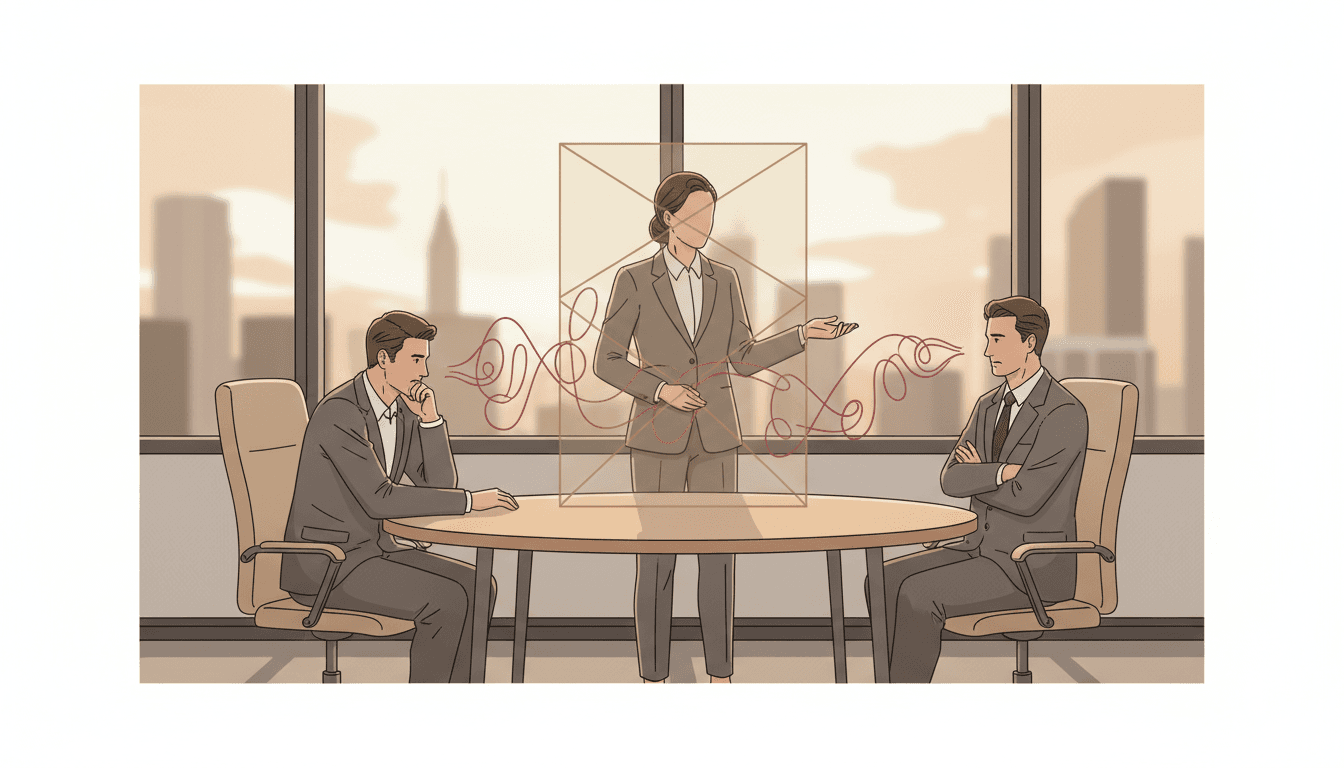
Leadership presence in tough conversations is the ability to project calm authority, clarity, and credibility when workplace discussions become emotionally charged, adversarial, or high-stakes. It's the combination of emotional regulation, strategic communication, and physical composure that allows a leader to hold the room—even when the room pushes back.
This is different from general confidence. Presence in tough conversations requires you to manage not only your own emotional state but also the emotional temperature of the entire interaction. It's a skill that can be learned, practiced, and refined through deliberate frameworks.
Why Leadership Presence Breaks Down in High-Stakes Moments
Before you can build presence in tough conversations, you need to understand why it collapses. Most professionals don't lose credibility because they lack knowledge—they lose it because their nervous system hijacks their communication.

The Amygdala Hijack Problem
When you face conflict, criticism, or confrontation, your brain's threat detection system activates before your rational mind can intervene. Research published in the Journal of Applied Psychology found that 66% of employees report their performance drops significantly during workplace conflict situations (CPP Global, 2008). Your body floods with cortisol. Your voice tightens. Your thoughts narrow.
The result? You default to one of three destructive patterns: you become overly aggressive (fight), you go silent and concede too quickly (freeze), or you deflect and change the subject (flight). None of these build credibility.
The Preparation Gap
Most leaders prepare what they'll say in a tough conversation but not how they'll say it—or how they'll respond when the conversation veers off-script. A study by VitalSmarts (now Crucial Learning) found that 72% of leaders admit they avoid or delay difficult conversations, and when they finally have them, they feel underprepared for the emotional dynamics (Crucial Learning, 2016).
This preparation gap is where presence dies. You walk in with talking points but no strategy for maintaining composure when someone challenges your data, questions your motives, or becomes visibly upset.
Identity Threat and Self-Doubt
Tough conversations often trigger what psychologists call "identity threat"—the feeling that your competence, fairness, or character is being questioned. When a direct report disputes their performance review, they're not just disagreeing with your assessment. They're implicitly challenging your judgment as a leader.
This is why even experienced executives can feel rattled. The conversation isn't just about the topic—it's about who you are. Learning to project calm authority under pressure starts with recognizing this dynamic.
The ANCHOR Framework: Pre-Conversation Preparation
Presence in tough conversations is 70% preparation and 30% execution. The ANCHOR framework gives you a structured way to prepare before you walk into any high-tension exchange.
A — Anticipate Emotional Triggers
Before the conversation, write down the three things the other person could say that would most destabilize you. Be brutally honest. Maybe it's "You're not being fair." Maybe it's "I've already talked to HR." Maybe it's silence—a long, uncomfortable pause while they stare at you.
For each trigger, script a composed response. Not a rebuttal—a response that acknowledges their statement while maintaining your authority. For example:
- Trigger: "You're playing favorites."
- Composed response: "I understand that's how it feels, and I want to address that directly. Let me walk you through the criteria I used."
This technique is called "emotional inoculation." By rehearsing your response to the worst-case scenario, you reduce the amygdala's power over your reaction in real time.
N — Narrow Your Core Message
Every tough conversation needs one anchor message—a single sentence that captures your position. If you can't state your core message in under 15 words, you haven't clarified your thinking enough.
Examples:
- Budget cuts: "We need to reduce this budget by 20% while protecting our two highest-impact initiatives."
- Performance dispute: "Your results in Q3 did not meet the standards we agreed on in June."
- Organizational pushback: "This restructuring is necessary to position us for the market shift we're already seeing."
When the conversation gets chaotic, you return to this anchor. It keeps you from rambling, over-explaining, or getting pulled into tangential arguments. This aligns with the principles of speaking with authority and confidence.
C, H, O, R — Context, Holding Space, Outcome, Recovery Plan
Context: Define the setting intentionally. A performance conversation in a glass-walled conference room signals something different than one in your office with the door closed. Choose a setting that supports the tone you want. Holding Space: Decide in advance how much emotional space you're willing to hold. In a layoff conversation, you may need to sit with someone's grief for several minutes. In a budget negotiation, you may need to let a peer vent before redirecting. Know your threshold. Outcome: Define your minimum acceptable outcome before the conversation. Not your ideal outcome—your floor. This prevents you from conceding too much under pressure. Recovery Plan: Schedule 15–30 minutes after the conversation for decompression. Tough conversations drain executive function. Without recovery time, your next meeting will suffer.Ready to Build Unshakeable Presence in Every Conversation? The Credibility Code gives you the exact frameworks, scripts, and mindset shifts that mid-career professionals use to project authority—even in the toughest moments. Discover The Credibility Code
In-the-Moment Techniques: Holding Presence Under Fire
Preparation gets you to the door. These techniques keep you grounded once you're inside the conversation.

The 4-Second Reset
When you feel your composure slipping—your chest tightening, your voice rising, your thoughts scrambling—use the 4-Second Reset:
- Inhale for 2 seconds through your nose (this activates your parasympathetic nervous system).
- Pause for 2 seconds before responding (this creates the perception of thoughtfulness rather than reactivity).
Research from the HeartMath Institute shows that controlled breathing patterns can shift your heart rate variability within 10 seconds, moving your nervous system from a stress state to a coherent state (HeartMath Institute, 2019). Four seconds is enough to reclaim control.
The pause also signals something powerful to the other person: you are not rattled. Leaders who pause before responding are perceived as 30% more competent and trustworthy, according to research on speech patterns and credibility (University of Michigan, Communication Studies, 2017).
For more on mastering the pause, see our guide on how to pause effectively in public speaking.
The Reflect-Reframe-Redirect Method
When someone says something emotionally charged, resist the urge to defend immediately. Instead, use this three-step sequence:
Reflect: Mirror back what they said without agreeing or disagreeing.- "What I'm hearing is that you feel the decision was made without your input."
- "The core question here is how we make resource decisions when timelines are compressed."
- "Let's focus on what we can adjust going forward to make sure your team's priorities are represented."
This method works because it validates the other person's experience without surrendering your position. It's especially effective when you need to disagree with leadership without losing credibility.
Vocal and Physical Anchors
Your body communicates before your words do. In tough conversations, two physical adjustments make an outsized difference:
Lower your vocal register. When stressed, your voice naturally rises in pitch, which signals anxiety. Consciously drop your pitch by about 10–15%. You don't need to sound artificially deep—just grounded. Think "newsreader," not "drill sergeant." Plant your feet. If you're sitting, press both feet flat on the floor. If you're standing, distribute your weight evenly. This physical grounding sends a signal to your brain that you are stable, which in turn stabilizes your emotional state. Studies in embodied cognition show that physical posture directly influences emotional regulation (Carney, Cuddy, & Yap, 2015—replicated findings on postural feedback effects).For a deeper dive into body language strategies, explore our guide on body language for leadership presence.
Navigating Specific High-Stakes Scenarios
Frameworks are useful. Applied frameworks are powerful. Here's how leadership presence plays out in three common tough-conversation scenarios.
Scenario 1: The Performance Dispute
Situation: You've given a direct report a "needs improvement" rating. They're upset, defensive, and threatening to escalate to HR. Presence approach:- Open with your anchor message: "Your results in Q3 did not meet the standards we agreed on. I want to walk through the specifics."
- When they push back with emotion ("This is unfair, I worked harder than anyone"), use Reflect-Reframe-Redirect: "I can see you feel your effort isn't being recognized. Let's separate effort from outcomes and look at the metrics together."
- If they threaten HR escalation, don't flinch. Respond with calm neutrality: "You're absolutely welcome to do that. I want you to feel the process is fair. In the meantime, let's continue this conversation so we're both clear on next steps."
The key is to hold your ground without escalating the emotional temperature. This is where communicating with confidence in difficult conversations becomes essential.
Scenario 2: The Budget Cut Announcement
Situation: You need to tell your team that their project budget is being cut by 30%. They'll be angry, anxious, and looking to you for answers you may not fully have. Presence approach:- Lead with honesty, not corporate euphemism. "Our project budget is being reduced by 30%, effective next quarter. I want to be direct about what this means and what it doesn't mean."
- Acknowledge the emotional reality: "I know this is frustrating. Some of you are worried about your roles. Let me address that directly."
- Define what you can control: "Here's what I've already negotiated to protect..." This signals that you've been advocating for them, which builds trust even in bad news.
For a comprehensive approach to these situations, see our playbook on how to deliver bad news professionally and with poise.
Scenario 3: Pushback from a Senior Peer
Situation: In a leadership meeting, a peer publicly challenges your proposal, suggesting it's "not grounded in reality." Presence approach:- Do not match their energy. Lower your voice slightly and slow your pace. This contrast makes you appear more composed and credible.
- Respond to the substance, not the tone: "I appreciate the pushback. Let me address the feasibility concern specifically." Then present your evidence calmly.
- If the attack becomes personal, name it without aggression: "I want to keep this focused on the proposal rather than characterizations. Here's the data."
A Harvard Business Review analysis found that leaders who respond to public challenges with measured, evidence-based responses are rated 45% higher in leadership effectiveness by their peers than those who respond defensively (HBR, Groysberg & Slind, 2012).
Post-Conversation Recovery: The Phase Most Leaders Skip
The conversation is over. You held your ground. But your work isn't done. Recovery is the most overlooked phase of leadership presence—and skipping it creates cumulative damage.
The Debrief Protocol
Within one hour of the conversation, spend 10 minutes on a written debrief. Answer three questions:
- What landed? Which of your points or responses were most effective?
- Where did I wobble? At what moment did I feel my composure slip, even slightly?
- What would I adjust? If I had this conversation again tomorrow, what would I change?
This isn't self-criticism—it's calibration. Every tough conversation is training data for the next one.
Emotional Metabolization
Tough conversations leave a physiological residue. Cortisol stays elevated for up to 90 minutes after a stressful interaction. If you stack another high-stakes meeting immediately after, you're operating at diminished capacity.
Build in a recovery buffer. Take a walk. Have a glass of water. Do a 5-minute breathing exercise. This isn't soft—it's strategic. Leaders who manage their recovery between difficult interactions maintain higher cognitive performance throughout the day, according to research on executive decision fatigue (Baumeister & Tierney, Willpower, 2011).
Relationship Repair Signals
Some tough conversations create relational tension that lingers. Within 24–48 hours, send a brief follow-up that reinforces the relationship without backtracking on your position:
- "I appreciated your honesty yesterday. I know that wasn't an easy conversation. I'm committed to working through this together."
This signal tells the other person that the relationship matters to you—without undermining the message you delivered. It's a critical step in maintaining long-term leadership presence in difficult meetings.
Your Credibility Is Built in the Moments That Matter Most. The Credibility Code equips you with the preparation rituals, in-the-moment scripts, and recovery strategies that transform tough conversations from career risks into career-defining moments. Discover The Credibility Code
Building a Long-Term Practice
Leadership presence in tough conversations isn't a one-time skill—it's a practice. The professionals who command the most respect in high-tension moments are those who train consistently, not just those who prepare for individual conversations.
Weekly Micro-Rehearsals
Spend 10 minutes each week rehearsing a hypothetical tough conversation. Use the ANCHOR framework. Script your anchor message. Identify your emotional triggers. Practice the Reflect-Reframe-Redirect sequence out loud. Research on deliberate practice shows that even brief, focused rehearsals improve performance under pressure significantly more than passive study (Ericsson, 2006).
Feedback Loops
After real tough conversations, ask a trusted colleague or mentor for honest feedback on your presence. Not on what you said—on how you came across. Were you grounded? Did you seem reactive at any point? Did your voice stay steady?
This external perspective is invaluable because your self-perception during high-stress moments is often inaccurate. What felt like composure to you may have read as coldness. What felt like empathy may have read as uncertainty. Building this feedback loop accelerates your growth faster than any other single practice.
For a broader approach to developing your communication presence over time, explore our guide on how to communicate with authority at work.
Frequently Asked Questions
How do I maintain leadership presence when someone is yelling at me?
Lower your voice and slow your pace—this contrast de-escalates the interaction. Plant your feet, take a 4-second breath, and respond to the content, not the volume. Say something like, "I can see this is important to you. I want to address it properly, so let's slow down." If the yelling continues, calmly set a boundary: "I'm committed to this conversation, but I need us to have it at a volume where we can both think clearly."
What's the difference between leadership presence and executive presence in tough conversations?
Leadership presence in tough conversations focuses on maintaining composure, authority, and connection with the other person during conflict. Executive presence is a broader concept that includes how you carry yourself across all professional contexts—meetings, presentations, hallway interactions. Think of leadership presence in tough conversations as a specific, high-stakes application of the broader executive presence skill set. Our article on executive presence vs. leadership presence explores this distinction in depth.
How do I prepare for a tough conversation when I only have 5 minutes?
Focus on two things: your anchor message (one sentence that captures your core position) and your biggest emotional trigger (the one thing they could say that would rattle you most). Script a calm response to that trigger. These two elements—clarity on your message and inoculation against your worst-case reaction—provide 80% of the preparation value in 20% of the time.
Can introverts have strong leadership presence in tough conversations?
Absolutely. Introverts often excel in tough conversations because they naturally listen more carefully, pause before responding, and avoid the reactive escalation that extroverts sometimes fall into. The key is preparation—introverts perform best when they've rehearsed their anchor message and anticipated the conversation's emotional dynamics. For tailored strategies, see our guide on how to build leadership presence as an introvert.
How do I recover credibility after losing composure in a tough conversation?
Acknowledge it directly and quickly—within 24 hours. Say something like, "I didn't handle that moment the way I intended. I want to revisit the substance of what we discussed with a clearer head." This kind of ownership actually builds credibility because it demonstrates self-awareness and accountability. Then use the debrief protocol to identify what triggered you and prepare differently next time.
How long does it take to develop strong leadership presence in tough conversations?
Most professionals notice significant improvement within 6–8 weeks of deliberate practice—weekly micro-rehearsals, post-conversation debriefs, and feedback loops. The skill compounds: each tough conversation you navigate well builds neural pathways that make the next one easier. However, like any performance skill, it requires ongoing maintenance. Leaders who stop practicing tend to regress under novel or unusually high-stakes conditions.
Transform Your Toughest Conversations Into Your Strongest Moments. Everything in this framework—the ANCHOR preparation method, the in-the-moment techniques, the recovery strategies—is just the beginning. The Credibility Code gives you the complete system for building authority, composure, and credibility in every professional interaction. Discover The Credibility Code
Ready to Command Authority in Every Conversation?
Transform your professional communication with proven techniques that build instant credibility. The Credibility Code gives you the frameworks top leaders use to project confidence and authority.
Discover The Credibility CodeRelated Articles
Leadership Presence in Difficult Conversations: A Framework
Leadership presence in difficult conversations means maintaining composure, credibility, and authority when the emotional stakes are high—whether you're delivering tough feedback, navigating pushback from peers, or sharing unwelcome news. The framework that follows gives you a step-by-step method to prepare mentally, regulate your emotions in real time, choose language that commands respect, and recover quickly if you lose your footing. These are the same techniques used by executives who stay c

Leadership Presence in Difficult Conversations: A Guide
Leadership presence in difficult conversations means maintaining composure, authority, and empathy when the stakes are high—whether you're delivering tough feedback, pushing back on a peer, or sharing bad news. It requires emotional regulation, intentional language, and a framework that keeps you grounded. The leaders who master this skill don't avoid hard conversations; they walk into them with a calm confidence that preserves both credibility and relationships. This guide gives you the exact f

Leadership Presence in a Crisis: How to Lead Calmly Under Pressure
Leadership presence in a crisis means maintaining visible composure, communicating with clarity, and projecting calm authority when stakes are highest. To lead effectively under pressure, you need three things: emotional regulation techniques that keep your nervous system steady, a structured messaging framework that eliminates confusion, and deliberate body language that signals control. This article gives you a complete, actionable system for all three — so the next time crisis hits, your team