
How to Negotiate When You Feel Scared: A Calm Method
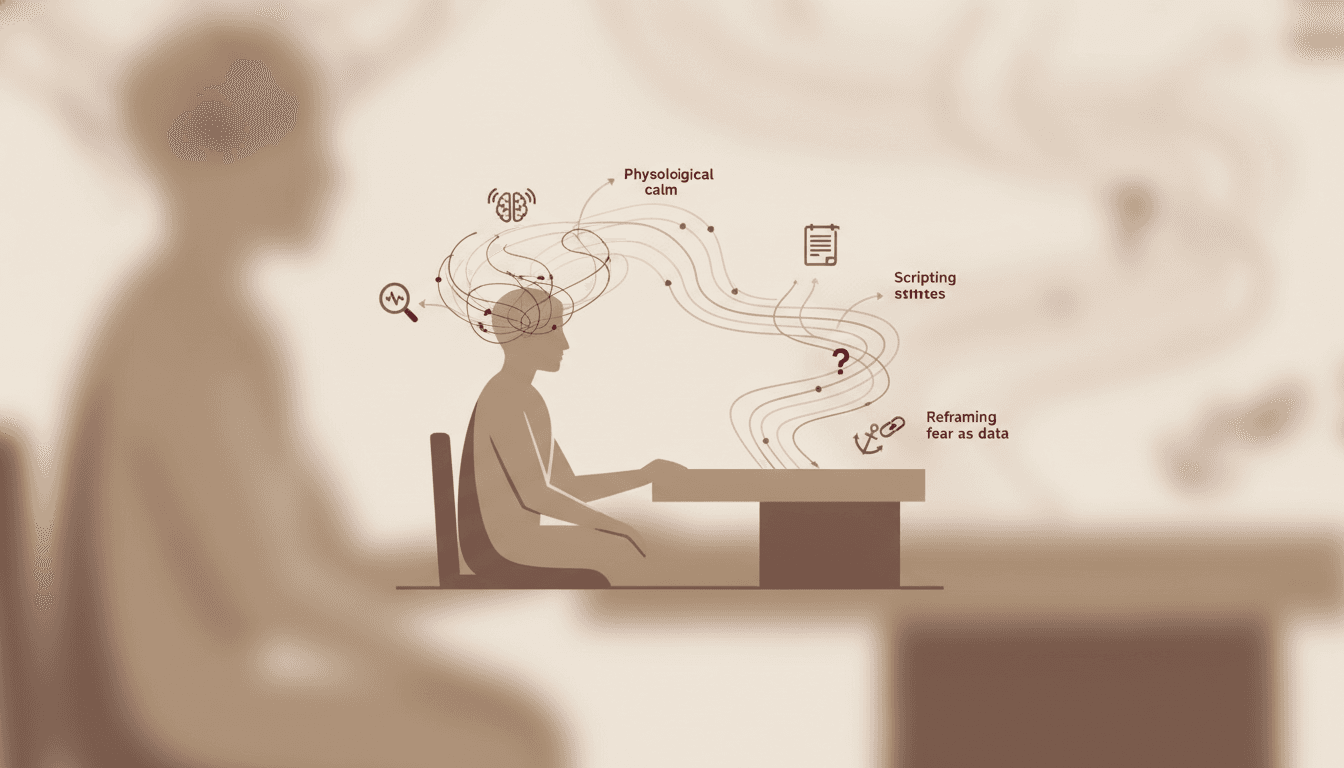
What Is Negotiation Fear (and Why It's Universal)
Negotiation fear is the acute anxiety, dread, or avoidance response that arises when you anticipate a conversation where you must advocate for yourself, push back on terms, or risk rejection. It's a physiological and psychological stress response — not a character flaw.
This fear typically manifests as a racing heart, shallow breathing, mental blanking, or the overwhelming urge to accept whatever's offered just to end the discomfort. It affects professionals at every level, from first-time salary conversations to executive-level contract discussions.
According to a 2023 survey by the American Psychological Association, 56% of working adults report that workplace stress — including high-stakes conversations like negotiations — significantly impacts their mental health. You're not alone in feeling this way, and acknowledging fear is the first step to managing it.
Why Your Brain Treats Negotiation Like a Threat
The Neuroscience Behind Negotiation Anxiety
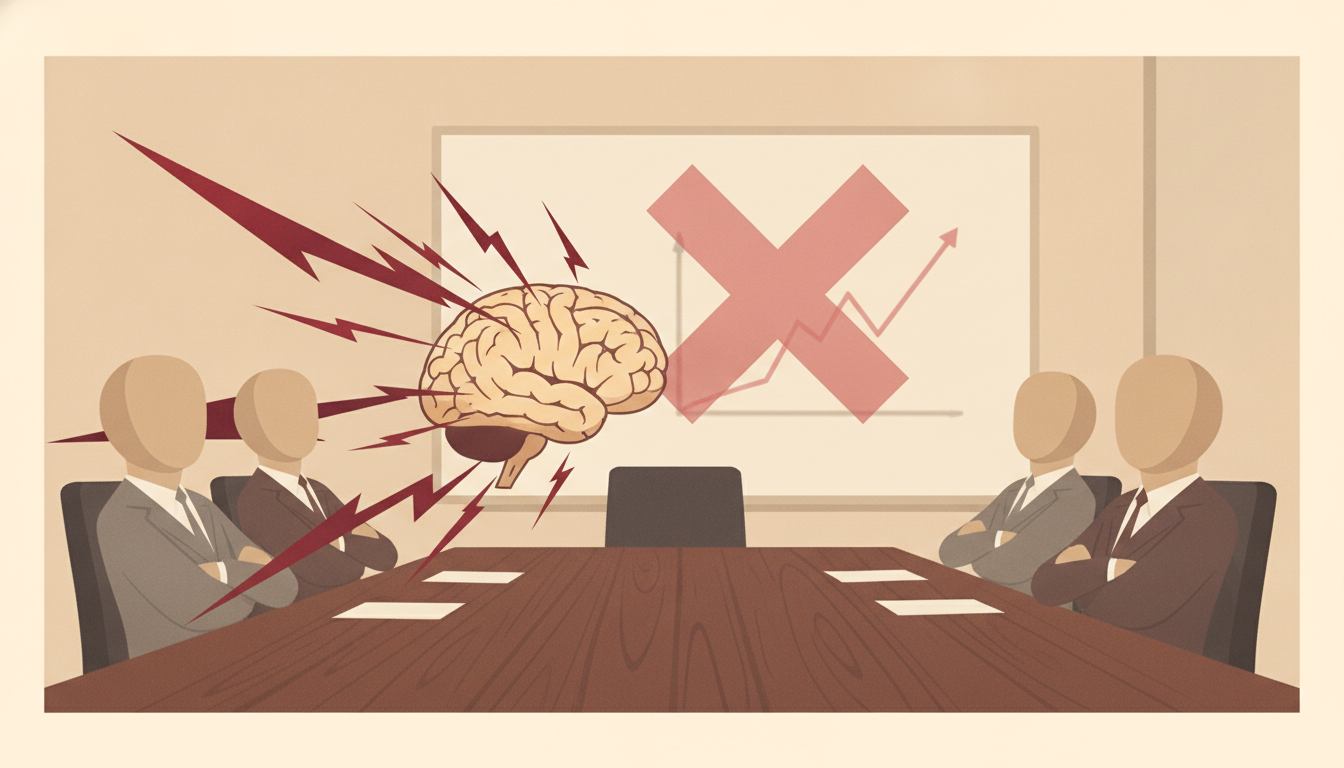
Your brain doesn't distinguish well between physical danger and social risk. When you sit across from someone who controls your salary, your project scope, or your next promotion, your amygdala — the brain's threat-detection center — fires the same alarm it would if you encountered a physical threat.
This triggers your sympathetic nervous system: cortisol floods your bloodstream, your heart rate spikes, your prefrontal cortex (responsible for clear thinking and articulate speech) partially shuts down. That's why you rehearse perfect arguments in the shower but freeze when the moment arrives.
Research published in the Journal of Experimental Social Psychology found that individuals who experience high anxiety during negotiations achieve outcomes up to 12% worse than their calmer counterparts — not because their positions are weaker, but because anxiety impairs strategic thinking and leads to premature concessions.
Fear vs. Danger: A Critical Distinction
Here's what most negotiation advice misses: fear is not evidence of danger. Fear is evidence that something matters to you. When you feel scared before a salary conversation, your brain is telling you that this outcome is important — not that you're incapable of handling it.
This reframe is essential. If you can learn to interpret fear as a signal of significance rather than a warning of failure, you shift from a defensive posture to an engaged one. This is the foundation of the calm method we'll walk through below.
If you've ever felt your voice tremble during a high-pressure moment, you already know how fear shows up physically. The good news: those physical symptoms respond well to targeted techniques.
The Calm Method: A Step-by-Step Framework for Scared Negotiators
The CALM method gives you a repeatable structure that works whether you're negotiating a raise, pushing back on a project timeline, or advocating for resources. Each letter represents a phase:
- C — Control your physiology
- A — Anchor your position in advance
- L — Lead with a scripted opening
- M — Manage the middle (including freezes)
C — Control Your Physiology Before You Walk In
You cannot think clearly when your nervous system is in fight-or-flight mode. Before any negotiation, spend 5–10 minutes using one or more of these physiologically proven techniques:
Physiological sigh (double inhale, long exhale): Inhale sharply through your nose twice in quick succession, then exhale slowly through your mouth for 6–8 seconds. A 2023 Stanford study published in Cell Reports Medicine found that this breathing pattern reduced self-reported anxiety and improved mood more effectively than mindfulness meditation in just five minutes. Cold water reset: Splash cold water on your wrists and face, or hold something cold in your hands. This activates the mammalian dive reflex, which slows your heart rate and calms your vagus nerve. Power posture (private only): Spend two minutes standing in an expansive posture — feet wide, hands on hips — in a private space before the meeting. While the "power pose" research has been debated, a 2018 meta-analysis in Psychological Bulletin confirmed that expansive postures do reduce cortisol and increase subjective feelings of power. Scenario example: Sarah, a marketing director, had a compensation review with her VP. She arrived 15 minutes early, sat in her car, performed three rounds of physiological sighs, and reviewed her notes. By the time she walked in, her heart rate had dropped from 95 bpm to 72. She later said it was the first negotiation where she didn't feel like she was "performing from behind a wall of panic."A — Anchor Your Position in Advance
Anchoring is one of the most well-documented negotiation strategies, and it's also one of the most powerful antidotes to fear. When you anchor first — by stating a specific number, term, or expectation early in the conversation — you set the frame of the discussion rather than reacting to someone else's.
Fear thrives in ambiguity. The less you've defined what you want, the more room anxiety has to fill the gaps with worst-case scenarios.
Before your negotiation, write down three numbers or positions:
- Your ideal outcome — the best realistic result
- Your acceptable outcome — what you'd walk away satisfied with
- Your walk-away point — the floor below which you won't go
Having these defined in advance means you don't need to calculate under pressure. Your brain can focus on listening and responding rather than frantically evaluating offers in real time.
For specific language patterns that project confidence during this anchoring phase, explore our guide on negotiation phrases that show confidence.
Ready to negotiate with authority, not anxiety? The Credibility Code gives you the frameworks, scripts, and vocal techniques that transform how you show up in every high-stakes conversation. Discover The Credibility Code
L — Lead with a Scripted Opening
The first 30 seconds of a negotiation set the emotional tone for everything that follows. If you stumble, over-apologize, or hedge, you signal uncertainty — and the other party adjusts their strategy accordingly.
Script your opening sentence word-for-word. Not your entire negotiation — just the first sentence. This eliminates the hardest moment: the blank-page panic of "how do I even start?"
Examples of scripted openings:- Salary negotiation: "I've done thorough research on market compensation for this role, and I'd like to discuss aligning my salary with the value I'm delivering. I'm targeting a range of $X to $Y."
- Project scope pushback: "I want to make sure we set this project up for success. Based on the current timeline and resources, here's what I can realistically deliver — and here's what would need to change to expand the scope."
- Promotion conversation: "I've been preparing for this conversation because I believe my contributions over the past [timeframe] position me well for [specific role]. I'd like to discuss the path forward."
Notice what these openings share: they're direct, they state intent, and they don't apologize. They also don't require improvisation — you've rehearsed them.
If you tend to sound uncertain at work, scripting your opening is the single highest-leverage change you can make.
M — Manage the Middle (Including When You Freeze)
Even with preparation, negotiations go sideways. The other person says something unexpected. They push back harder than you anticipated. You lose your train of thought. This is normal — and it's where most scared negotiators abandon their position.
You need recovery phrases — pre-memorized sentences that buy you time without surrendering ground:
- "That's an interesting point. Let me think about that for a moment." (Buys 10–15 seconds of silence without conceding anything.)
- "I want to make sure I respond to that thoughtfully. Can you say more about your reasoning?" (Redirects pressure back to them.)
- "I appreciate you sharing that. Here's how I see it from my side..." (Acknowledges without agreeing.)
- "Let me come back to that. Before I do, I want to address [original point]." (Prevents derailment.)
These phrases are not tricks. They're structural supports that keep the conversation productive when your fear response is screaming at you to fold.
The 3-second rule: When you feel the urge to fill silence with a concession, count to three silently. Silence in negotiation communicates confidence. According to negotiation researchers at Columbia Business School, negotiators who tolerate silence achieve better outcomes because the other party often fills the pause with concessions or additional information.Reframing Fear as Data: The Mindset Shift That Changes Everything
What Your Fear Is Actually Telling You

Most professionals treat negotiation fear as evidence that they shouldn't be negotiating — that they're not senior enough, not qualified enough, or not tough enough. This interpretation is backwards.
Fear in negotiation is data. Specifically, it tells you three things:
- This outcome matters to you. You wouldn't feel scared negotiating for something you didn't care about.
- You perceive a power imbalance. Your fear may be pointing to a real or imagined gap in leverage — and that's useful information to address.
- You haven't practiced enough. Fear decreases with repetition. If you're terrified, it often means this is a relatively novel situation for you.
None of these data points mean you should avoid the negotiation. They mean you should prepare more deliberately.
From "I'm Not Ready" to "I've Done the Work"
One of the most effective reframes for negotiation anxiety is shifting from outcome-focus to preparation-focus. You can't control whether the other person says yes. You can control whether you've done your research, scripted your opening, defined your anchors, and practiced your recovery phrases.
When you've done those things, your internal narrative shifts from "I hope this goes okay" to "I've done the work, and I'm ready for whatever happens." That shift — from hope to preparation — is where fear loses its grip.
If you're negotiating from a position where you feel outmatched, our guide on how to negotiate when you feel intimidated offers complementary strategies for managing power dynamics.
Pre-Negotiation Scripting: Your Fear-Proof Preparation System
Building Your Negotiation Script Document
Before any significant negotiation, create a one-page document with these five elements:
- Your opening statement (scripted word-for-word)
- Three anchoring data points (market data, performance metrics, comparable offers)
- Your three positions (ideal, acceptable, walk-away)
- Three likely objections and your responses (scripted)
- Four recovery phrases (memorized)
This document isn't a script you read from — it's a preparation artifact that forces you to think through the conversation before it happens. The act of writing it reduces anxiety because your brain has already "rehearsed" the hardest moments.
Rehearsal That Actually Reduces Fear
A 2019 study in the Negotiation Journal found that negotiators who rehearsed their key points aloud (not just mentally) experienced 23% less anxiety during the actual conversation compared to those who only prepared mentally.
Here's a simple rehearsal protocol:
- Day before: Read your script document aloud three times. Time your opening statement.
- Morning of: Stand in front of a mirror and deliver your opening statement twice. Watch your body language.
- 30 minutes before: Review your three positions and four recovery phrases silently.
This layered approach means your preparation is stored in multiple memory systems — visual, auditory, and kinesthetic — making it more accessible under stress.
Turn preparation into presence. The Credibility Code includes negotiation scripts, vocal exercises, and the exact frameworks that help professionals communicate with calm authority — even when they're scared. Discover The Credibility Code
Anchoring Strategies That Reduce Pressure
Why Going First Reduces Your Anxiety
Counterintuitively, making the first offer in a negotiation often reduces anxiety rather than increasing it. Here's why: when you wait for the other party to anchor, you spend the entire lead-up in a state of dread, imagining what they might say. When you anchor first, you eliminate that uncertainty.
Research from Harvard's Program on Negotiation confirms that the first offer serves as a powerful psychological anchor — subsequent offers tend to cluster around it. By going first with a well-researched number, you're not being aggressive. You're being strategic.
The "Bracket" Technique for Scared Negotiators
If stating a single number feels too exposed, use the bracket technique: offer a range where your ideal outcome is the bottom of the range.
Example: If you want a $120,000 salary, say: "Based on my research and the scope of this role, I'm looking at a range of $120,000 to $135,000."This technique reduces pressure because you're not committing to a single point that can be immediately rejected. It also signals that you've done your homework. For a deeper dive into salary-specific strategies, see our guide on how to negotiate salary confidently with scripts.
Anchoring With Evidence, Not Emotion
Fear often tempts negotiators to justify their requests with emotional appeals: "I really need this" or "I've been working so hard." These statements may be true, but they undermine your position by shifting the frame from value to sympathy.
Instead, anchor with evidence:
- "The market rate for this role in our region is $X to $Y, according to [source]."
- "In the last quarter, my work on [project] generated $X in revenue."
- "Comparable roles at [competitor companies] are compensated at $X."
Evidence-based anchoring is easier to deliver when scared because you're reporting facts, not making personal claims. It takes the emotional weight off your shoulders and puts it on the data.
Recovery Strategies: What to Do When Fear Takes Over Mid-Negotiation
Recognizing the Freeze Response
Even with perfect preparation, you may hit a moment where fear overwhelms your thinking. Your mind goes blank. Your palms sweat. You can't remember what you planned to say. This is the freeze response, and it happens to experienced negotiators too.
The key is recognizing it without judging it. When you notice the freeze, you have about a 3-second window to deploy a recovery strategy before you default to a concession or an apology.
The "Strategic Pause" Technique
Instead of rushing to fill the silence, lean into it. Say one of your recovery phrases — "That's a thoughtful point. Let me consider that" — and then deliberately pause for 5–7 seconds. During that pause:
- Take one slow breath
- Look at your notes (if available)
- Recall your three positions (ideal, acceptable, walk-away)
This pause looks like thoughtfulness to the other person. It feels like a lifeline to you. For more techniques on maintaining composure when the pressure is on, explore our guide on leadership presence under pressure.
The "Return to Anchor" Move
If you've lost the thread of the conversation entirely, you can always return to your anchor: "I want to come back to the core of what I'm proposing..." This isn't retreating — it's refocusing. It gives your brain a familiar script to follow when improvisation has failed.
The Post-Negotiation Recovery
Not every negotiation ends the way you want. When fear has been a factor, it's especially important to debrief with yourself afterward:
- What went well? (Even one small moment of composure counts.)
- Where did fear take over? (Identify the specific trigger.)
- What would I script differently next time?
This debrief transforms even a difficult negotiation into preparation for the next one. Over time, your fear response diminishes because your brain accumulates evidence that you can survive — and even succeed — in these conversations.
If you're working on building confidence after a setback at work, this same debrief process applies.
Frequently Asked Questions
Is it normal to feel scared before a negotiation?
Yes, it's extremely common. Research from Columbia Business School shows that negotiation anxiety affects the majority of professionals, regardless of seniority. Fear before a negotiation is a normal stress response to a high-stakes social situation. The goal isn't to eliminate fear — it's to manage it so it doesn't drive your decisions. Preparation, physiological regulation, and scripted responses are the most effective tools for negotiating well despite fear.
How do I stop my voice from shaking during a negotiation?
Voice trembling during negotiations is caused by tension in the vocal cords triggered by your fight-or-flight response. Before the conversation, do 2–3 rounds of physiological sighs to calm your nervous system. During the negotiation, slow your speaking pace by 20% — this naturally steadies your voice. Drinking room-temperature water (not cold) also helps relax the throat muscles. For more detailed vocal techniques, see our guide on how to sound confident in a negotiation.
What's the difference between negotiation fear and negotiation anxiety?
Negotiation fear is typically acute and situational — a strong emotional response to a specific upcoming conversation. Negotiation anxiety is a broader, more chronic pattern of worry about negotiation situations in general. Fear tends to spike and resolve; anxiety tends to simmer. Both respond well to preparation and physiological calming techniques, but chronic negotiation anxiety may also benefit from cognitive reframing work and gradual exposure through lower-stakes practice negotiations.
Can I negotiate well even if I feel terrified?
Absolutely. Feeling terrified and performing well are not mutually exclusive. Research in performance psychology shows that moderate anxiety can actually improve focus and effort — a phenomenon known as the Yerkes-Dodson law. The key is channeling that arousal into preparation rather than avoidance. Many successful negotiators report feeling significant fear before important conversations. What separates them isn't fearlessness — it's a system for managing fear so it doesn't control their behavior.
How do I prepare for a negotiation when I have no leverage?
Start by questioning whether you truly have no leverage. Most professionals underestimate their value. Document your contributions, research market rates, and identify what the other party needs from you. Even in low-leverage situations, preparation and calm delivery create perceived confidence that influences outcomes. Our guide on how to negotiate when you feel powerless offers specific strategies for these scenarios.
Should I tell the other person I'm nervous?
Generally, no. While vulnerability can build rapport in some contexts, announcing nervousness in a negotiation often undermines your position. The other party may unconsciously (or consciously) press harder. Instead, use your calming techniques privately and let your preparation speak for you. If you notice your anxiety showing, deploy a recovery phrase and pause rather than narrating your emotional state.
From scared to strategic — in every conversation. The Credibility Code is the complete system for professionals who want to communicate with calm authority, negotiate with confidence, and build lasting credibility at work. It includes negotiation scripts, vocal mastery techniques, and the mindset frameworks that transform how others perceive you. Discover The Credibility Code
Ready to Command Authority in Every Conversation?
Transform your professional communication with proven techniques that build instant credibility. The Credibility Code gives you the frameworks top leaders use to project confidence and authority.
Discover The Credibility CodeRelated Articles

How to Negotiate When You Feel Nervous: A Step-by-Step Guide
Negotiating when you feel nervous starts with accepting that anxiety is a normal biological response — not a sign of weakness. The key is a three-phase approach: prepare your mind and body before the conversation, use specific calming techniques and language patterns during the negotiation, and have recovery strategies ready if nerves spike mid-conversation. With the right preparation rituals, breathing techniques, and confidence-projecting scripts, you can negotiate effectively even when your h
How to Sound Confident in a Negotiation: 9 Vocal Shifts
To sound confident in a negotiation, focus on nine specific vocal shifts: lower your pitch at the end of statements, slow your speaking pace by 20–30%, use strategic 2–3 second pauses before key points, eliminate filler words, reduce vocal fry, anchor your voice in your diaphragm, match your volume to the room, front-load your strongest points, and replace hedging language with declarative statements. These shifts signal authority and composure — even when you feel nervous inside.

How to Negotiate When You Feel Underqualified
Negotiating when you feel underqualified starts with understanding that your perceived lack of qualifications is rarely the full picture. The key is to shift from a credentials-based mindset to a value-based mindset. Prepare by documenting your tangible contributions, reframing imposter feelings as a sign of growth, and using specific language scripts that anchor the conversation in results — not résumé lines. You don't need to feel fully qualified to negotiate effectively; you need to be fully