
How to Communicate With Difficult Stakeholders Confidently

Communicating with difficult stakeholders requires a combination of emotional composure, strategic framing, and assertive clarity. Start by identifying the stakeholder's resistance type — whether they're skeptical, domineering, or disengaged — then match your communication approach accordingly. Use data-driven framing to neutralize emotional pushback, lead with shared objectives to build alignment, and set clear boundaries without becoming adversarial. The goal isn't to "win" the conversation; it's to establish credibility and move decisions forward, even under pressure.
What Is Difficult Stakeholder Communication?
Difficult stakeholder communication is the practice of managing professional interactions with individuals who resist, challenge, dominate, or undermine your ideas, authority, or project direction. These stakeholders may be senior executives, cross-functional partners, clients, or board members whose behavior creates friction in decision-making.
Unlike routine professional communication, difficult stakeholder interactions demand heightened emotional regulation, strategic message framing, and a deliberate approach to influence. It's not about avoiding conflict — it's about navigating it with credibility and composure intact.
Why Stakeholder Conversations Go Wrong
Before you can fix difficult stakeholder dynamics, you need to understand what drives them. Most communication breakdowns with stakeholders don't stem from bad intentions — they stem from misaligned expectations, unspoken concerns, and power dynamics that nobody addresses directly.

The Hidden Drivers of Stakeholder Resistance
Resistance from stakeholders rarely means they disagree with your idea outright. More often, they feel unheard, uninformed, or threatened. A 2023 study by the Project Management Institute found that 29% of projects fail due to inadequate communication — and stakeholder misalignment is a leading contributor.
Consider this scenario: You're presenting a new process change to a VP who immediately pushes back with, "We tried something like this before and it didn't work." That's not a logical objection — it's an emotional anchor tied to a past failure. If you respond with more data, you miss the real issue. The effective move is to acknowledge the past experience before reframing the present opportunity.
Three Stakeholder Archetypes That Create Friction
Not all difficult stakeholders are the same, and your approach should vary based on their behavior pattern:
- The Skeptic — Questions everything, demands excessive proof, and delays decisions. They need evidence and credibility signals before they'll engage.
- The Dominator — Talks over others, redirects conversations, and asserts control. They need to feel respected and included, not challenged publicly.
- The Ghost — Disengaged, unresponsive, and hard to pin down. They need concise, high-stakes framing that shows why their input matters now.
Understanding which archetype you're dealing with is the first step toward choosing the right communication strategy. If you're working to establish credibility quickly in any room, recognizing these patterns becomes second nature.
The ANCHOR Framework for Difficult Stakeholder Conversations
Generic advice like "be empathetic" or "listen more" isn't enough when you're facing a hostile VP or a dismissive client. You need a repeatable framework. The ANCHOR method gives you one.
How the ANCHOR Method Works
A — Acknowledge their perspective before introducing yours. This disarms defensiveness. N — Name the shared objective. Reframe the conversation around mutual goals. C — Clarify the specific issue. Don't let vague objections linger. H — Hold your position with evidence and calm conviction. O — Offer a path forward. Give them a next step that includes their input. R — Reconfirm alignment before closing. Summarize what was agreed upon.Here's how this looks in practice. Imagine a senior director says in a steering committee meeting: "I don't think your team has the bandwidth to deliver this."
Instead of getting defensive, you respond:
- Acknowledge: "That's a fair concern, and I appreciate you raising it."
- Name: "We both want this initiative to succeed without overextending the team."
- Clarify: "Can you share which deliverables feel most at risk to you?"
- Hold: "Based on our current capacity plan, we've accounted for the Q3 workload. Here's the breakdown."
- Offer: "I'd suggest we revisit the resource plan biweekly so we can flag issues early."
- Reconfirm: "So we're aligned on moving forward with the current plan and checking in every two weeks?"
This approach works because it treats the stakeholder as a collaborator, not an obstacle — while still holding your ground. For more on asserting yourself without creating conflict, explore our guide on how to be assertive at work without being aggressive.
Scripts for Common Pushback Scenarios
Having language ready before high-pressure moments is essential. According to Harvard Business Review, professionals who prepare specific talking points before difficult conversations are 50% more likely to achieve their desired outcome.
When a stakeholder dismisses your recommendation: "I hear that you see it differently. Here's what the data is showing us — [present evidence]. I'd like to walk through the analysis together so we can make the best call." When a stakeholder tries to derail the agenda: "That's an important point, and I want to give it the attention it deserves. Can we table it for the last ten minutes, or schedule a separate discussion? I want to make sure we cover [original agenda item] while we're all here." When a stakeholder questions your authority: "I understand this is a complex area. I've been leading this workstream for [timeframe] and have worked closely with [relevant teams/data]. Let me share what we've found."Ready to Handle Any High-Stakes Conversation? These frameworks are just the beginning. Discover The Credibility Code — the complete playbook for building authority and commanding presence in every professional interaction.
Maintaining Composure Under Pressure
Frameworks are powerful, but they fall apart if your composure cracks. The ability to stay calm, centered, and articulate when a stakeholder is aggressive or dismissive is what separates competent communicators from authoritative ones.

The Physiology of Pressure — And How to Override It
When you face hostility or confrontation, your body's stress response kicks in. Cortisol floods your system, your breathing shallows, and your prefrontal cortex — the part of your brain responsible for clear thinking — starts to disengage. Research published in the Journal of Experimental Psychology (2017) found that acute stress reduces working memory capacity by up to 25%, making it harder to think on your feet.
The antidote is physical, not just mental. Before or during a tense stakeholder interaction:
- Box breathe: Inhale for 4 counts, hold for 4, exhale for 4, hold for 4. This activates your parasympathetic nervous system within 30 seconds.
- Ground your posture: Plant both feet flat, sit back in your chair, and relax your shoulders. This sends a signal of stability to your brain and to the room.
- Slow your speech by 10%: When we're anxious, we speed up. Deliberately slowing down projects calm authority.
For a deeper dive into vocal control under pressure, see our guide on how to sound more authoritative with 9 proven vocal shifts.
The "Pause and Pivot" Technique
When a stakeholder says something that catches you off guard — a personal jab, an unfair accusation, or a loaded question — your instinct is to respond immediately. Don't.
Instead, use the Pause and Pivot:
- Pause for 2-3 seconds. Take a breath. This signals confidence, not uncertainty.
- Pivot to the substance. Redirect the conversation from the emotional charge to the factual core.
Example: A stakeholder says, "Honestly, I don't think anyone on your team really understands the business side of this."
Pause. Then: "I want to make sure we're solving the right business problem. Let me walk through how we've mapped our approach to the revenue targets you outlined last quarter."
You didn't take the bait. You didn't get defensive. You redirected to credibility. This technique is closely related to the strategies covered in confidence in high-stakes conversations.
Building Long-Term Alignment With Resistant Stakeholders
Managing a single difficult conversation is one thing. Building a productive, ongoing relationship with a resistant stakeholder is another — and it's where real career authority is built.
The Pre-Meeting Strategy Most People Skip
According to a 2022 Gartner survey, 74% of cross-functional leaders said that pre-alignment conversations — before formal meetings — were the single most effective tool for reducing stakeholder conflict. Yet most professionals walk into meetings cold, hoping the strength of their argument will carry the day.
Before any high-stakes meeting with a difficult stakeholder, invest 10-15 minutes in a one-on-one pre-conversation. Here's what to cover:
- Surface their concerns privately. People are more honest — and more flexible — when they're not performing for a group.
- Share your key points in advance. This gives them time to process and reduces the likelihood of a defensive reaction in the room.
- Ask for their input on one specific element. When people feel ownership over part of the solution, they're far less likely to torpedo the whole thing.
This is the same principle behind presenting ideas to senior management effectively — you build buy-in before you need it.
From Adversary to Advocate: The Credibility Deposit System
Think of every interaction with a difficult stakeholder as a transaction in a credibility bank. Every time you deliver on a commitment, share useful information proactively, or acknowledge their expertise, you make a deposit. Every time you overpromise, surprise them with bad news, or bypass their input, you make a withdrawal.
Over time, the professionals who build the largest credibility balances are the ones who transform resistant stakeholders into advocates. This means:
- Following up within 24 hours after every significant interaction with a summary and next steps.
- Giving credit publicly when a stakeholder's input improves the outcome.
- Flagging risks early, before they become problems. Difficult stakeholders hate surprises more than they hate bad news.
If you're looking to build this kind of professional reputation systematically, our framework for how to build a professional reputation that opens doors breaks down the exact steps.
Turn Difficult Dynamics Into Career-Defining Moments. The Credibility Code gives you the scripts, frameworks, and mindset shifts to communicate with authority — even when the room is working against you. Discover The Credibility Code.
When to Escalate — And How to Do It Without Losing Credibility
Not every difficult stakeholder situation can be resolved through communication alone. Sometimes, the behavior crosses a line — from challenging to obstructive, or from skeptical to hostile. Knowing when and how to escalate is a critical leadership skill.
Recognizing the Escalation Threshold
Escalation is warranted when a stakeholder's behavior is:
- Blocking decisions that have organizational impact, despite reasonable attempts at alignment.
- Personally hostile — making comments that attack your competence or character rather than the work.
- Consistently unresponsive to the point where project timelines or deliverables are at risk.
A 2021 study by CPP Inc. (the publishers of the Myers-Briggs assessment) found that U.S. employees spend approximately 2.8 hours per week dealing with conflict, costing organizations an estimated $359 billion annually in paid hours. Not all conflict needs escalation, but unresolved obstructive behavior has a real cost.
How to Escalate Professionally
When you escalate, frame it as a process issue, not a people issue. This protects your credibility and avoids the appearance of blame.
Script for escalating to your manager or sponsor: "I want to flag a decision bottleneck on [project]. I've had [number] conversations with [stakeholder] to align on [specific issue], and we haven't been able to reach resolution. I'd appreciate your guidance on how to move this forward — whether that's a joint meeting, a revised approval process, or another approach."Notice what this script does: it presents facts, shows you've already tried, and asks for guidance rather than demanding action. This is the language of a credible leader, not a frustrated employee. For more on navigating upward communication with confidence, read our guide on how to challenge your boss respectfully and be heard.
Frequently Asked Questions
How do you communicate with a stakeholder who won't listen?
Start by switching your format. If meetings aren't working, try a concise written summary with clear decision points. In conversation, use the ANCHOR method — acknowledge their perspective first, then name the shared goal before presenting your case. Often, stakeholders who "won't listen" feel unheard themselves. Addressing their underlying concern first opens the door for them to hear yours.
What's the difference between difficult stakeholders and toxic stakeholders?
Difficult stakeholders challenge your ideas, demand more evidence, or resist change — but they're acting within professional norms. Toxic stakeholders engage in personal attacks, deliberate sabotage, or consistent bad-faith behavior. Difficult stakeholders can be won over with credibility and strategy. Toxic stakeholders often require escalation, documentation, and organizational intervention.
How do you stay calm when a stakeholder is aggressive in a meeting?
Use physiological regulation first: box breathing (4-4-4-4 count) and grounded posture. Then deploy the Pause and Pivot technique — wait 2-3 seconds before responding, and redirect the conversation to facts and shared objectives. Avoid matching their energy. Your composure becomes your authority. Preparation also helps — rehearse your key points so they're accessible even under stress.
How do you build trust with a skeptical stakeholder?
Make small, consistent credibility deposits. Deliver on every commitment — even minor ones. Share relevant information proactively before they ask. Acknowledge their expertise in areas where it's genuine. Over time, skeptical stakeholders become your strongest allies because they hold everyone to a high standard, and you've met it repeatedly.
How do you handle a stakeholder who undermines you in front of others?
Address it privately first. Use a direct but non-confrontational script: "In yesterday's meeting, when you said [specific comment], it put me in a difficult position. I'd like to work together effectively — can we discuss how to handle disagreements before they come up in group settings?" If the behavior continues, document it and escalate using the professional escalation framework outlined above.
Can you use these techniques with C-suite stakeholders?
Absolutely. In fact, C-suite stakeholders often respond best to direct, evidence-based communication. The ANCHOR framework is especially effective because it mirrors how executives think — shared objectives, clear data, and decisive next steps. For more on this, see our guide on how to communicate with the C-suite.
Your Credibility Is Your Greatest Professional Asset. The Credibility Code gives you the complete system — frameworks, scripts, and strategies — to communicate with authority in every conversation, even the most difficult ones. Discover The Credibility Code and transform how stakeholders see you.
Ready to Command Authority in Every Conversation?
Transform your professional communication with proven techniques that build instant credibility. The Credibility Code gives you the frameworks top leaders use to project confidence and authority.
Discover The Credibility CodeRelated Articles
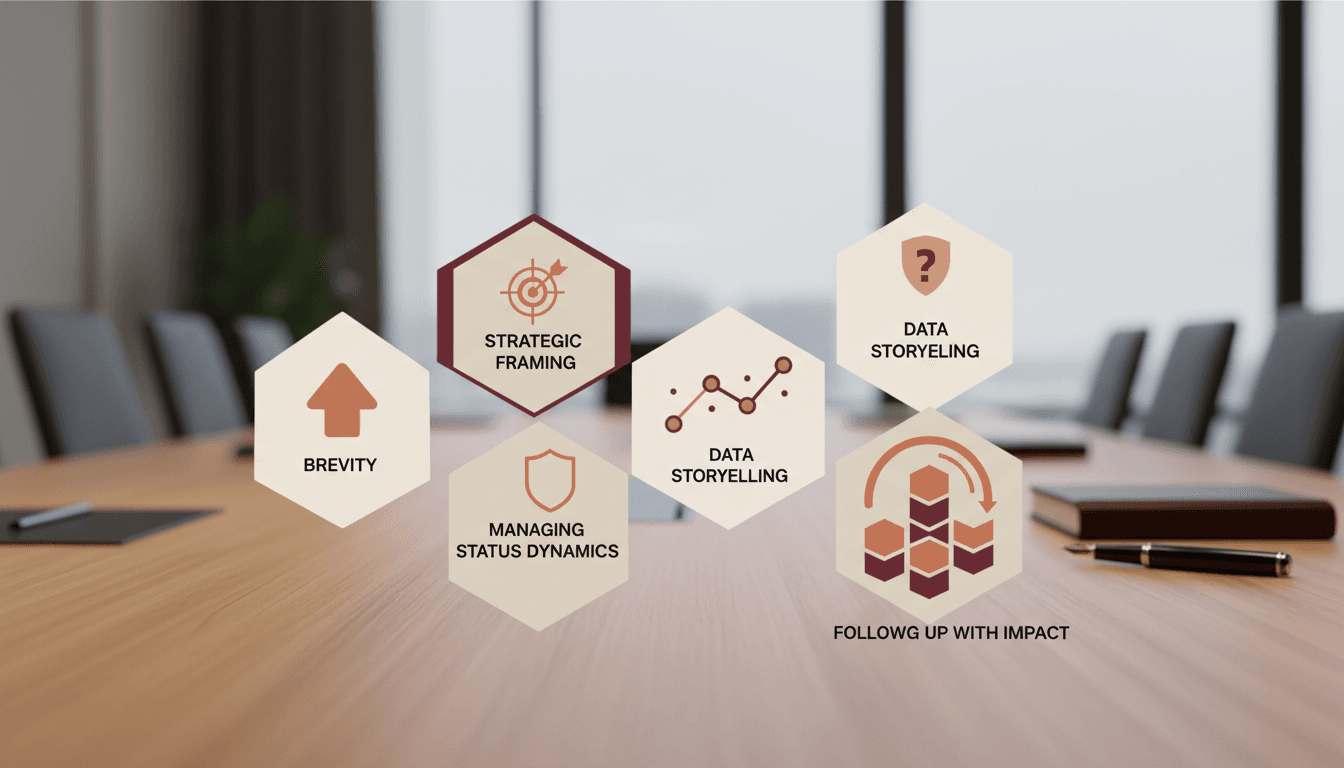
How to Communicate with Executives Effectively: 6 Rules
To communicate with executives effectively, follow six unwritten rules: lead with the bottom line (brevity), frame everything strategically (so what?), use data to tell a story, anticipate tough questions before they're asked, manage status dynamics with confidence, and follow up with impact. Executives think in decisions, not details. When you match their communication style, you earn credibility, visibility, and influence fast.

Executive Communication in Crisis: 6 Authority Principles
When a crisis hits your organization, the way you communicate in the first hours and days determines whether you retain or destroy stakeholder trust. The six authority principles executives use during crises are: lead with calm certainty, structure before you speak, practice radical transparency within guardrails, own what you don't know, control the narrative cadence, and communicate through your people. These principles help leaders project authority, reduce panic, and maintain credibility—eve

How Executives Build Instant Rapport: 6 Hidden Moves
Executives build instant rapport by deploying six specific techniques in the first 60 seconds of any interaction: strategic mirroring of body language and vocal tone, deliberate name usage, status-matching language, calibrated vulnerability, genuine curiosity signals, and environment-aware positioning. These aren't charisma tricks—they're learnable communication patterns that create immediate trust and open the door to influence, negotiation, and lasting professional relationships.